


Losing your job after taking medical leave can feel stressful and unfair, especially when you believed your position was protected under the FMLA. In some cases, employers can legally terminate an employee after FMLA leave, but firing someone because they used protected leave may violate federal law. If you were laid off after taking FMLA leave, it is important to document what happened, preserve important records, and speak with an employment attorney to better understand your rights and legal options.
At Westview Law, our team understands how stressful it can feel to lose your job after taking protected medical leave. We help employees understand their rights under the FMLA and evaluate whether a termination may have been unlawful. If you believe you were fired after FMLA leave, contact us today for a confidential case review and guidance on your next steps.
In this blog, we will explain when it may be illegal to be fired after FMLA leave, the signs of possible retaliation, and the steps employees can take to protect their rights and explore legal options.
Understanding the Family and Medical Leave Act (FMLA)
The Family and Medical Leave Act (FMLA) is a federal law that gives eligible employees the right to take job-protected leave for certain family and medical reasons. The purpose of FMLA is to help employees handle important personal situations without automatically losing their jobs. FMLA may apply to situations involving serious health conditions, the birth of a child, adoption, or caring for a qualifying family member through unpaid job-protected leave.
Not every employee automatically qualifies for FMLA leave. FMLA eligibility usually depends on factors such as how long the employee has worked for the employer, the number of hours worked, and whether the employer is a covered employer that meets certain requirements. Understanding these rules can help employees determine whether they qualify for protection under the law.
FMLA also provides employees important rights and protections. Eligible employees may have the right to return to the same job or a similar position after approved leave ends. The law also protects employees from retaliation for using qualifying FMLA leave. Knowing these rights can help employees better understand and protect themselves in the workplace.
What Are the Common Misconceptions About FMLA
Many people believe that taking leave under FMLA guarantees complete job protection in every situation. This is a common misunderstanding. FMLA protects eligible employees from being fired because they used protected leave, but it does not prevent termination for lawful reasons. Employers may still take action for issues such as policy violations, documented performance concerns, or company-wide layoffs that are unrelated to the leave.
Another common misconception is that FMLA leave works the same way as all other types of leave. FMLA is a specific federal law that provides eligible employees with protected leave for certain medical and family situations and is generally unpaid. Other forms of leave may come from company policies, state laws, disability benefits, or remote work arrangements. Understanding the differences can help employees better understand their rights and workplace protections.
What Are the Legal Grounds for Termination During FMLA Leave?
Taking FMLA leave does not completely protect an employee from termination in every situation. Employers may still have lawful reasons to end employment while a person is on leave. The key issue is whether the decision is related to the employee taking protected FMLA leave or whether leave became a negative factor in the decision. Employers generally cannot terminate someone simply for using FMLA rights or take an adverse action because of protected leave.
Performance issues that are unrelated to FMLA leave may sometimes be a valid reason for termination. For example, documented performance problems that existed before the leave began may still be considered. Employers may also take action if there are legitimate policy violations or misconduct unrelated to the leave itself, depending on the employer's stated reason.
Business-related changes can also affect employment decisions. Company restructuring, layoffs, department closures, or workforce reductions may impact employees who are on leave. If an employee had been affected regardless of FMLA status, the termination may be lawful. Each situation has specific facts and circumstances that are important.
Examples of Court Cases Involving FMLA Termination
Court cases involving FMLA termination have shaped the understanding and enforcement of employee rights. Many of these cases focus on whether an employer interfered with an employee's FMLA rights or retaliated against an employee for taking protected leave. Some employees have successfully challenged terminations by showing a connection between their leave and the employer's actions or employer intent. These cases often highlight how timing and workplace conduct can become important factors.
Successful legal challenges usually involve strong evidence and clear facts. Courts may review emails, attendance records, performance reviews, and workplace communications to understand what happened. Some landmark cases have also created legal precedents that guide future FMLA disputes. These decisions help courts and employers better understand their responsibilities under the law.
Case studies also show the importance of keeping detailed records. Employees who save documents and track important workplace events may have stronger support for their claims. Notes about conversations, leave requests, and employer responses can become valuable evidence if disputes arise later and help build strong claims.
Legal representation can also play an important role in these cases. Employment lawyers can help gather evidence, explain legal rights, and build stronger arguments. Many successful outcomes involve careful preparation and a clear understanding of the law. Learning from past cases can help employees better protect themselves and recognize potential legal issues.
When Termination Is Lawful vs When It May Violate FMLA Rights
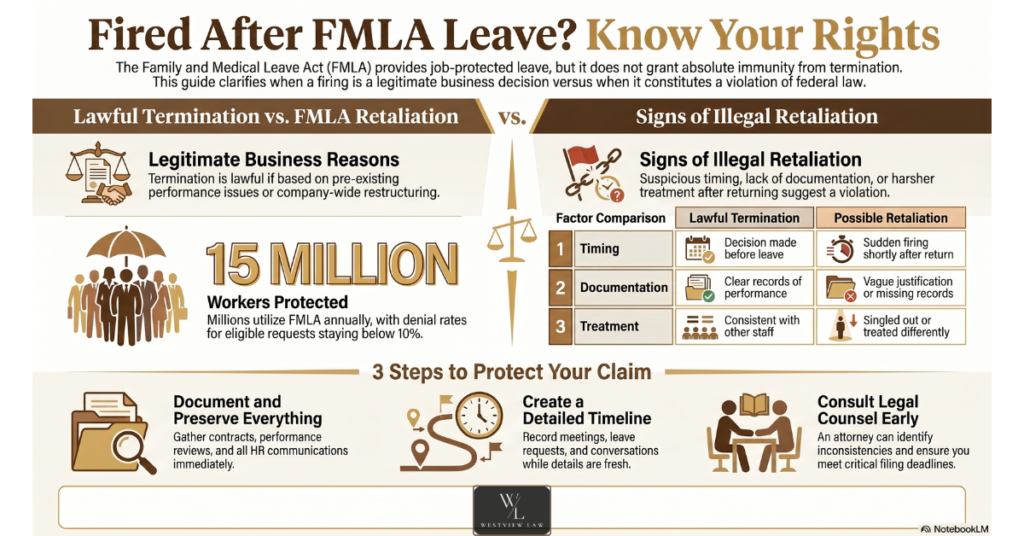
Not every termination after FMLA leave is illegal, but the reason behind the decision and the timing can make a significant difference in how the law applies. Employers may have valid business or performance-related grounds for ending employment, but they cannot base a decision on an employee’s use of protected leave. The comparison below breaks down key factors that can help clarify where a termination may fall.
| Factor | Lawful Termination After FMLA Leave | Possible FMLA Retaliation or Violation |
|---|---|---|
| Reason for termination | Performance issues, misconduct, or restructuring unrelated to leave | Fired because of FMLA use or timing tied to leave |
| Timing | Decision made before leave or part of broader layoffs | Sudden termination shortly after returning from leave |
| Documentation | Clear records of performance issues or business changes | Lack of documentation or vague justification |
| Treatment of employee | Consistent with how other employees are treated | Different or harsher treatment after FMLA leave |
| Layoffs/restructuring | Part of company-wide or department-wide reduction | Employee singled out while others in similar roles remain |
| Evidence pattern | Performance reviews, warnings, policy violations | Emails, comments, or timing suggesting leave-related bias |
| Legal risk for employer | Lower if reasons are well-documented and unrelated to leave | Higher if there is evidence of retaliation or interference |
What Are Your Rights if You Get Fired After FMLA Leave?
DOL findings show that most FMLA requests are approved, with denial rates generally reported as under 10% in employer compliance surveys. The Family and Medical Leave Act (FMLA) gives eligible employees important workplace protections. FMLA allows qualifying employees to take protected leave for certain medical or family reasons without losing their jobs. These protections help employees handle serious personal situations while they maintain their employment rights and, in some cases, reasonable accommodations.
We regularly tell our clients, "FMLA leave is not a privilege an employer can punish employees for using." One important FMLA right is the right to reinstatement. In many situations, employees have the right to return to the same job or an equivalent position after approved leave ends. An equivalent position generally means similar pay, benefits, and job responsibilities. However, there may be limited exceptions depending on the circumstances.
Employees are also protected against retaliation for using FMLA leave. Employers generally cannot punish, discipline, or terminate someone simply for taking protected leave. If negative actions happen because an employee used FMLA rights, legal concerns may arise. Understanding these protections can help employees recognize when their rights may have been affected.
Steps to Take If You Believe You Were Wrongfully Terminated

Losing your job unexpectedly can feel overwhelming, especially if the termination seems unfair or unlawful. The steps you take after you get fired can help protect your rights, preserve important evidence, and strengthen a potential wrongful termination claim. The following steps explain what you should do if you believe you were wrongfully terminated and identify possible red flag issues that may help prove your case.
Step 1: Request and Preserve Important Employment Documents
Gather copies of your employment contract, employee handbook, performance reviews, disciplinary notices, termination paperwork, and HR communications. These records may help show whether your employer followed proper HR procedures and company policies before terminating you.
Step 2: Write Down a Detailed Timeline of Events
Create a timeline that includes important meetings, complaints, disciplinary actions, and conversations leading up to your termination. Writing everything down early can help preserve details that may become important later, in your case, including events involving a previous employer if relevant.
Step 3: Preserve Evidence of Discrimination or Retaliation
Save emails, text messages, complaints to HR, and other communications that may support claims of discrimination, harassment, or retaliation involving a medical condition. Evidence showing unfair treatment or suspicious timing can help strengthen your wrongful termination claim.
Step 4: Avoid Deleting Emails or Digital Records
Keep copies of work-related communications and documents that relate to your employment or termination if you legally have access to them. Preserving these records may help establish what happened before and after your firing, including claims involving alleged poor performance.
Step 5: Identify Potential Witnesses
Make a list of coworkers, supervisors, or HR representatives who may have witnessed relevant events or conversations. Witness statements can help support your version of events and provide additional credibility to your claim, especially in strong claims.
Step 6: Review Company Policies and Agreements
Read your employee handbook, severance agreement, and workplace policies carefully to understand your employer’s procedures and obligations as a covered employer. In some cases, failing to follow company policies may support a wrongful termination case.
Step 7: Limit Public Discussions About Your Case
Avoid posting details about your termination on social media or discussing the situation publicly. Public statements can sometimes be misinterpreted or used against you during a legal dispute involving employer intent.
Step 8: Speak With an Employment Attorney
An employment attorney can review your situation and explain whether your termination may violate state or federal law. Getting legal counsel early may help you preserve evidence and avoid missing important filing deadlines.
Can You Be Fired After Taking FMLA Leave?
The U.S. Department of Labor has reported that millions of workers take FMLA leave each year, with surveys estimating that over 15 million employees use FMLA leave annually. Many employees worry about what happens after they return from FMLA leave or after FMLA leave ends.
Taking protected leave does not automatically prevent an employer from ending employment in every situation. However, employers generally cannot fire someone simply because they used their FMLA rights. Understanding the difference can help employees better protect themselves.
Termination may still be lawful under certain conditions. For example, an employer may make decisions based on company restructuring, performance issues, policy violations, or other legitimate business reasons. The key issue is whether the decision was connected to the employee taking FMLA leave. A termination based on unrelated reasons may be lawful, while a decision tied directly to FMLA use could raise legal concerns.
It is also important to understand the difference between FMLA-related and unrelated terminations. If an employee returns from leave and is treated differently or suddenly faces disciplinary actions without a clear reason, questions may arise. Looking at the timing and surrounding circumstances can sometimes help identify potential problems.
Employees can take proactive steps to help protect themselves. Keep copies of leave requests, medical documents, and workplace communications. Follow company procedures and maintain clear communication with your employer throughout the process. Understanding company policies and keeping accurate records can help protect your rights if issues arise later.
How to Handle Being Fired After FMLA Leave

Being fired after returning from FMLA leave can feel stressful and confusing. Your first steps can help protect your rights after taking leave. Save emails, text messages, performance reviews, and any documents related to your leave or termination. Write down important details about conversations and events while they are still fresh in your memory.
It may also help to speak with an employment lawyer as early as possible. A lawyer can review your situation and explain whether your rights may have been affected. Employees may also choose to file a complaint with the United States Department of Labor if they believe someone violated their FMLA protections. Taking action early can help preserve important evidence and avoid missed deadlines.
Long-term solutions can vary depending on the circumstances of the case. Some employees may explore legal claims, negotiate settlements, or pursue other forms of relief. Others may focus on finding new employment opportunities while addressing legal concerns. Understanding your options can help you move forward with more confidence and clarity.
In a recent case involving a Westview client, an employee was suddenly terminated after returning from an approved FMLA leave and was told it was due to performance concerns. The employee felt the timing was suspicious and began documenting everything immediately. They gathered emails, prior performance reviews, and leave approval records and wrote a clear timeline of events. They also preserved messages showing positive feedback before the leave and avoided discussing the situation publicly on social media.
After speaking with an employment attorney at Westview Law, the attorney reviewed the records and identified inconsistencies in the employer’s explanation and the timing of the termination. A formal demand was made, highlighting possible FMLA retaliation. The employer ultimately agreed to a favorable settlement that included financial compensation and a neutral job reference.
Were You Fired After Taking an FMLA Leave?
Being fired after taking FMLA leave can leave employees feeling confused, frustrated, and uncertain about their rights. While employers can legally terminate workers in some situations, they cannot retaliate against employees simply for using protected leave under the Family and Medical Leave Act or take an adverse action because of that leave. Keeping records of communications, documenting changes in treatment, and understanding your legal protections can make a major difference if you believe your rights were violated.
If you suspect your termination was unlawful, speaking with an employment attorney may help you understand your options and next steps. Resources such as the Wage and Hour Division of the U.S. Department of Labor, local legal aid organizations, and state labor agencies may also provide guidance and support. Taking action early can help preserve evidence, protect your rights, and give you a clearer path forward after a difficult situation.
Were you fired shortly after returning from FMLA leave and wondering if your rights were violated? At Westview Law, we help employees understand whether a termination may involve unlawful retaliation or interference with protected leave rights. Our team of employment lawyers in California carefully reviews workplace records, employer actions, and timelines to identify potential violations under federal employment laws. Contact us today to discuss your situation and learn what legal options may be available to you.
Frequently Asked Questions
This FAQ section provides answers to common questions about being fired after taking FMLA leave. It explains employee rights, legal protections, and important information to help you better understand your options.
Can an Employer Fire an Employee After They Return From FMLA Leave?
Yes, an employer can terminate an employee after FMLA leave in certain situations. However, they cannot fire someone simply for taking protected leave. The employer must have a lawful reason for the decision.
What Should I Do if I Believe I Was Wrongfully Terminated After Taking FMLA Leave?
Save emails, messages, performance reviews, and any records related to your leave or termination. Write down important details while they are still fresh in your mind. Speaking with an employment lawyer may also help you understand your options.
Are There Any Steps I Should Take to Protect My Rights Before, During, or After Taking FMLA Leave?
Keep copies of medical documents, leave requests, and workplace communications. Follow your employer's procedures and keep records of important conversations. Staying organized can help protect your rights.
How Can Westview Law Help Me if I Was Fired After FMLA Leave?
Westview Law can review the facts of your situation and explain your legal options. They can also help determine whether your workplace rights may have been violated.
What Are Some Common Reasons Employers Give for Firing Employees After FMLA Leave?
Employers may point to performance issues, attendance concerns, company restructuring, or policy violations. In some situations, these reasons may be legitimate. The details of each case can make an important difference.
Disclaimer: The information provided on this blog is for general informational purposes only and does not constitute legal advice. Reading this content does not create an attorney-client relationship. Laws and regulations vary by jurisdiction and may change over time, so you should consult a qualified employment attorney directly for advice regarding your specific situation. Past examples, case studies, or hypothetical scenarios are illustrative only and do not guarantee similar results.