Wrongful termination
Firings that follow a leave request, safety complaint, or pay question, brought under FEHA or Tameny.
Westview Law PC represents Orange County employees in wrongful termination, harassment, discrimination, retaliation, and wage-and-hour claims under California and federal law.
Reviewed by David M. Safvati, Esq., California State Bar #326605 (verify) · Attorney Advertising
Westview Law PC represents workers across Orange County, including Santa Ana, Irvine, Anaheim, Huntington Beach, Costa Mesa, Newport Beach, Tustin, Garden Grove, and Fullerton. Consultations are confidential. Most plaintiff-side employment matters are handled on a contingency-fee basis, meaning the client pays no attorney fee unless there is a recovery.
Orange County's workforce of roughly 1.6 million people splits across distinct economies. Irvine and the South County tech corridor draws software engineers, product managers, and biotech researchers. Anaheim's tourism and hospitality sector employs hotel staff, theme-park workers, and food-service teams. Hoag and UCI Health anchor a healthcare cluster that runs from Newport Beach through Costa Mesa. Manufacturing in Brea, Buena Park, and Stanton rounds out the County's employment base. Each sector produces its own pattern of workplace problems, and California law applies the same statutory framework to all of them.
The Fair Employment and Housing Act, codified at Government Code sections 12900 through 12996, is the central California anti-discrimination and anti-harassment statute. Section 12940 lists the prohibited practices, including discrimination, harassment, and retaliation based on race, sex, age, disability, pregnancy, national origin, religion, sexual orientation, gender identity, and other protected categories. See Gov. Code §12940. Federal law runs in parallel through Title VII, the ADA, the ADEA, and the FMLA, and an OC employee can usually pursue both state and federal tracks.
Westview Law PC is an employee-side California firm. The attorneys represent workers, not management. This page explains how Westview handles intake, agency filings with the California Civil Rights Department (CRD) and the federal Equal Employment Opportunity Commission (EEOC), pre-suit demand letters, written discovery, depositions, motion practice, mediation, and trial in the Orange County Superior Court and the United States District Court for the Central District of California, Southern Division.
Most jobs in California are at-will under Labor Code §2922. You can be let go for a bad reason or none, but not an illegal one, and in a county whose top two employers are Disney and UC Irvine, that line gets tested in very different workplaces.
FEHA reaches employers with five or more workers, and its harassment rules apply even to an employer with one. Title VII starts at fifteen. Public employers are covered too, so a UC Irvine lab assistant has the same FEHA rights as a Disneyland cast member. When a case has state and federal claims, Westview files with the CRD and the EEOC together.
Most discrimination trials follow the three steps from McDonnell Douglas Corp. v. Green (1973) 411 U.S. 792, applied to FEHA in Guz v. Bechtel National, Inc. (2000) 24 Cal.4th 317. You show facts that suggest bias. The employer gives a lawful reason. You show that reason doesn't hold up. At the county's hospital systems, the proof is usually on paper: a nurse written up for a charting slip others made without discipline, or a firing reason that changed between the termination letter and the CRD response.
| Claim | Filing window | Authority |
|---|---|---|
| CRD complaint (discrimination, harassment, retaliation) | 3 years from the unlawful act | Gov. Code §12960(e) |
| EEOC charge (Title VII, ADA, ADEA) | 300 days in California | 42 U.S.C. §2000e-5(e)(1) |
| Lawsuit under FEHA | Within 1 year of the CRD right-to-sue notice | Gov. Code §12965 |
| Tameny public-policy firing | 2 years | Tameny v. Atlantic Richfield Co. (1980) 27 Cal.3d 167; CCP §335.1 |
| Unpaid wages | 3 years, or 4 under the Unfair Competition Law | Lab. Code §1194; B&P §17208 |
Firings that follow a leave request, safety complaint, or pay question, brought under FEHA or Tameny.
Resort and restaurant staff harassed by guests rather than coworkers. The employer must step in once it knows or should know.
Nurses reporting unsafe care (Health & Safety Code §1278.5) and any worker reporting a violation under Lab. Code §1102.5.
Light-duty and leave disputes in warehouse and hospital jobs, under Gov. Code §12940(m), (n).
Up to four months of pregnancy disability leave, plus a stool or lifting limits when needed, under Gov. Code §12945.
Uneven discipline, promotions, or shifts that track race, and hairstyle bias barred by the CROWN Act.
Quid pro quo and hostile-environment claims. A supervisor's harassment makes the employer strictly liable.
Workers 40 and over singled out in layoffs or pushed toward retirement.
Accent bias, immigration threats, and English-only rules lacking business necessity (Gov. Code §12951).
Schedules that ignore Sabbath observance, and dress codes aimed at head coverings or beards.
Unequal pay by sex, race, or ethnicity for similar work under Lab. Code §1197.5.
Unpaid overtime, missed breaks, and late final pay. No OC city sets its own minimum wage, so the state's $16.90 is the floor for most jobs.
A firing reason that doesn't match the file, like "restructuring" while the team keeps hiring. That is pretext under McDonnell Douglas.
Slurs, groping, or sexual comments that change the job. One serious incident can be enough (Gov. Code §12923).
A supervisor who ties shifts, a raise, or the job itself to sexual favors.
Ignoring a doctor's note, or refusing to discuss modified duty, a new schedule, or leave.
A bad review, fewer shifts, or a transfer right after a complaint or an accommodation request.
Off-the-clock prep work, skipped meal breaks without the extra hour of pay (Lab. Code §226.7), and unreimbursed phone or car use (§2802).
Labeling a worker a contractor when the company controls the work. Under AB 5, the company must prove the ABC test.
Time and a half after 8 hours a day or 40 a week, double time after 12 (Lab. Code §510). A salaried title alone doesn't make a job exempt.
Refusing CFRA leave (up to 12 weeks, Gov. Code §12945.2), or firing someone for taking it.
The company or agency you work for. UC Irvine and the County of Orange are public entities, so punitive damages are off the table (Gov. Code §818).
A harassing supervisor can be named personally (Gov. Code §12940(j)(3)).
Managers are personally liable for their own harassment. Their firing decisions are claims against the company.
An HR team that sits on a complaint exposes the employer to a claim for failing to prevent harassment (Gov. Code §12940(k)).
For harassment by a coworker or a resort guest, the employer is liable if it knew and didn't act.
Security, janitorial, and event staff often work through a contractor. The contractor and the site operator can both be responsible.
Two companies that share control of your hours, pay, or discipline can both be employers under FEHA.
A buyer of a hospital group or hotel that keeps the same operations can inherit claims it knew about.
Lost wages and benefits, plus future losses if returning is not realistic. A hotel worker's shifts and an Irvine engineer's salary and stock are valued differently.
Compensation for the emotional harm itself. Punitive damages need clear and convincing proof of malice, oppression, or fraud committed or approved by an officer, director, or managing agent (Civ. Code §3294).
A FEHA plaintiff who prevails can recover reasonable fees under Gov. Code §12965(c). Willfully withheld final wages add up to 30 days' pay (Lab. Code §203).
Westview Law PC publishes only outcomes that are objectively verifiable through court records or recognized industry recognition. Specific past results in a given practice area are confidential and discussed during a consultation when relevant to the facts. The following recoveries reflect the firm's trial track record across practice areas.
Past results do not guarantee future outcomes. Each case depends on its specific facts. See case results for the full firm record.
Westview Law PC has one office, at 1880 Century Park East, Suite 1100, Los Angeles, CA 90067. The firm does not maintain a separate location in Orange County, and we want clients to have that fact in front of them before they call. What the firm does have is a California bar license that covers every county in the state, and a regular practice in Orange County matters filed at the Orange County Superior Court, Central Justice Center (700 Civic Center Drive West, Santa Ana, CA 92701) and in the U.S. District Court for the Central District of California, Southern Division (Ronald Reagan Federal Building and U.S. Courthouse, 411 West 4th Street, Santa Ana, CA 92701). Initial consultations are conducted by phone or video, and in-person meetings happen at the Century City office or at a Orange County-area location when the case requires it. Call (310) 906-4862 to start a case review.
What Orange County looks like for us in practice. The hospitality sector along the Disneyland corridor produces wage-and-hour matters tied to tipped employees, scheduling, and meal-period compliance. Healthcare retaliation matters under Health & Safety Code §1278.5 run through the Hoag and Kaiser systems. Tech and biotech employers in Irvine generate trade-secret and noncompete crossover claims (California's noncompete ban under Bus. & Prof. Code §16600 is relevant when an out-of-state parent tries to enforce a noncompete here). The Central Justice Center has dedicated visitor parking.
An attorney's view of the Orange County mix. In our practice in Orange County, the most frequent matter is wrongful termination after a disability-accommodation request, often in the Irvine tech and biotech corridor. We also see a steady stream of hospitality wage-and-hour claims out of the resort district. What OC clients often misunderstand is that California's noncompete law (Bus. & Prof. Code §16600) is one of the strongest pro-employee statutes in the country, and many out-of-state employers carry their home-state restrictions into California contracts even though those clauses are unenforceable here.
Where federal and state enforcement sits. Federal claims under Title VII, the ADA, and the ADEA are administered by the U.S. Equal Employment Opportunity Commission, and California state-law claims under FEHA, the Labor Code, and the Cal-WARN Act run through the California Civil Rights Department and the California Labor Commissioner, with the California Attorney General's office taking some pattern-and-practice and PAGA-related matters. Civil filings for Orange County residents proceed at the Orange County Superior Court, Central Justice Center.
Most FEHA, Tameny, and Labor Code civil actions for OC employees are filed at the Central Justice Center, 700 Civic Center Drive West, in Santa Ana. The Central Justice Center handles civil unlimited matters. Complex employment cases are sometimes routed to the dedicated complex civil program. Departments and direct calendaring follow the Local Rules of the Orange County Superior Court.
The CRD has no office in Orange County. Intake is handled online and by phone, and the nearest regional offices are in Los Angeles, at 320 West 4th Street, Suite 1000, and in Riverside, at 1325 Spruce Street, Suite 320. The CRD investigates, mediates, and where appropriate issues a right-to-sue letter that opens the civil-court path.
Title VII, ADA, ADEA, FMLA, and related federal claims for OC-based plaintiffs are filed in the United States District Court for the Central District of California, Southern Division, which sits at the Ronald Reagan Federal Building and United States Courthouse at 411 West Fourth Street in Santa Ana.
Westview's OC caseload reflects the County's employment mix. Pregnancy discrimination and accommodation cases come out of the Irvine tech corridor, where employees often discover after a leave request that their projects have been reassigned and their reviews downgraded. See Gov. Code §12945; Sanchez v. Swissport, Inc. (2013) 213 Cal.App.4th 1331 (interactive-process duty applies to pregnancy disability). Healthcare retaliation cases involve nurses and clinical staff at Hoag, UCI Health, and the Children's Hospital of Orange County, often invoking Lab. Code §1102.5 and Health and Safety Code §1278.5 (patient-safety whistleblower protection). Hospitality cases out of Anaheim, including theme-park and hotel workers, often combine harassment claims with wage-and-hour theories under Brinker Restaurant Corp. v. Superior Court (2012) 53 Cal.4th 1004. Manufacturing in north OC produces classic disability-discrimination and English-only-rule cases.
FEHA, Title VII, and Labor Code claims all run on different clocks. The conservative reading is the earliest deadline that applies to your facts. Westview Law PC offers confidential consultations to Orange County employees.
A general-practice lawyer can review a severance agreement. A disputed FEHA case runs through CRD deadlines, depositions, and usually a summary-judgment motion before a Santa Ana jury sees it. Fee-shifting shapes how employers value a claim.
You can file alone. Wage claims go to the Labor Commissioner's Santa Ana office at 2 MacArthur Place, Suite 800; safety complaints go to Cal/OSHA in the same building. Discrimination claims are riskier: an early right-to-sue notice starts a one-year clock. A first call with Westview is free.
Firms that also defend employers may be conflicted out of cases against the county's biggest employers, a list led by Disney and UC Irvine. A worker-only firm is not.
Westview Law PC handles most plaintiff-side employment matters on a contingency-fee basis. The client pays no attorney fee unless there is a recovery, and the firm advances most case costs. The contingency percentage is set out in a written fee agreement that the client reviews before signing. FEHA also shifts attorney's fees to the employer when the employee prevails under Gov. Code §12965(c). Fee-shifting often drives settlement because the employer's exposure includes both the underlying damages and the cost of the employee's legal work.
The California Civil Rights Department does not have an office in Orange County. OC residents file online or by phone, and the closest regional offices are in Los Angeles, at 320 West 4th Street, Suite 1000, and in Riverside, at 1325 Spruce Street, Suite 320. A worker can also file with the federal EEOC, which has a Los Angeles District Office that covers Orange County for federal claims.
The deadline depends on the legal theory. A FEHA discrimination, harassment, or retaliation charge with the CRD must be filed within three years of the last unlawful act under Gov. Code §12960(e). A Title VII or ADA charge with the EEOC must be filed within 300 days in California. A Tameny wrongful-termination tort claim is generally subject to a two-year statute under CCP §335.1. Labor Code wage claims run on a three-year clock, extended to four years if pleaded as an unfair competition violation under B&P §17208.
No. A current employee can file a CRD charge while still employed. FEHA prohibits retaliation against an employee who files or participates in a charge under Gov. Code §12940(h). Constructive discharge is a separate doctrine that applies where conditions are so intolerable a reasonable person would resign. See Turner v. Anheuser-Busch, Inc. (1994) 7 Cal.4th 1238. Most workers stay employed while a claim is pending. The decision is fact-specific and worth discussing with counsel.
Yes, for harassment claims. FEHA imposes personal liability on individual supervisors and co-workers who engage in harassment under Gov. Code §12940(j)(3). Discrimination and retaliation claims, by contrast, run against the employer entity and not the individual supervisor. The harassment-versus-discrimination distinction matters at the pleading stage, because the wrong defendants on the wrong claims can be dismissed. Westview pleads each theory against each proper defendant.
Direct evidence is rare. Most FEHA and Title VII cases turn on circumstantial evidence: comparators (similarly situated employees outside the protected class treated more favorably), shifting explanations (the employer's stated reason changes), deviations from written policy (the employer applied a rule differently to the employee), and timing (an adverse action close in time to protected activity). Personnel-file documents under Lab. Code §1198.5, payroll records under §226, emails, Slack messages, performance-review history, and HR investigation notes are common evidence sources.
The facts suggest a possible pregnancy-discrimination claim under Gov. Code §12945 and a parallel federal claim under the Pregnancy Discrimination Act, 42 U.S.C. §2000e(k). Timing is one of the strongest circumstantial-evidence categories in disparate-treatment law. The first steps are preserving documents (offer letter, performance reviews, the email or Slack thread where the pregnancy was disclosed, the termination email), requesting the personnel file under Lab. Code §1198.5, and filing a CRD charge to start the administrative clock. A free consultation can tell you whether the timeline and documents support a claim.
Two California statutes commonly apply. Lab. Code §1102.5 protects employees who disclose a reasonable belief of legal violation to a government agency, a supervisor with authority to investigate, or any public body. Health and Safety Code §1278.5 specifically protects healthcare workers who advocate for patient care or report unsafe conditions. Hospital retaliation cases often combine §1102.5, §1278.5, and FEHA where the retaliation is also discriminatory. Document the report and the adverse action timing.
Yes. FEHA covers most employers with five or more employees, and harassment claims apply regardless of employer size. Hospitality workers in Anaheim have brought successful claims for sexual harassment, racial harassment, denied accommodations for disability and pregnancy, and retaliation for participating in union or wage complaints. Wage-and-hour claims for meal and rest period violations under Brinker are common in the hotel and theme-park sectors because of long shifts and tight scheduling.
A release signed at termination is not always enforceable. California requires consideration beyond what the employee was already owed and clear language. ADEA waivers must comply with the Older Workers Benefit Protection Act, which sets a 21-day review window and a 7-day revocation window. California has also restricted no-rehire clauses under CCP §1002.5 and limited non-disparagement language. An attorney should review a release before signing or, if already signed, evaluate whether it covers the claims at issue.
Most CRD investigations close within 12 to 18 months of filing. Cases that proceed to civil court typically take 18 to 36 months from complaint filing through trial in the Orange County Superior Court, though the actual schedule depends on the assigned department, discovery disputes, and whether mediation succeeds. Title VII cases in the Central District of California, Southern Division often move faster on a federal scheduling order. Settlement timing varies.
Most cases resolve without a trial. The typical sequence is administrative filing, investigation, civil complaint, discovery, mediation, and settlement. Cases that do not resolve at mediation can proceed to a jury trial in the Orange County Superior Court or the Central District of California, Southern Division. The client makes the decision to settle or proceed at every stage. Westview prepares each case as if it will be tried, because employers settle most aggressively against firms that have shown they will take a case to verdict.
This page was reviewed by David M. Safvati, California Bar #326605, a Westview Law PC attorney whose practice focuses on plaintiff-side employment litigation in Orange County and statewide. David M. Safvati handles FEHA discrimination, harassment, and retaliation matters in the Orange County Superior Court and the United States District Court for the Central District of California, Southern Division, including cases against Irvine technology employers, Anaheim hospitality operators, healthcare systems, and north-OC manufacturers.
David M. Safvati earned a J.D. from Loyola Law School and was admitted to the California Bar in 2019. Bar admissions include the State Bar of California, the United States District Court for the Central District of California, and the Ninth Circuit Court of Appeals. David M. Safvati is a member of the California Employment Lawyers Association and the Orange County Bar Association Labor and Employment Section.
Verify California Bar status at apps.calbar.ca.gov/attorney/Licensee/Detail/326605.
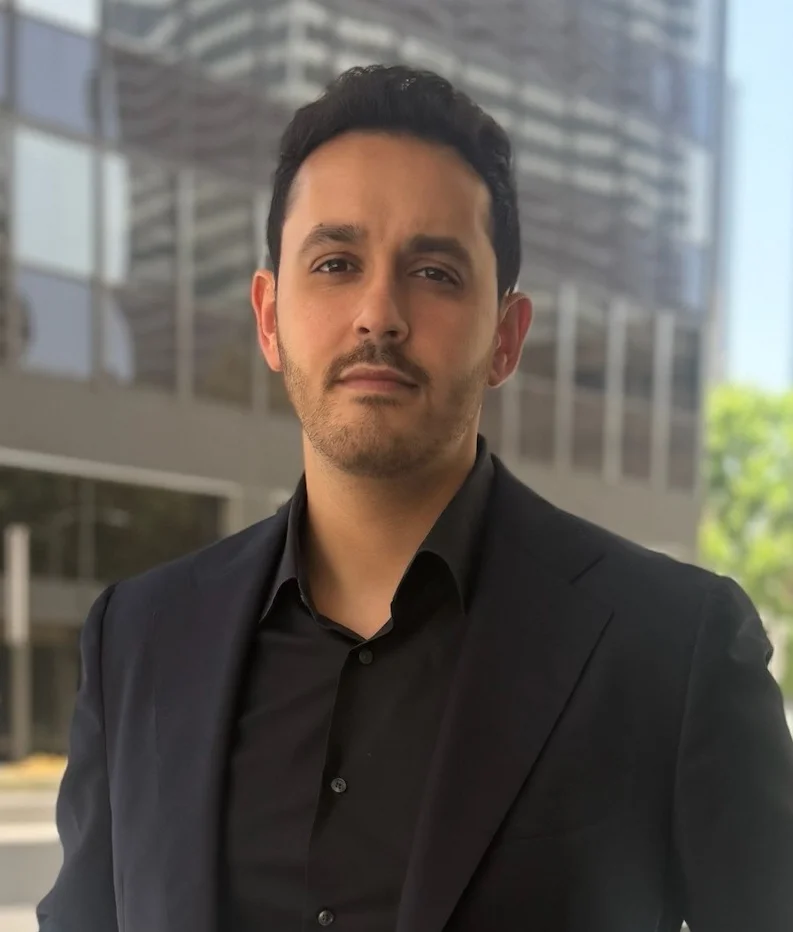 David M. Safvati
Founding Partner
David M. Safvati
Founding Partner
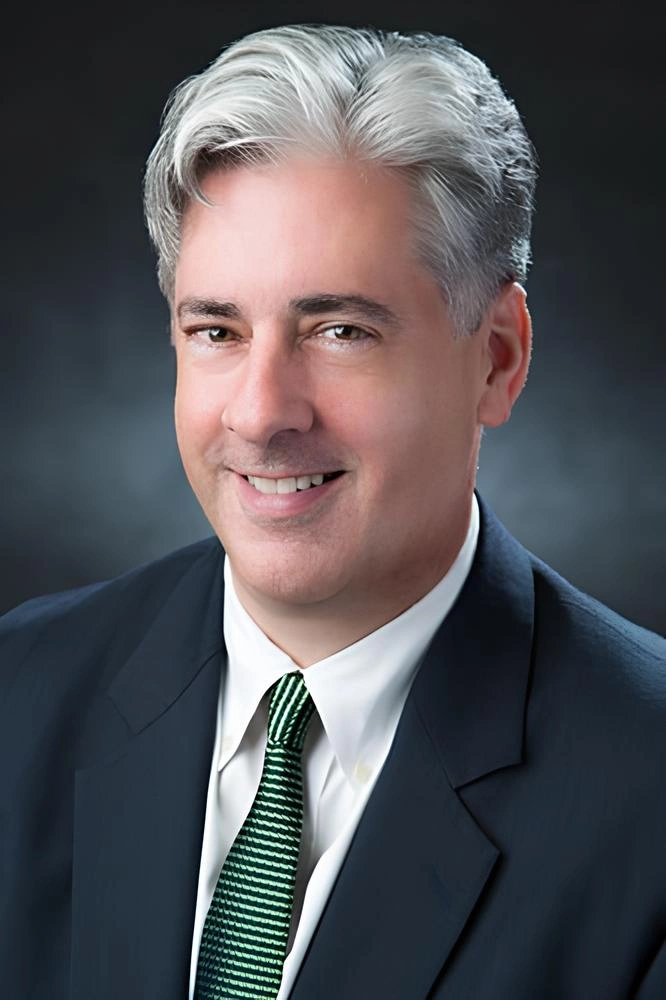 Paul S. Marks
Of Counsel
Paul S. Marks
Of Counsel
 Taylor Markey
Of Counsel
Meet the Team →
Taylor Markey
Of Counsel
Meet the Team →

40+ Years Combined Experience
Top 100 Verdict in California (2024). A real trial law firm that fights for results.
Schedule a Consultation →
Free Case Evaluation
Our California attorneys offer free, confidential consultations.
Get a Free Evaluation →
We Prepare Every Case for Trial
That’s why insurance companies take us seriously — we prepare every case for trial.
View All Results →
Serving Employees Across California
Wherever you work in California, our attorneys can take your case.
Get a Free Evaluation →
Not Sure Where You Stand?
A free consultation is the fastest way to understand your options.
Talk to an Attorney →