



Understanding work restrictions and your employment rights is important because it helps you know what protections you may have when health or job limitations affect your ability to work. Yes, you can be fired if work restrictions prevent you from performing essential job functions, even with reasonable accommodations, but your employer should first engage in an interactive process to explore possible adjustments before deciding on termination. This process can make a real difference in protecting both your job and your rights.
Westview Law brings experience in handling workplace disputes involving medical limitations, accommodations, and wrongful termination claims. Employers must follow legal requirements before terminating an employee with work restrictions, including engaging in the interactive process. Our team understands how these cases are evaluated and what evidence matters when protecting your rights. If you are unsure about your situation, contact us for a free consultation to help you understand your options and take the next step with confidence.
In this blog, we will explain whether you can be fired due to work restrictions, how reasonable accommodations and the interactive process work, and what legal protections may apply when your ability to perform your job is affected.
Understanding Work Restrictions and Employment Rights

Work restrictions are limitations or adjustments that affect how an employee performs their job duties. These restrictions often protect a person's health, safety, or well-being, especially after a work injury or workplace injury. Common examples include limits on lifting heavy objects, standing for long periods, working certain hours, or performing specific physical tasks. Work restrictions are meant to help employees continue working safely.
Work restrictions can happen for many reasons. A person may have a medical condition, recover from an injury, or live with a disability that affects certain job activities. In some situations, restrictions may also be temporary, such as during pregnancy or after surgery. Every situation is different, which is why work restrictions should be based on an individual's specific needs and circumstances, including situations involving injured workers.
Employees with work restrictions may have legal rights under federal and state laws. The Americans with Disabilities Act (ADA) protects qualified employees with disabilities from discrimination in the workplace. The law may require employers to make reasonable changes that help employees perform their jobs. The Family and Medical Leave Act (FMLA) may also provide eligible employees with protected leave for certain medical or family-related situations.
EEOC data shows that disability-related discrimination and retaliation claims constitute a significant portion of all filings, often ranking among the most common complaint categories each year. Other workplace laws may also protect employees depending on their state and the facts of the situation. These laws aim to prevent unfair treatment and help employees maintain equal opportunities at work. When employees understand these protections, they can recognize when their rights, including those related to workers' compensation and available benefits, may be affected.
The law may require employers to make reasonable changes that help employees perform their jobs. The Family and Medical Leave Act (FMLA) can help eligible employees with protected leave for certain medical or family-related situations.
Employers also have responsibilities when work restrictions are involved. They may be required to provide reasonable accommodations unless doing so would create an undue hardship for the business. Employers should also maintain a workplace free from discrimination and retaliation. Creating a supportive work environment helps employees feel respected and provides them a fair opportunity to succeed.
Common Work Restrictions That Could Lead to Being Fired
Work restrictions can affect the type of work an employee is able to perform. Common examples include reduced work hours, lifting limits, restrictions on standing or walking, and modified job duties through light-duty work restrictions or light-duty work. Some employees may also have limits on repetitive movements, travel requirements, or physically demanding tasks. These restrictions are often created to support an employee's health and safety.
In some situations, work restrictions can affect how certain job duties are performed. For example, a warehouse employee with lifting restrictions or a back injury may not be able to handle heavy inventory. An employee with reduced work hours may not be available for full shifts or overtime. These changes can sometimes create challenges depending on the nature of the job and the business needs.
Work restrictions alone do not automatically mean someone can be fired. However, conflicts can arise when an employer believes an employee cannot perform essential job functions. For example, an employee recovering from an injury may be placed on modified duties or light-duty work in a light-duty capacity, but later face issues if no suitable work is available. Another situation may involve an employee with medical restrictions who cannot return to their previous role without accommodations.
Employers may provide different reasons for termination in these situations. They may claim that the employee could no longer perform essential duties or that accommodations would create significant difficulties for the business. In some cases, employers may also point to attendance concerns or operational challenges. The specific facts of each situation matter.
Employment laws may protect workers with qualifying medical conditions or disabilities from unfair treatment. Employers may have a legal obligation to consider reasonable accommodations before taking adverse action. Understanding your rights can help you recognize when a termination may raise legal concerns. If questions arise, speaking with an employment lawyer may help clarify your options.
Can an Employer Legally Fire Me for Having Work Restrictions?

Many employees worry that work restrictions could put their jobs at risk. The answer is not always simple. In many workplaces, most employers can make decisions under "at-will" employment rules, which generally allow them to end employment at any time. However, there are important legal limits and exceptions to those rules.
A termination may be considered lawful in certain situations. For example, an employer may argue that an employee cannot perform the essential duties of a position, even with reasonable accommodations. Employers may also make decisions based on legitimate business reasons that are unrelated to a person's medical condition, restrictions, or an employment contract. The specific facts of each situation matter.
Employees with work restrictions may still have legal protections against unfair treatment. Federal laws, such as the Americans with Disabilities Act (ADA), may protect qualified employees from disability discrimination and adverse actions tied to a protected activity. Employers generally cannot fire someone simply because they have a medical condition or need workplace accommodations. Wrongful termination claims may arise if an employer takes action that violates these protections.
Documentation can be very important if concerns arise about a termination. Keep records of emails, accommodation requests, medical restrictions, and conversations with your employer. Written records can help show what was requested and how the employer responded. Staying organized may help protect your rights if legal questions come up later.
What Constitutes a Reasonable Accommodation?
A reasonable accommodation is a change or adjustment in the workplace that helps a qualified employee perform their job duties and may provide accommodations for medical needs. These accommodations are commonly associated with employees who have disabilities or certain medical conditions. The goal is to provide support that allows employees to have equal opportunities at work.
A reasonable accommodation can take many forms depending on the employee's needs and the nature of the job. There is no single solution that works for everyone. Employers and employees often work together to identify adjustments that are practical and effective when seeking work accommodations. According to the U.S. Department of Labor–supported Job Accommodation Network (JAN), over half of workplace accommodations cost $0, and many others involve only minimal, one-time expenses.
"Good-faith communication between employers and employees is often the difference between termination and accommodation," says Taylor Markey, attorney at Westview Law. Examples of reasonable accommodations may include modified work schedules, changes to job duties, additional break times, or specialized equipment as work accommodations. Some employees may need assistive technology, a different workspace setup, or permission to work remotely when appropriate. Temporary accommodations may also be provided to accommodate work restrictions during recovery from an injury or medical condition.
Employers are generally expected to consider reasonable accommodations unless providing them would create an undue hardship for the business. Factors such as cost, workplace operations, and available resources may be considered. Understanding what qualifies as a reasonable accommodation can help employees better understand their workplace rights and options and whether employers may need to accommodate their work restrictions.
How Employers Evaluate Work Restrictions vs Employee Rights
When work restrictions affect job performance, both employers and employees must navigate a careful balance between business needs and legal protections. Employers may focus on operational requirements, while laws protect employees by requiring fair consideration of accommodations and non-discriminatory treatment. Understanding where these two perspectives meet can help clarify what is lawful and what may raise legal concerns. The table below breaks down common workplace situations to show how employer decisions compare with employee rights and protections in practice.
| Situation | Employer Position | Employee Protection / Trade-Off | Key Consideration |
|---|---|---|---|
| Employee cannot perform essential job duties | May consider termination | Must first assess reasonable accommodations under ADA | Whether job function is truly “essential” |
| Reasonable accommodation requested | May claim operational difficulty or cost | Employer must engage in interactive process unless undue hardship exists | Whether accommodation is truly unreasonable or costly |
| Temporary medical restriction | May be treated as inability to work full duties | May qualify for temporary adjustments or protected leave (e.g., FMLA) | Duration and medical documentation of restriction |
| Performance issues linked to restriction | Employer may cite productivity concerns | Must ensure decisions are not based on disability or medical condition alone | Whether performance issue is separate from restriction |
| Termination decision | Employer may rely on at-will employment rules | Cannot legally terminate based on disability discrimination | Whether proper process and documentation were followed |
What Is the Process of Requesting Accommodations?
Requesting a workplace accommodation can feel overwhelming, especially when you are already managing a health condition or limitation. The process is designed to help employees and employers work together to find reasonable adjustments that allow you to perform essential job functions while staying supported and productive. Below is a clear step-by-step guide to help you understand how to request accommodations from your employer and communicate effectively throughout the process.
Step 1: Identify Your Need for an Accommodation
Start by clearly identifying what aspect of your job is difficult due to a medical condition or limitation. Be specific about the task or barrier so you can explain it clearly to your employer.
Step 2: Review Your Workplace Policy and Rights
Check your employee handbook or company policy to understand how accommodation requests are handled. This helps you follow the correct procedure and strengthens your request by showing you are informed.
Step 3: Submit a Formal Request to Your Employer
Notify your supervisor, HR department, or designated contact in writing that you are requesting a workplace accommodation. Keep your message clear, professional, and focused on your ability to continue performing your job with support.
Step 4: Provide Supporting Documentation if Required
Your employer may ask for medical documentation to understand your limitations and need for accommodation. Make sure the information is clear and relevant to your work restrictions, without oversharing unnecessary details.
Step 5. Engage in the Interactive Process
Have an open conversation with your employer about possible accommodations that could help you perform your job. Effective communication is key here. Be honest about your needs while remaining open to reasonable alternatives.
Step 6: Follow Up and Confirm the Agreed-Upon Accommodation
Once an accommodation is agreed upon, make sure it is documented and implemented properly. If issues arise, communicate promptly and be willing to renegotiate adjustments as needed to ensure the solution remains effective.
Legal Recourse for Being Fired Due to Work Restrictions

If you believe you were fired because of work restrictions, it is important to understand that you may have legal options. Employees with qualifying medical conditions or disabilities may have protections under federal and state employment laws. A termination related to work restrictions does not always mean an employer acted unlawfully, but certain situations may raise legal concerns, especially after a workers' compensation claim.
One of the first steps is speaking with an employment lawyer or workers' compensation attorney. A lawyer can review the details of your situation and explain whether your rights may have been violated. Legal counsel can also help you understand deadlines, available claims, and the evidence that may support your case. Getting advice early may help you avoid missing important steps.
Employees may also have the option tofile a complaint with the Equal Employment Opportunity Commission (EEOC). The EEOC investigates claims involving workplace discrimination and violations of certain employment laws. Filing a complaint is often an important step before bringing certain legal claims. Keeping records of accommodation requests, emails, and workplace communications can help support the process in some workers' compensation cases.
Possible legal remedies can vary depending on the facts of the case. In some situations, an employee may seek reinstatement to their job, lost wages, compensation for damages, or other relief allowed by law. Taking timely action is important because legal deadlines may apply. Staying organized and keeping documentation can help protect your rights moving forward, and some firms may offer a free consultation.
How to Protect Yourself From Being Fired Due to Work Restrictions
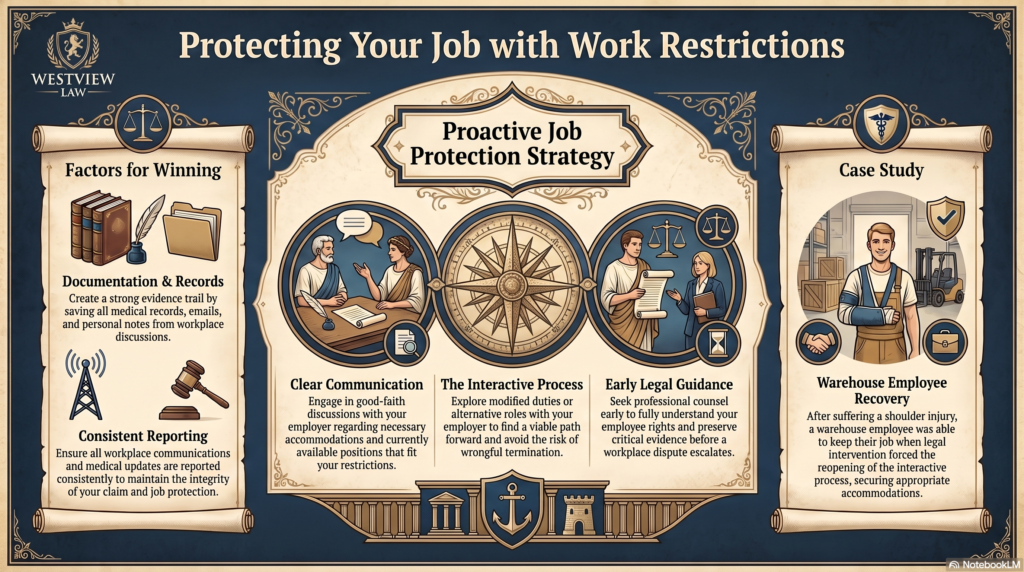
Protecting yourself from problems related to work restrictions often starts with clear communication and acting in good faith. Be open with your employer about your limitations and discuss any accommodations that may help you perform your job safely. Try to keep conversations professional and focused on finding practical solutions, including discussions about available positions if needed. Good communication can help prevent misunderstandings later.
Keeping accurate records is also very important. Save medical records, accommodation requests, emails, and notes from workplace discussions. Keep copies of any agreements or updates related to your work restrictions or medical treatment. Organized records can help show what was requested and how your employer responded.
There may be times when legal guidance becomes necessary. If you feel your employer is ignoring accommodation requests, treating you unfairly, or taking actions that may affect your job, speaking with a lawyer may help. Early legal advice can provide a better understanding of your rights and possible next steps. Acting sooner rather than later may also help preserve important evidence.
Employment law issues can sometimes become complex very quickly. Westview Law assists individuals with workplace matters involving employment rights, accommodations, and wrongful termination concerns. Experienced legal support can help employees better understand their options and protect their interests moving forward.
For example, a warehouse employee developed a shoulder injury and received a medical restriction limiting heavy lifting. Their employer said there were no light-duty roles available and moved to end their employment. The employee was unsure if this was lawful and contacted an employment attorney for guidance.
The attorney reviewed the job description, medical notes, and accommodation history. They found the employer had not fully explored modified duties or alternative roles. After legal intervention, the employer agreed to reopen the interactive process and offer a temporary light-duty assignment. The employee kept their job and returned to work with adjusted responsibilities while recovering.
Ready to Navigate Being Fired for Work Restrictions?
Work restrictions do not automatically protect you from termination, but employers must still follow the law. If your restrictions prevent you from performing essential job duties, your employer may consider termination, but only after exploring reasonable accommodations through an interactive process. Understanding how this process works is key to knowing where you stand and what options may be available to you.
If you are facing this situation, it is important to understand your rights before making any decisions or assumptions. Speaking with an employment attorney can help you determine whether your employer handled your case properly and whether you may have legal options. You do not have to navigate this process alone, and getting guidance early can make a real difference.
Are you wondering whether your employer can legally fire you because of work restrictions? Westview Law has experience handling employment cases involving accommodations, medical limitations, and workplace terminations. We understand how employers are required to evaluate restrictions and engage in the interactive process before making decisions. Contact us today to review your situation and learn what legal options may be available to you.
Frequently Asked Questions
This FAQ section answers common questions about being fired due to work restrictions and explains important employee rights under fair employment and disability laws. It covers workplace accommodations, legal protections, and steps you may take if you believe your rights have been affected.
Can I Be Fired for Work Restrictions Due to a Medical Condition?
Employers are required to make reasonable accommodations for employees with medical conditions, as mandated by the Americans with Disabilities Act (ADA). Firing an employee solely based on work restrictions may be considered discrimination.
What Should I Do if My Employer Is Threatening to Fire Me Due to Work Restrictions?
It is important to communicate with your employer about your work restrictions and provide any necessary documentation from a medical professional. If your employer continues to threaten termination, you may want to seek legal advice to understand your rights and options.
Can My Employer Fire Me if I Have a Temporary Work Restriction?
In most cases, employers are required to provide reasonable accommodations for temporary work restrictions. If your employer is considering firing you due to a temporary restriction, it is important to discuss the situation with them and provide any necessary documentation.
Are There Any Laws That Protect Me From Being Fired for Work Restrictions?
A: The Americans with Disabilities Act (ADA) protects employees from discrimination based on disabilities, including work restrictions related to medical conditions. If you believe you are being unfairly targeted for your work restrictions, you may have legal recourse.
What Steps Can I Take if I Have Been Fired Due to Work Restrictions?
A: If you believe you have been wrongfully terminated due to work restrictions, you may want to consult with an employment law attorney to discuss your options. They can help you understand your rights and determine if you have a case for discrimination or wrongful termination.
Disclaimer: The information provided on this blog is for general informational purposes only and does not constitute legal advice. Reading this content does not create an attorney-client relationship. Laws and regulations vary by jurisdiction and may change over time, so you should consult a qualified employment attorney directly for advice regarding your specific situation. Past examples, case studies, or hypothetical scenarios are illustrative only and do not guarantee similar results.