English-only rule applied during breaks
Bilingual workers told to speak only English at lunch under threat of write-up.
Employee-side representation for California workers treated differently because of ancestry, ethnicity, accent, language, or immigration status. Free, confidential case review.
Statewide California representation. Westview Law PC handles national origin discrimination cases for California employees in every county. Consultations are free and confidential.
California protects employees from discrimination based on national origin, ancestry, ethnicity, accent, language, and immigration status. The state statute is Gov. Code §12940, the Fair Employment and Housing Act (FEHA), which lists national origin as a protected characteristic. National origin also includes ancestry, place of birth, and the perceived national origin of the employee or the employee's family. The federal counterpart is Title VII of the Civil Rights Act, 42 U.S.C. §2000e et seq.
This page is written for the California employee who was told to "speak English only" on a break, who was passed over for promotion because of an accent that did not affect job performance, who heard ancestry-based remarks from a supervisor, who was treated differently after the employer learned where the employee was born, or whose I-9 paperwork was scrutinized in ways co-workers' was not. Westview Law PC represents California employees in FEHA and Title VII national origin cases through the California Civil Rights Department (CRD), the Equal Employment Opportunity Commission (EEOC), and the courts.
California reads national origin broadly. FEHA covers accent discrimination, English-only rules, and conduct that targets the worker's ancestry or the ancestry of family members. Federal regulations at 29 C.F.R. §1606.7 govern English-only rules under Title VII; FEHA codified its own version at Gov. Code section 12951, which is more protective than the federal floor.
Under Guz v. Bechtel National, Inc. (2000) 24 Cal.4th 317, the employee establishes a prima facie national origin case by showing: (1) membership in a protected national origin group (or perceived membership); (2) qualified for the position; (3) an adverse employment action; and (4) circumstances suggesting national origin was a substantial motivating factor. The framework comes from McDonnell Douglas Corp. v. Green (1973) 411 U.S. 792, adopted into California law by Guz.
FEHA asks whether national origin was a "substantial motivating factor" in the decision under Harris v. City of Santa Monica (2013) 56 Cal.4th 203. Title VII allows mixed-motive analysis under 42 U.S.C. section 2000e-2(m). Both standards favor employees over the federal "but-for" standard that controls ADEA cases. A jury can find FEHA liability where the employer had legitimate reasons too, as long as national origin was a substantial factor.
An employer cannot take adverse action against an employee because of an accent unless the accent materially interferes with the worker's ability to perform the job. Fragante v. City and County of Honolulu (9th Cir. 1989) 888 F.2d 591 set the narrow federal carve-out. California reads the rule even more protectively under FEHA. Most front-of-house and customer-service jobs do not justify accent-based exclusion. An employer that bases a hire, promotion, or termination on accent must show the accent actually interfered with job duties, not that it made supervisors uncomfortable.
Workplace rules requiring English-only speech are restricted. Under Garcia v. Spun Steak Co. (9th Cir. 1993) 998 F.2d 1480, the Ninth Circuit allowed limited English-only rules that did not affect bilingual employees who could comply. California rejects the narrower Ninth Circuit reading. Gov. Code section 12951 prohibits employers from adopting or enforcing English-only policies unless the rule is justified by business necessity, the employer notifies workers of the rule and consequences in advance, and the rule does not reach times when employees are not actively working (breaks, off-the-clock conversations). EEOC regulations at 29 C.F.R. section 1606.7 set a presumption that broad English-only rules violate Title VII.
FEHA's national origin coverage reaches conduct tied to the employee's immigration status. Lab. Code §1171.5 establishes that immigration status is irrelevant to most employment-law remedies. The Immigration Reform and Control Act at 8 U.S.C. section 1324b prohibits citizenship-status and national-origin discrimination by employers with four or more employees, and creates a parallel enforcement track at the Department of Justice Immigrant and Employee Rights Section. Selective I-9 reverification, requests for "extra" documentation beyond I-9 List requirements, and refusal to accept facially valid documents from an employee with a foreign-sounding name are typical violation patterns.
CRD charge: three years from the last unlawful act under Gov. Code §12960(e). Civil suit: one year from the right-to-sue letter under Gov. Code §12965(c)(1)(C). EEOC charge for Title VII: 300 days because California has CRD as a deferral agency.
Bilingual workers told to speak only English at lunch under threat of write-up.
Qualified candidate passed over with a comment that customers "want someone who sounds American."
Supervisor or co-workers ridicule pronunciation, names, or speech patterns.
Employer demands new documentation only from workers with foreign-sounding names.
Employer rejects facially valid List A document and demands additional paperwork in violation of 8 U.S.C. section 1324b.
Repeated derogatory references to the worker's country of origin, ancestry, or religious-cultural traditions.
Persistent national-origin profiling during interviews, performance reviews, or daily interactions.
Workers of one national origin systematically paid less than similarly situated peers.
Less-desirable shifts assigned predominantly to workers of a particular national origin.
New supervisor ends an established advancement path after learning about the worker's ancestry.
Employer reassigns or excludes workers based on alleged customer preference for a different national origin.
Adverse change in duties, schedule, or pay following an internal or agency complaint of national origin discrimination.
Firing in which national origin was a substantial motivating factor.
Applicant rejected because of accent, ancestry, or perceived national origin.
Internal candidate passed over for a worker outside the protected group.
Severe or pervasive harassment based on ancestry, ethnicity, or language.
Policy that fails the business-necessity test under Gov. Code section 12951.
Adverse action where the accent did not materially interfere with job duties.
Selective verification, demand for extra documents, or refusal of valid documents under 8 U.S.C. section 1324b.
Wage disparity tied to national origin, also actionable under Lab. Code section 1197.5.
Adverse action for complaining about national-origin treatment, prohibited by section 12940(h).
FEHA liability under section 12940(a). Title VII liability for employers with 15 or more employees.
Individual harassment liability under section 12940(j); aiding and abetting under section 12940(i).
Aiding-and-abetting exposure when HR endorsed a discriminatory action or policy.
Integrated-enterprise liability where corporate separateness fails.
Joint employer responsibility for placement and worksite enforcement.
FEHA reaches a "person using the services of one or more employees."
Where the acquirer continued the operation that produced the violation.
Where the host or franchisor controlled the employment policy at issue.
Back pay from the unlawful action through judgment, plus front pay where reinstatement is not feasible. Mitigation duty applies. Pay disparity cases also support recovery of the wage gap going back to the limitations period.
Emotional-distress damages without a statutory cap under FEHA. Punitive damages available where the employer acted with malice, oppression, or fraud under Civ. Code section 3294 and a managing agent ratified the conduct. Title VII has compensatory and punitive caps tied to employer size under 42 U.S.C. section 1981a; FEHA does not.
Recoverable to the prevailing FEHA plaintiff under Gov. Code §12965(c)(6). Title VII fee shifting under 42 U.S.C. section 2000e-5(k).
Specific past results in national origin matters are confidential and reviewed during a consultation. Westview Law PC's publicly verified flagship outcomes include:
See the case results page for the full firm record.
Past results do not guarantee future outcomes. Each case depends on its specific facts.
CRD charge: three years from the last unlawful act under Gov. Code section 12960(e). After the right-to-sue letter, one year to file in superior court under Gov. Code section 12965(c)(1)(C). EEOC charge for Title VII: 300 days from the unlawful act in California. After EEOC right-to-sue, 90 days to file in federal court under 42 U.S.C. section 2000e-5(f)(1). For Immigration Reform and Control Act anti-discrimination claims at 8 U.S.C. section 1324b, file with the DOJ Immigrant and Employee Rights Section within 180 days of the unlawful act. Missing any deadline ends the claim.
The California Civil Rights Department (CRD), formerly the Department of Fair Employment and Housing (DFEH), is the state agency that processes FEHA charges. CRD operates regional offices in Oakland, Fresno, Los Angeles, San Bernardino, and San Diego, plus a statewide intake line. After CRD issues the right-to-sue letter, the case goes to California superior court for the county where the unlawful act occurred or where the employee resides.
The Equal Employment Opportunity Commission (EEOC) handles Title VII charges with work-sharing into CRD. After EEOC issues the notice of right to sue, the case can be filed in one of four federal district courts in California: the Northern District of California, the Eastern District of California, the Central District of California, or the Southern District of California. The Department of Justice Immigrant and Employee Rights Section (IER) handles the parallel track for 8 U.S.C. section 1324b document-abuse and citizenship-status claims. California plaintiffs generally keep the case in state court under FEHA because of the broader substantive coverage and uncapped damages.
Discrimination tied to language or ancestry is on the rise. Document the policies, the comments, and the comparators while the record is fresh.
The CRD intake portal accepts self-filed charges. A right-to-sue letter will issue. The harder questions come after: which forum, which causes of action, whether to add an 8 U.S.C. section 1324b filing for document abuse, how to challenge an English-only policy under Gov. Code section 12951 versus the looser Ninth Circuit reading of Title VII. National origin cases turn on the documentary record, the policy language, and the comparator data. A general-practice attorney can file the complaint; whether the policy-attack and pretext analysis hold up at summary judgment depends on how the file was built. If the policy is in writing and the comparator evidence is clean, the case may be straightforward. If the proof is circumstantial and the employer asserts business necessity, the case becomes a project.
Discrimination based on ancestry, ethnicity, place of birth, accent, language, or perceived national origin. FEHA at Gov. Code section 12940 covers all of these as a single protected characteristic. The conduct can be a hiring rejection, a firing, a denied promotion, harassment, a pay disparity, an English-only rule, or an accent-based exclusion. National origin also reaches discrimination based on the ancestry of the employee's family members.
Only under limited conditions. Gov. Code section 12951 requires the employer to justify any English-only rule with business necessity, give workers advance notice of the rule and its consequences, and limit the rule to times the worker is actively performing job duties. A rule covering breaks, lunches, or private conversations between bilingual co-workers generally violates FEHA. The federal EEOC regulation at 29 C.F.R. section 1606.7 presumes broad English-only rules to be discriminatory.
Yes. Under Fragante v. City and County of Honolulu (9th Cir. 1989) 888 F.2d 591, an employer cannot reject a worker because of accent unless the accent materially interferes with job duties. California reads the rule even more protectively under FEHA. Most jobs do not justify accent-based exclusion. An employer that fires or refuses to promote based on accent must prove the accent actually interfered with the work, not that supervisors or customers preferred a different sound.
No. Customer preference is not a lawful defense to national-origin discrimination. Federal courts have rejected customer-preference defenses across protected classes, and California follows the same rule. Reassigning an employee away from customer-facing work because of perceived customer preference for a different national origin is itself discriminatory under FEHA.
Selective I-9 reverification, demand for "extra" documents beyond what the I-9 List requires, and refusal to accept facially valid documents are violations under 8 U.S.C. section 1324b. The federal Immigrant and Employee Rights Section enforces the statute. FEHA national origin can also reach the conduct because the selective treatment usually targets workers of perceived foreign origin. The case can run on parallel tracks.
Yes. California Lab. Code section 1171.5 establishes that immigration status is irrelevant to most employment-law claims. FEHA protections apply regardless of immigration status. The employee can recover lost wages, emotional distress damages, and other FEHA remedies. Federal law restricts certain remedies for undocumented workers in some contexts but does not eliminate the underlying claim.
Often yes. National origin harassment and racial harassment overlap. FEHA covers both under Gov. Code section 12940. The legal standard is the same: severe or pervasive conduct that alters the conditions of employment. Slurs based on country of origin, ridicule of language or accent, and ethnic stereotyping all support harassment claims. The fact finder considers the totality of the circumstances.
Only if the fluency level required matches the job's actual demands. A receptionist job that requires phone communication can require English proficiency at a level that supports the work. A warehouse role with no customer contact generally cannot. The test must be administered consistently to all candidates, scored by neutral standards, and validated to the job duties. A test designed to filter out workers with accents fails the business-necessity test.
Direct evidence is rare. Most cases rely on circumstantial proof: ancestry-based comments by decision-makers, comparator workers of different national origin treated more favorably, statistical patterns in hiring or promotion, written policies that disparately affect a national origin group, and pretextual reasons given for adverse actions. The Reeves v. Sanderson Plumbing Products, Inc. (2000) 530 U.S. 133 framework applies: prima facie case plus disbelief of the employer's stated reason can support liability.
Yes. Dual-filing is standard. CRD and EEOC have a work-sharing agreement, so one charge usually counts for both. The civil action can plead both Title VII and FEHA causes of action. Plaintiffs often keep the case in California superior court because FEHA does not cap damages and the substantive rules on accent and English-only are more protective.
Three years from the last unlawful act to file a CRD charge under Gov. Code section 12960(e). One year from the CRD right-to-sue letter to file in superior court under Gov. Code section 12965(c)(1)(C). EEOC charge for Title VII: 300 days. After EEOC right-to-sue, 90 days to file in federal court. For 8 U.S.C. section 1324b document-abuse claims, 180 days to file with the Immigrant and Employee Rights Section.
Recovery tracks the lost wages, the emotional-distress evidence, and whether punitive damages are available. Lost wages cover the period from termination through judgment, plus front pay where reinstatement is not feasible. FEHA emotional distress has no statutory cap; Title VII does (caps run from $50,000 to $300,000 by employer size under 42 U.S.C. section 1981a). Punitive damages require malice, oppression, or fraud and a managing agent under Civ. Code section 3294. Attorney's fees flow to the prevailing plaintiff.
David M. Safvati is a California-licensed employment lawyer at Westview Law PC. The practice handles FEHA disparate-treatment and hostile-environment cases across the protected classes, with national origin, race, and religion as recurring file types. Education: Loyola Law School, J.D. Bar admissions: State Bar of California, admitted 2019; U.S. District Court for the Central District of California; U.S. District Court for the Northern District of California; U.S. District Court for the Eastern District of California; U.S. District Court for the Southern District of California. CA Bar #326605 (verify on calbar.ca.gov). Member, California Employment Lawyers Association. Speaks on Gov. Code section 12951 English-only enforcement and the FEHA reading of accent-based adverse actions.
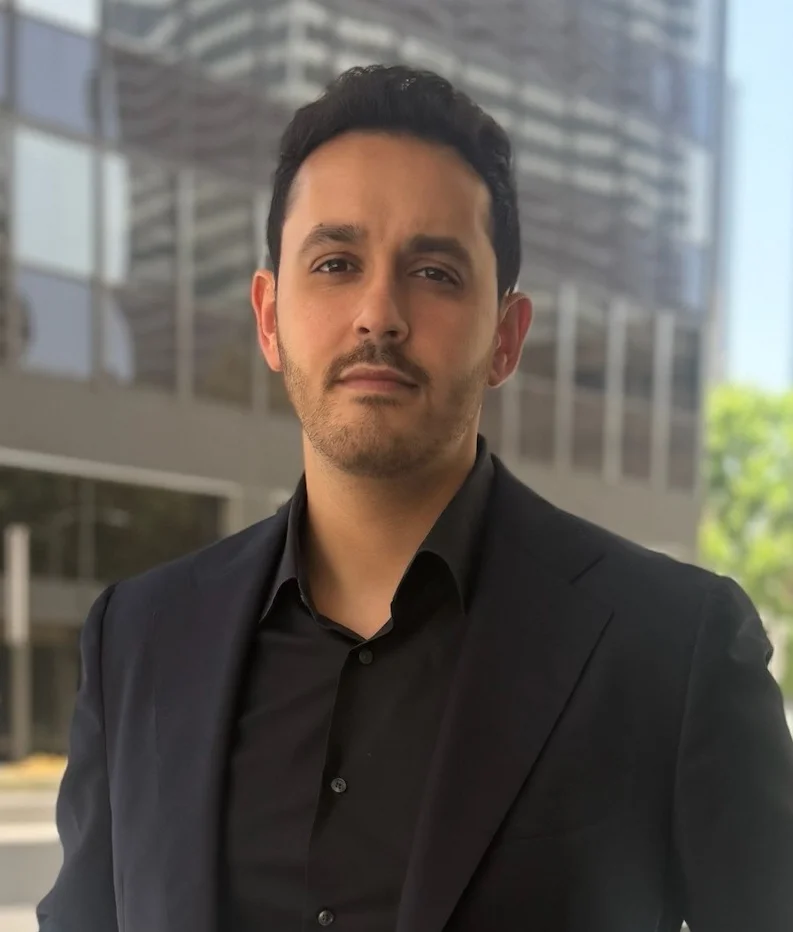 David M. Safvati
Founding Partner
David M. Safvati
Founding Partner
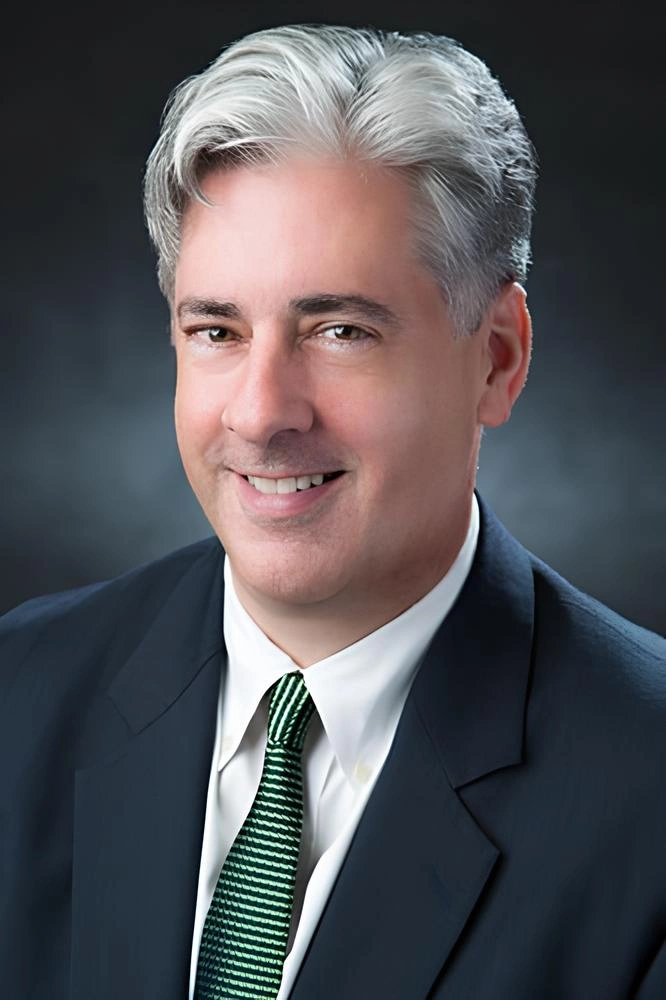 Paul S. Marks
Of Counsel
Paul S. Marks
Of Counsel
 Taylor Markey
Of Counsel
Meet the Team →
Taylor Markey
Of Counsel
Meet the Team →

40+ Years Combined Experience
Top 100 Verdict in California (2024). A real trial law firm that fights for results.
Schedule a Consultation →
Free Case Evaluation
Our California attorneys offer free, confidential consultations.
Get a Free Evaluation →
We Prepare Every Case for Trial
That’s why insurance companies take us seriously — we prepare every case for trial.
View All Results →
Serving Employees Across California
Wherever you work in California, our attorneys can take your case.
Get a Free Evaluation →
Not Sure Where You Stand?
A free consultation is the fastest way to understand your options.
Talk to an Attorney →