
Female engineer paid less than male peers
Same role, same duties, lower base pay; comparator data shows a sex-based gap.
Employee-side representation for California workers paid less than colleagues of a different sex, race, or ethnicity for substantially similar work. Free, confidential case review.
Statewide California representation. Westview Law PC handles California Equal Pay Act and federal EPA cases for employees in every county. Consultations are free and confidential.
California's Equal Pay Act lives at Lab. Code §1197.5. The statute prohibits an employer from paying any employee at a wage rate less than the rate paid to employees of the opposite sex, or of a different race or ethnicity, for "substantially similar work, when viewed as a composite of skill, effort, and responsibility, and performed under similar working conditions." California's standard is broader than the federal Equal Pay Act at 29 U.S.C. §206(d), which requires "equal work" on jobs performed under similar conditions. "Substantially similar" reaches further than "equal."
This page is written for the California worker who learned a colleague of a different sex or race was paid more for the same work, the engineer whose pay history was used to set her starting salary below her male peers, the worker who got the same role as someone else but different compensation, or the applicant who wanted to know the pay range for a posted position. Westview Law PC represents California employees in Equal Pay Act, federal EPA, and FEHA pay-discrimination cases through the California Civil Rights Department (CRD), the Labor Commissioner, and the courts.
California's framework has been built out in two waves. SB 358 (2015) expanded the substantive coverage to "substantially similar work" and tightened the affirmative defenses available to employers. SB 1162 (2022) added pay-scale disclosure for job postings and expanded pay-data reporting to CRD. The compliance landscape is still settling; California employees who learn of pay disparities through these new tools often have viable claims that were invisible before 2023.
The employee shows that an employee of the opposite sex (or a different race or ethnicity) is paid more for "substantially similar work, when viewed as a composite of skill, effort, and responsibility, and performed under similar working conditions." The comparator does not have to hold the exact same job title or work in the same physical location; the worksite limitation that the federal EPA imposes does not apply to the California statute. Once the employee makes that showing, the burden shifts to the employer to justify the difference under one of the statutory affirmative defenses.
Lab. Code section 1197.5(a)(1) lists the only defenses: (A) a seniority system; (B) a merit system; (C) a system that measures earnings by quantity or quality of production; or (D) a bona fide factor other than sex, race, or ethnicity, such as education, training, or experience. The "bona fide factor" defense requires the employer to show the factor is not based on or derived from a prohibited factor, is job-related to the position in question, and is consistent with business necessity. The employer must also show that each factor it relies on accounts for the entire wage differential. Prior salary alone cannot justify a pay disparity.
Rizo v. Yovino (9th Cir. 2020) 950 F.3d 1217 holds that prior salary cannot, by itself, justify a pay disparity under the federal Equal Pay Act. California codified the same rule and went further. Lab. Code §432.3 prohibits employers from asking about a candidate's salary history, and section 1197.5(b)(3) bars use of prior salary alone to justify a wage differential. The combination eliminates prior-salary-anchored pay structures as a defense.
SB 1162 (effective January 2023) amended Lab. Code section 432.3 to require employers with 15 or more employees to disclose the pay scale for a position in any job posting, and to require all employers to provide the pay scale on request to a current employee for the employee's own position. The same bill expanded pay-data reporting to CRD under Gov. Code section 12999. An employer that hides pay scales, or that pays current employees inconsistent with the posted ranges, gives the worker a starting record for an Equal Pay Act analysis.
The federal Equal Pay Act at 29 U.S.C. section 206(d) covers only sex-based pay discrimination, requires "equal work" on jobs performed under similar conditions, and limits the comparator pool to the same establishment. California EPA reaches further. Federal EPA claims have a two-year statute of limitations (three years for willful violations) and allow liquidated damages equal to the wage differential. Title VII pay-discrimination claims live alongside EPA claims and add a broader set of protected classes plus uncapped emotional-distress damages under FEHA when paired with the state statute.
California Lab. Code section 1197.5: two years from the violation, three years for willful violations, under section 1197.5(h)(2). Each paycheck reflecting the disparity can be a separate violation. CRD charge for the FEHA pay-discrimination overlay: three years from the last unlawful act under Gov. Code §12960(e). Federal EPA: two years, three for willful violations.
Same role, same duties, lower base pay; comparator data shows a sex-based gap.
Race or ethnicity-based pay gap for substantially similar work.
Starting pay set as a percentage above the worker's prior salary, replicating earlier market disparities.
Employer of 15-plus failed to disclose pay scale on a posting; hired worker discovers they fall below the unposted range.
Two senior managers with the same title and duties, different pay.
Different titles, same skill-effort-responsibility composite, different pay.
Female employee promoted into a senior role at less than male peers in the same band.
Base pay equal but bonus, RSU grant, or commission structure is not.
Compression decisions implemented selectively against women or workers of color.
Employer penalized a worker for failing to negotiate, then defended the gap as a market factor.
Worker asked about pay scale or filed a CRD pay-data question and faced an adverse change.
The worker's reported job category in CRD pay data is misclassified, hiding a real disparity.
The core Lab. Code section 1197.5 claim.
Violation of section 1197.5(b)(3) and section 432.3.
Failure to post pay scale on a covered listing under section 432.3 as amended by SB 1162.
Inaccurate or missing CRD pay-data reporting under Gov. Code section 12999.
Disparity that survives equal base pay through different bonus or stock allocations.
Pay discrimination as part of a broader FEHA disparate-treatment case under Gov. Code section 12940(a).
Federal claim under 42 U.S.C. section 2000e-2; pairs with FEHA and California EPA.
Adverse action after the worker asked, discussed, or disclosed pay. Section 1197.5(k) and Lab. Code section 232 protect the inquiry.
Worker placed in a different job classification than their actual duties warrant to obscure the comparator pool.
Direct liability under Lab. Code section 1197.5.
HR and finance executives whose decisions set or maintained the disparity.
Integrated-enterprise liability where the parent set compensation policy.
Joint employer responsibility on contingent-worker pay rates.
Where the client controlled the wage rate paid for substantially similar work.
Where the acquirer continued the policy that produced the disparity.
Where the venture set the pay rate for the work in question.
FEHA aiding-and-abetting exposure under section 12940(i) where pay decisions were tied to a protected characteristic.
The full amount of the wage gap going back two years (three for willful violations) under Lab. Code section 1197.5(h)(2). Each paycheck reflecting the disparity restarts the clock for that period. Pre-judgment interest under Civ. Code section 3287 attaches.
Lab. Code section 1197.5(h)(1) provides liquidated damages equal to the wage differential. Federal EPA at 29 U.S.C. section 216(b) provides parallel liquidated damages. FEHA emotional-distress damages, where the disparity is pleaded as FEHA disparate-treatment too, have no statutory cap. Punitive damages available where the employer's conduct meets the malice-oppression-fraud standard of Civ. Code section 3294.
Recoverable to the prevailing California EPA plaintiff under Lab. Code section 1197.5(h)(1). FEHA fee shifting under Gov. Code §12965(c)(6). Federal EPA fee shifting under 29 U.S.C. section 216(b).
Specific past results in this practice area are confidential and shared during a consultation. Westview Law PC's public verified flagship outcomes include a $146M jury verdict (commercial), an $11.4M judgment (real estate fraud), and a $3.2M jury verdict (breach of contract; Top 100 California Verdicts 2024). See Case Results for the full firm record.
Past results do not guarantee future outcomes. Each case depends on its specific facts.
California Lab. Code section 1197.5: two years from the violation, three years for willful violations, under section 1197.5(h)(2). Each paycheck reflecting the disparity is a separate violation; the clock for each runs from that paycheck. CRD charge for the FEHA pay-discrimination overlay: three years from the last unlawful act under Gov. Code section 12960(e). Federal EPA at 29 U.S.C. section 255(a): two years, three for willful. Title VII pay-discrimination claims at 42 U.S.C. section 2000e-5(e)(3) under the Lilly Ledbetter Fair Pay Act: 300 days from each paycheck. Missing any deadline ends the claim.
The California Civil Rights Department (CRD), formerly the Department of Fair Employment and Housing (DFEH), is the state agency that processes FEHA pay-discrimination charges. CRD also receives and publishes pay-data reports under Gov. Code section 12999. CRD operates regional offices in Oakland, Fresno, Los Angeles, San Bernardino, and San Diego, plus a statewide intake line. A Lab. Code section 1197.5 claim does not require CRD exhaustion; it can be filed directly in California superior court.
The Labor Commissioner's Office accepts wage claims and section 1197.5 complaints. The federal Equal Pay Act, Title VII, and other federal-claim filings go through the EEOC and the federal district courts (the Northern District of California, the Eastern District of California, the Central District of California, or the Southern District of California). California plaintiffs often keep cases in state court under Lab. Code section 1197.5 paired with FEHA because of the broader substantive standard, the bar on prior-salary defenses, and the uncapped FEHA damages.
Each paycheck restarts the clock. A pay disparity you learned about today may have started years ago, but the recoverable period runs from each paycheck. Document the disparity now and preserve the records.
Call (310) 906-4862 Open the consultation formThe Labor Commissioner's wage-claim process is open to self-represented workers. A pay-disparity claim filed pro se will get a hearing, but the Berman wage-hearing forum is not built for the comparator-data discovery that California EPA cases need. The civil-court forum supports broader discovery, deposition of compensation decision-makers, and expert statistical analysis. A general-practice attorney can file the complaint; whether the comparator pool is defined correctly, whether the bona-fide-factor analysis is rebutted with the right documentary evidence, and whether the FEHA disparate-treatment overlay is preserved are the analyses that drive value. Pick the path that fits the facts.
The California statute at Lab. Code section 1197.5 is broader. California reaches "substantially similar work" measured by skill, effort, and responsibility, while the federal EPA at 29 U.S.C. section 206(d) requires "equal work" on jobs performed under similar conditions. California also covers race and ethnicity disparity, while the federal EPA covers only sex. California does not limit comparators to the same physical worksite, while the federal EPA does. The defenses are also tighter under California law.
No, not as the sole basis. Lab. Code section 432.3 prohibits employers from asking about salary history during hiring. Lab. Code section 1197.5(b)(3) bars use of prior salary alone to justify a pay differential. Rizo v. Yovino (9th Cir. 2020) 950 F.3d 1217 reached the same conclusion under the federal EPA. The employer can consider other factors (education, training, experience, performance), but each factor must account for its share of the differential, and the factors cannot be derived from prior pay alone.
SB 1162 amended Lab. Code section 432.3 to require employers with 15 or more employees to post pay scales on covered job listings. Failure to do so is enforceable through the Labor Commissioner and through civil action. Penalties run from $100 to $10,000 per violation. The posting violation can be a starting point for a broader pay-equity analysis when the worker later learns their actual pay falls below the range posted to candidates.
Yes. Under Lab. Code section 432.3 as amended by SB 1162, a current employee can request the pay scale for the position the employee currently holds. The employer must provide it. The request itself is protected activity; retaliation for making the request violates section 1197.5(k) and Lab. Code section 232.
Talking about pay with co-workers is protected by Lab. Code section 232 and section 1197.5(k). California law also makes pay-secrecy policies unlawful. Workers can ask co-workers, request the pay scale for their own position under section 432.3, look at the pay scales posted on company job listings, and review the pay-data reports CRD publishes under Gov. Code section 12999. A pay-equity case usually combines comparator-direct evidence with the discovery the employer must produce in litigation.
The composite of skill, effort, and responsibility, performed under similar working conditions. Different job titles can still be substantially similar work; same titles can still be different work. The fact finder looks at what the workers actually do, the tools and decisions involved, the supervisory responsibility, and the physical or mental demands. The Ninth Circuit's "equal work" caselaw under the federal EPA is relevant as background but California's "substantially similar" standard is more flexible for the worker.
Lab. Code section 1197.5(a)(1) lists four: seniority system, merit system, system measuring earnings by quantity or quality of production, or a bona fide factor other than sex, race, or ethnicity. The bona-fide-factor defense requires the employer to show the factor is not derived from a protected characteristic, is job-related, is consistent with business necessity, and accounts for the entire differential. Each factor must be applied reasonably. The defense is harder to maintain than employers often expect.
Yes. Dual-claim filings are standard. Federal EPA at 29 U.S.C. section 206(d) and California Lab. Code section 1197.5 both reach sex-based pay discrimination. California EPA also reaches race and ethnicity disparity. Title VII at 42 U.S.C. section 2000e-2 and FEHA at Gov. Code section 12940 add the broader disparate-treatment framework. The California EPA usually drives the substantive analysis because the standard is broader.
The California Lab. Code section 1197.5 limitations period is two years from the violation, three for willful, and each paycheck restarts the clock for that paycheck. The recoverable period is bounded by the limitations period, but the disparity itself can be much older. The Lilly Ledbetter Fair Pay Act at 42 U.S.C. section 2000e-5(e)(3) similarly treats each paycheck as a new violation for Title VII. Long-running disparities are recoverable for the periods inside the limitations window.
No. Lab. Code section 232 prohibits employers from requiring workers to refrain from discussing wages or from punishing workers who discuss wages. Section 1197.5(k) extends the protection to pay-equity inquiries and complaints. An adverse action after the worker asked about pay, requested a pay scale under section 432.3, or filed a CRD pay-data question is itself actionable.
The full amount of the wage differential going back two years (three for willful violations) under Lab. Code section 1197.5(h)(2), plus liquidated damages equal to the differential under section 1197.5(h)(1), plus pre-judgment interest, plus attorney's fees. FEHA emotional-distress damages where the disparity is pleaded as FEHA disparate-treatment have no cap. Title VII overlay adds federal compensatory and punitive damages within the section 1981a caps. Punitive damages under California Civ. Code section 3294 require malice, oppression, or fraud and a managing agent.
Not for a Lab. Code section 1197.5 claim. The California Equal Pay Act supports a direct civil action without CRD exhaustion. For a FEHA pay-discrimination overlay (Gov. Code section 12940(a)), CRD exhaustion is required: file the CRD charge within three years of the last unlawful act, obtain the right-to-sue letter, then file in superior court within one year. Most cases plead both, so the CRD filing is typical even though the underlying section 1197.5 claim does not strictly require it.
David M. Safvati is a California-licensed employment lawyer at Westview Law PC. The practice handles Lab. Code section 1197.5 pay-equity cases alongside FEHA disparate-treatment and Title VII files. Education: Loyola Law School, J.D. Bar admissions: State Bar of California, admitted 2019; U.S. District Court for the Central District of California; U.S. District Court for the Northern District of California; U.S. District Court for the Eastern District of California; U.S. District Court for the Southern District of California. CA Bar #326605 (verify on calbar.ca.gov). Member, California Employment Lawyers Association. Speaks on SB 1162 pay-scale enforcement and on the practical use of CRD pay-data reports in litigation.
 David M. Safvati
Founding Partner
David M. Safvati
Founding Partner
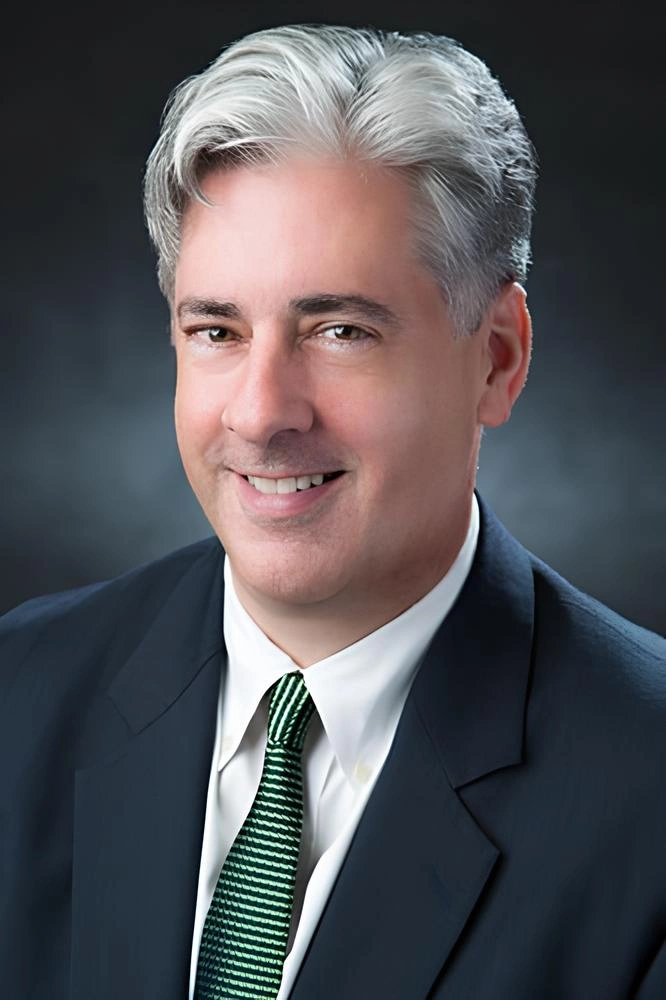 Paul S. Marks
Of Counsel
Paul S. Marks
Of Counsel
 Taylor Markey
Of Counsel
Meet the Team →
Taylor Markey
Of Counsel
Meet the Team →

40+ Years Combined Experience
Top 100 Verdict in California (2024). A real trial law firm that fights for results.
Schedule a Consultation →
Free Case Evaluation
Our California attorneys offer free, confidential consultations.
Get a Free Evaluation →
We Prepare Every Case for Trial
That’s why insurance companies take us seriously — we prepare every case for trial.
View All Results →
Serving Employees Across California
Wherever you work in California, our attorneys can take your case.
Get a Free Evaluation →
Not Sure Where You Stand?
A free consultation is the fastest way to understand your options.
Talk to an Attorney →