




Workplace retaliation happens when an employer takes negative action against an employee for reporting concerns or exercising legal rights. It can show up in many ways, from sudden discipline to reduced hours or unfair treatment. Understanding retaliation is important because it helps employees recognize the warning signs early and take steps to protect themselves and their careers.
At Westview Law, we handle employment law matters with a focus on workplace retaliation, discrimination, and employee rights under state and federal law. Our firm draws on practical case experience and a detailed understanding of labor protections to help employees assess whether retaliation has occurred and what legal options may be available. Each matter is reviewed carefully to build a strategy based on documentation, timelines, and the specific facts of the workplace situation. If you believe you are experiencing retaliation, contact us today to get clear, informed guidance on how to protect your rights.
In this blog, we explain workplace retaliation, how to recognize it, and how to report it and protect your rights.
Understanding Workplace Retaliation

Workplace retaliation happens when an employer takes negative action against an employee for engaging in a legally protected activity. This can include reporting workplace discrimination, filing a workplace complaint, participating in an investigation, or raising concerns about illegal conduct. Employees have the right to speak up without fearing punishment. Employer retaliation occurs when an employer responds in a way that unfairly targets the employee.
Retaliatory actions can take many forms. Some employees may face demotion, termination, reduced work hours, or sudden changes to their responsibilities as an adverse employment action. Others may experience unfair disciplinary actions or negative performance reviews that seem inconsistent with their past work history. In some situations, employees may also be excluded from meetings, projects, or advancement opportunities that may be considered retaliatory.
The U.S. Equal Employment Opportunity Commission (EEOC) reported that retaliation was the most frequently filed charge in FY 2019, accounting for about 53.8% of all discrimination charges filed. Employees have the right to speak up without fearing punishment. Retaliation occurs when an employer responds in a way that unfairly targets the employee.
Retaliation can create a hostile work environment that affects more than just job performance. Employees may feel stressed, anxious, or isolated when they believe that unfair treatment is happening to them. In severe situations, workplace conditions may become so difficult that an employee resigns, which may raise concerns about constructive discharge. A workplace should support open communication rather than create fear around reporting concerns.
Retaliation can also create legal problems for employers. Federal and state laws often protect employees from adverse actions tied to protected activities. Employers who violate these laws may face complaints, investigations, or legal claims. Beyond legal consequences, retaliation can damage workplace culture and reduce trust among employees over time.
Legal Protections Against Retaliation
Employees have legal rights and protections against workplace retaliation under several federal laws. These laws are designed to protect workers who report employment discrimination, participate in investigations, request accommodations, or exercise other workplace rights. Retaliation laws help create a safer environment where employees can raise concerns without fear of punishment.
Several federal laws include anti-retaliation protections. Title VII of the Civil Rights Act protects employees from retaliation related to complaints involving discrimination based on race, color, religion, sex, national origin, and sexual orientation.
The Americans with Disabilities Act (ADA)protects employees who request disability accommodations or report disability discrimination. TheAge Discrimination in Employment Act (ADEA) also provides protections for employees facing age-related discrimination or retaliation. The Equal Employment Opportunity Commission (EEOC) also plays important roles in enforcing workplace protections.
State laws may provide additional protections beyond federal law. Some states have broader workplace retaliation laws or offer extra protections for employees involved in certain activities, including concerns involving immigration status. Because these laws can vary by location, understanding local requirements is important. Consulting with a qualified lawyer experienced in employment law can help employees better understand their specific rights and protections.
Whistleblower laws also play an important role in preventing retaliation. Whistleblowing generally happens when an employee reports illegal conduct, fraud, safety violations, or other wrongdoing within a workplace. Employees who report these concerns in good faith may be protected by federal or state whistleblower laws. These protections help encourage people to report misconduct without worrying about unfair treatment or negative workplace consequences.
How to Report Retaliation at Work
Losing opportunities, facing sudden discipline, or being treated unfairly after speaking up at work can feel overwhelming. Research and federal reporting consistently show that many employees never formally report workplace harassment or retaliation, with EEOC noting that most incidents go unreported in workplace studies. Knowing how to report retaliation at work can help you protect your rights, preserve important evidence, and take the appropriate steps to resolve the issue. Below are important steps employees can take when facing workplace retaliation.
Step 1: Document Every Retaliatory Incident.
Start keeping detailed records of any retaliatory behavior, including emails, disciplinary actions, schedule changes, demotions, or hostile interactions. Organized evidence can help establish a clear timeline and strengthen your position if you later file a formal complaint or legal claim.
Step 2: Identify the Protected Activity.
Determine what action may have triggered the retaliation, such as reporting discrimination, requesting medical leave, participating in an investigation, or filing a workplace complaint. Showing a connection between your protected activity and the negative treatment you experienced can be important when proving retaliation.
Step 3: Review Your Company’s Internal Policies.
Check your employee handbook or workplace policies to understand the proper procedures for reporting retaliation and workplace misconduct. Following the company’s reporting process may help create additional documentation and show that the employer had an opportunity to address the issue.
Step 4: Report the Retaliation to HR or Management.
Notify Human Resources, a supervisor, or another designated representative about the retaliation in writing whenever possible. Written complaints create a record of your concerns and may encourage the employer to investigate and correct the problem internally.
Step 5: File a Complaint With the EEOC or Another Agency.
If the retaliation continues, you may choose to file a complaint with the Equal Employment Opportunity Commission (EEOC) or another government agency, depending on the circumstances of your case. The agency may review documents, interview witnesses, request additional evidence, or attempt mediation during the investigation process.
Step 6: Seek Legal Advice and Ongoing Support.
Speaking with an employment attorney can help you understand your legal rights, filing deadlines, and potential remedies available under state or federal law. Legal guidance may also help you avoid mistakes, preserve important evidence, and determine the strongest path forward for your situation.
Choosing the Right Response to Workplace Retaliation
Deciding how to respond to workplace retaliation often depends on the severity of the situation, the available evidence, and the internal processes within your organization. Each option comes with its benefits and limitations, and understanding these differences can help employees make more informed decisions about their next steps. The comparison below breaks down the most common response paths and the trade-offs involved so you can better evaluate which approach may fit your circumstances.
| Option | What It Involves | Key Advantages | Key Trade-Offs/Limitations |
|---|---|---|---|
| Internal Reporting (HR/Management) | Reporting retaliation through company channels or employee handbook procedures | Quickest internal response; may resolve issue without escalation; creates written record | Employer controls investigation; risk of bias or inadequate action |
| Documentation Only (Evidence Building) | Keeping records of emails, schedule changes, discipline, and incidents | Strengthens any future claim; helps establish timeline and pattern | Does not stop retaliation immediately; requires consistency and detail |
| EEOC or Government Complaint | Filing a formal complaint with EEOC or relevant agency | Independent review; legal protections activated; may lead to mediation or enforcement | Can take time; requires procedural compliance and deadlines |
| Legal Consultation (Employment Attorney) | Seeking advice from an employment lawyer on rights and strategy | Clarifies legal position; improves decision-making; helps avoid mistakes | May involve legal costs; outcome depends on facts and evidence strength |
| Remaining Silent | Not reporting or documenting retaliation | No immediate workplace conflict | High risk of continued retaliation; weakens future legal options |
| Resignation (Last Resort) | Leaving the job due to hostile conditions | Immediate relief from stressful environment | Potential loss of income; may complicate legal claims if not properly documented |
For example, after raising concerns about inconsistent pay practices and participating in an internal HR complaint, an employee began noticing sudden schedule reductions and was removed from key projects shortly after. Feeling uncertain, the employee started documenting every change and reached out to an employment attorney for guidance.
The attorney reviewed the timeline, identified a strong link between the complaint and the adverse actions, and helped the employee file a formal retaliation claim. With legal support, the matter was resolved through a negotiated settlement that included compensation for lost wages and a neutral employment reference, allowing the employee to move forward with greater financial and professional stability.
How to Prevent Retaliation in the Workplace
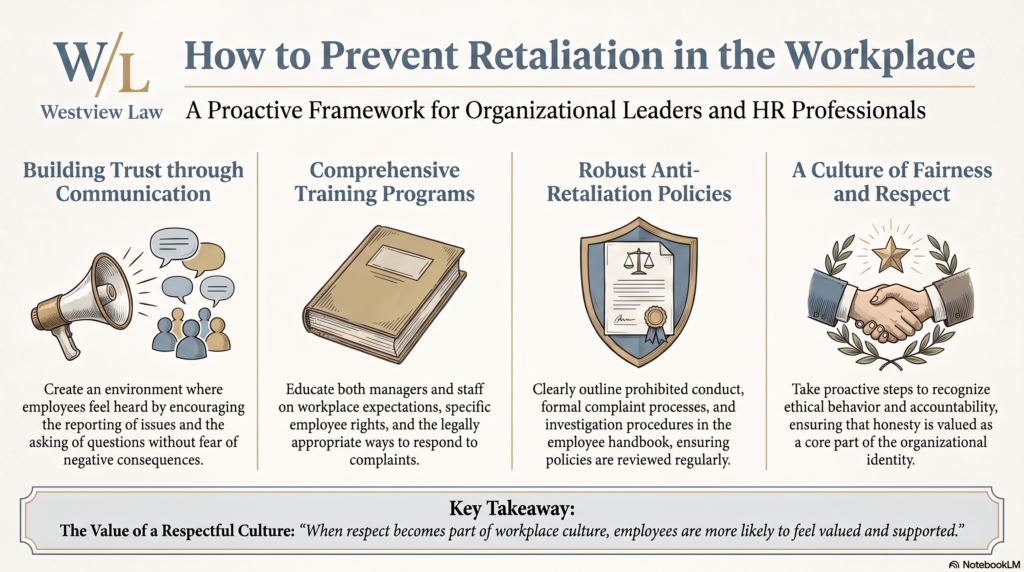
Preventing retaliation in the workplace starts with creating an environment where employees feel heard and respected. Open communication plays an important role in building trust between employees and management. Workers should feel comfortable reporting issues, asking questions, or raising concerns without fear of negative consequences. A supportive workplace often leads to stronger teamwork and better employee relationships.
Training programs can also help reduce the risk of retaliation issues. Managers and staff should understand workplace expectations and learn how to respond appropriately to complaints or concerns. Regular training can help educate employees, improve awareness of employee rights, and encourage employees to speak up when problems arise. Education can create a more informed and respectful workplace.
Strong anti-retaliation policies are another important part of prevention. Effective policies should clearly explain prohibited conduct, the complaint process, and how a formal complaint will be investigated. Policies should also outline the consequences for violating workplace rules and may be included in an employee handbook. Reviewing and updating these policies regularly can help ensure they remain effective and aligned with current workplace laws.
What conduct is prohibited, how to report it, and how to investigate complaints promote a culture of fairness and respect that can strengthen the workplace even further. Employees should feel encouraged to report concerns without worrying about punishment or exclusion. Employers can also take proactive steps and recognize ethical behavior that supports honesty and accountability. When respect becomes part of workplace culture, employees are more likely to feel valued and supported.
Have You Faced Workplace Retaliation?
Workplace retaliation can leave employees feeling stressed, isolated, and uncertain about what to do next. Understanding the signs of retaliation and knowing how to respond can help protect your rights and give you more confidence when addressing unfair treatment at work. Keeping records, following reporting procedures, and acting early can make a meaningful difference in protecting your position and your future.
If you believe you are experiencing retaliation, speaking with an employment attorney may help you better understand your legal options and next steps. Every employee deserves to work in an environment where they can report concerns without fear of punishment. Encouraging fairness, accountability, and respectful workplace practices benefits both employees and employers alike.
Have you experienced unfair treatment at work after speaking up or reporting a concern? Westview Law focuses on employment law, including workplace retaliation, and helps employees understand how state and federal protections may apply. Our firm reviews timelines, documentation, and workplace actions to assess whether retaliation may have occurred and what legal options may be available. If you think you are facing retaliation, contact us today to discuss your situation and protect your rights.
Frequently Asked Questions
This FAQ section answers common questions about retaliation at work and helps explain what workplace retaliation may look like. It covers employee rights, common examples of retaliatory actions, and steps you can take if you believe someone has treated you unfairly.
What Constitutes Retaliation at Work?
Retaliation at work occurs when an employer takes adverse action against an employee for engaging in protected activities, such as reporting discrimination, sexual harassment, or workplace safety concerns.
What Are Some Examples of Retaliation at Work?
Examples of retaliation at work include demotions, pay cuts, negative performance reviews, changes in job duties, termination following an employee's protected activity, spreading false rumors, or treating employees differently from other employees.
How Can Employees Protect Themselves From Retaliation at Work?
Employees can protect themselves from retaliation at work by documenting any instances of protected activity, reporting any retaliatory actions to HR or a supervisor, and seeking legal advice if necessary before taking legal action.
What Laws Protect Employees From Retaliation at Work?
Laws such as Title VII of the Civil Rights Act, the Age Discrimination in Employment Act, and the Occupational Safety and Health Act protect employees, including job applicants, from retaliation at work for engaging in protected activities.
What Should an Employee Do if They Believe They Are Experiencing Retaliation at Work?
If an employee believes they are experiencing retaliation at work, they should first try to address the issue internally with HR or a supervisor. If the issue is not resolved, they may seek legal advice about possible legal action or a lawsuit from a qualified employment attorney.
Disclaimer: The information provided on this blog is for general informational purposes only and does not constitute legal advice. Reading this content does not create an attorney-client relationship. Laws and regulations vary by jurisdiction and may change over time, so you should consult a qualified employment attorney directly for advice regarding your specific situation. Past examples, case studies, or hypothetical scenarios are illustrative only and do not guarantee similar results.