


The Family and Medical Leave Act (FMLA) gives eligible employees the right to take unpaid, job-protected leave for certain medical and family reasons. But when FMLA is misused or misunderstood, it can create real challenges for both workers and employers, making it important to recognize and address potential abuse early. Westview Law has profound experience in employment law and FMLA regulations, helping clients navigate these situations with clarity and confidence.
FMLA issues can quickly become stressful when questions about leave misuse or employer compliance arise. Westview Law has experience helping employees and businesses understand their rights and responsibilities under FMLA regulations and employment law. Our team takes a practical and personable approach, helping clients protect their interests while navigating complex workplace situations. If you are dealing with suspected FMLA abuse or facing an FMLA-related dispute, contact us today to discuss your options and get trusted legal guidance.
In this blog, we will explain what FMLA abuse is, how it can be identified, and what rights and legal options employees and employers have when concerns arise.
How Do You Identify FMLA Abuse?
Identifying possible FMLA abuse can sometimes be difficult. Potential FMLA abuse patterns alone do not automatically mean an employee is misusing leave. Employers should be careful not to make assumptions and should review situations fairly. Medical conditions and family situations can vary from person to person.
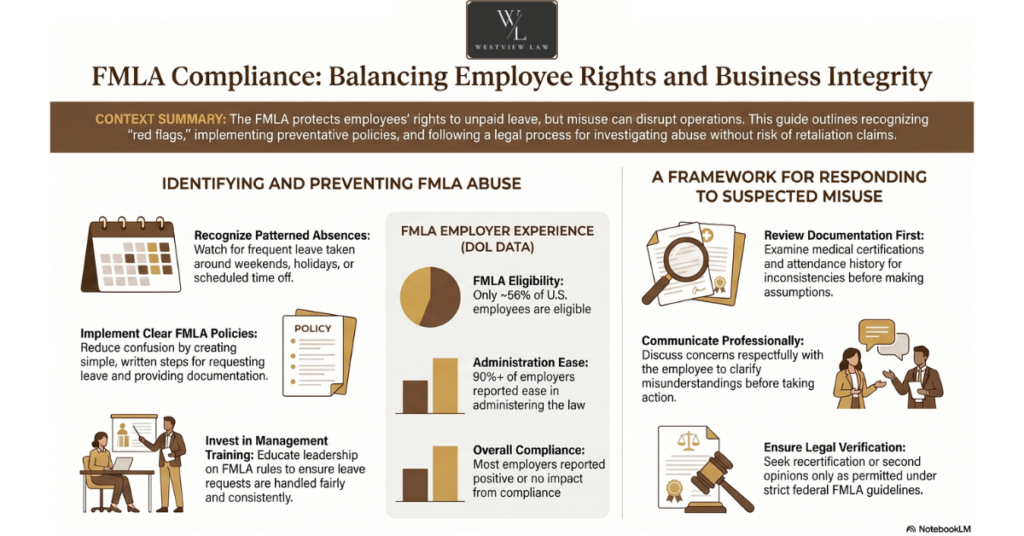
One common sign that may raise questions is frequent or patterned absences. For example, an employee may repeatedly take leave on the same days or at similar times. While this may appear unusual, there may also be legitimate reasons behind the pattern. Looking at the full picture is important because FMLA abuse occurs only when leave rights are improperly used.
Absences that regularly happen before weekends, holidays, or scheduled time off can also attract attention. Employers may notice repeated timing patterns and review them more closely. However, timing by itself does not prove misuse of FMLA leave, employee abuse, or taking advantage of workplace protections.
Inconsistencies in the reasons given for leave may also create concerns. Differences between medical certifications, leave requests, or workplace explanations can sometimes lead to questions involving possible fraudulent use. Employers should follow legal procedures and handle concerns carefully. Employees should also provide accurate and complete information when requesting leave.
What Is the Impact of FMLA Abuse on Businesses?
FMLA abuse can create challenges for businesses when employers manage leave concerns improperly. Unexpected absences sometimes lead to extra costs and planning issues involving multiple employees. Teams may need to rearrange schedules, hire temporary workers, or pay overtime to cover important tasks. These situations can place financial pressure on some businesses.
Workflow and productivity can also be affected when staffing changes happen suddenly. Projects may take longer to complete, and managers may need to shift responsibilities to keep operations moving. This does not mean that every leave request causes a problem. Many employees use FMLA for legitimate reasons, and leave protections remain important workplace rights.
When coworkers repeatedly take on extra responsibilities, they can also affect employee morale. Team members and other employees who cover undesirable work, additional shifts, or workloads may feel stressed or overwhelmed over time. Open communication and fair workplace attendance policies can help reduce frustration and maintain a supportive work environment.
Consider a situation where an employee regularly requests intermittent leave on Fridays and Mondays. Managers may notice the pattern and become concerned about scheduling issues. However, patterns alone do not automatically indicate misuse. Employers should review documentation and follow legal procedures before reaching conclusions.
Government survey data suggests that confirmed FMLA misuse is relatively uncommon. According to the U.S. Department of Labor’s 2018 FMLA Worksite Survey, most employers reported a positive impact or no impact from FMLA compliance, and more than 90% reported ease in administering the law. While some employers reported occasional concerns about suspected misuse, these represented a small minority compared to overall compliance experiences.
What Are the Legal Implications of FMLA Abuse for Employers?

The Family and Medical Leave Act (FMLA) gives employees important protections, but it also creates responsibilities for employers, including private employers covered by the law. Understanding the legal rules surrounding FMLA is important for managing leave requests properly. Employers must follow federal requirements while also balancing business needs. Clear policies and consistent procedures can help reduce misunderstandings.
Employers have certain rights under the FMLA process. According to U.S. Department of Labor survey data, only about 56% of U.S. employees are eligible for FMLA coverage, highlighting that the law applies to a limited portion of the workforce.
Employers may request medical certifications and supporting documentation when allowed by law. Employers may also ask for recertification in certain situations if questions arise about ongoing leave needs. However, these requests must follow legal guidelines and should be handled carefully. Employers should also avoid confusing FMLA obligations with issues related to reasonable accommodation requirements.
Failing to comply with FMLA rules can create legal risks for employers. Employees may file complaints or lawsuits if they believe their rights were violated. Claims can involve issues such as interference with leave rights, retaliation, or wrongful termination connected to FMLA leave. Legal disputes can become costly and time-consuming for businesses, making legal counsel important in complex situations.
Employers who violate FMLA requirements may face financial penalties and other consequences. Depending on the circumstances, legal remedies may include lost wages, benefits, reinstatement, and other damages. Even when concerns about potential leave misuse or an employee's failure to follow procedures exist, employers should avoid making decisions without proper review and documentation.
The United States Department of Labor provides guidance and resources to help employers understand FMLA requirements. Information available through the Department of Labor can help businesses create policies that align with federal standards. Regular policy reviews and training can help employers stay informed and maintain fair workplace practices.
How to Prevent FMLA Abuse in the Workplace
FMLA leave provides important protections for employees dealing with serious medical and family situations. At the same time, employers may face challenges when leave policies are misunderstood or potentially misused. Creating clear processes and promoting workplace awareness can help businesses support employees while maintaining fairness and accountability, while minimizing FMLA abuse and handling situations where employers may need to investigate suspected abuse.
1. Developing Comprehensive FMLA Policies
Clear FMLA policies can help reduce confusion in the workplace. Employees should understand how FMLA leave requests, an FMLA request, or situations where an employee requests FMLA leave are handled. Many employers benefit from creating simple policies that explain what documents may be required and the steps employees need to follow.
Employers can also benefit from having a strong system for tracking and managing FMLA leave. Organized records and consistent procedures can help reduce errors and improve communication. A structured process can make leave management easier and more efficient.
2. Training and Education
Training can help managers, HR professionals, and leadership understand their responsibilities under FMLA rules and the intended purpose of protected leave. When leadership understands the law, they are more likely to handle leave requests fairly and consistently. Good training can also reduce mistakes that lead to workplace disputes or confusion surrounding an employee's stated reason for leave.
Employees can also benefit from regular workshops and educational sessions. Learning about workplace rights and responsibilities helps create better understanding across the organization. When everyone knows the rules, confusion and misunderstandings become less common.
3. Monitoring and Reporting Mechanisms
Employers may choose to monitor leave patterns to identify unusual trends or concerns. Looking at repeated patterns, situations involving a coworker, or cases where attendance patterns have changed significantly can help organizations review situations more carefully. In limited situations and where legally appropriate, employers may conduct surveillance, but they should avoid assumptions and follow legal guidelines before taking action.
Creating a workplace where employees feel comfortable reporting concerns can also help. Reporting systems should be fair, respectful, and easy to use. Open communication can help businesses address issues while maintaining trust within the workplace
Balancing Employee FMLA Rights and Employer Responsibilities

FMLA situations often sit at the intersection of employee protection and workplace operational needs. While employees are entitled to take protected unpaid leave or, in some situations, paid leave benefits for qualifying reasons involving a family member or an injured family member, employers must also maintain productivity, ensure compliance, and manage staffing challenges.
These competing interests can create tension when concerns about misuse or enforcement arise. The table below breaks down these perspectives side by side to highlight where the key trade-offs occur and how a balanced approach can be maintained.
| Area | Employee Perspective (FMLA Rights) | Employer Perspective (Workplace Needs) | Key Trade-Off / Balance |
|---|---|---|---|
| Leave Usage | Right to take protected leave for valid medical/family reasons | Needs predictable staffing and attendance | Protect legitimate leave while discouraging misuse |
| Patterned Absences | May reflect real medical conditions requiring intermittent leave | May appear as suspicious scheduling patterns | Avoid assumptions; rely on documentation over timing alone |
| Documentation | Must provide accurate medical certification | Needs verification to confirm eligibility | Request compliance documents within legal limits |
| Workplace Impact | Job-protected leave ensures stability during hardship | Absences may disrupt productivity and increase costs | Balance operational continuity with legal leave protections |
| Misuse Concerns | Employees risk unfair accusations if misunderstood | Employers risk legal exposure if action is premature | Investigate fairly before taking corrective action |
| Enforcement Action | Employees protected from retaliation or wrongful termination | Employers must enforce policies consistently | Apply discipline only with clear, documented evidence |
| Legal Compliance | Employees can file complaints for violations | Employers face penalties for non-compliance | Strict adherence to FMLA rules reduces disputes |
A Step-by-Step Framework for Responding to Suspected FMLA Abuse
When employers suspect possible FMLA abuse, reacting too quickly can create legal and workplace challenges. Following a structured process can help organizations address concerns fairly while protecting employee rights and maintaining compliance with FMLA requirements, while avoiding assumptions of FMLA fraud.
Step 1: Identify and Review Potential Red Flags
Employers should first look for patterns or circumstances that raise concerns, such as repeated absences occurring around weekends, holidays, or scheduled vacation time. Other situations, such as working a second job or frequent activities like grocery shopping, may raise questions but should not automatically be treated as proof of misuse.
Step 2: Examine Leave Documentation Carefully
Reviewing existing records, medical documentation, attendance history, leave requests, and information from a health care provider can help employers better understand the situation. Looking at documentation as a whole may reveal inconsistencies or insufficient documentation or confirm that the leave request aligns with approved FMLA requirements and medical necessity.
Step 3: Maintain Accurate Records and Documentation
Employers should keep detailed records of attendance issues, communications, and any actions taken during the review process. Proper documentation creates a clear timeline and may become important if questions or legal concerns arise later, including records of FMLA absences and medical appointments.
Step 4: Communicate Professionally With the Employee
Open and respectful communication can help clarify misunderstandings before assumptions are made. Employers should discuss concerns carefully while reviewing an employee's request for leave and any medical reasons involved, while avoiding language that appears accusatory or discourages employees from exercising legitimate leave rights.
Step 5: Follow Company Policies Consistently
Policies related to FMLA leave should be applied fairly across all employees and situations. Consistency helps reduce claims of unfair treatment and demonstrates that decisions are based on established procedures rather than personal assumptions, including situations involving an employee's failure to follow reporting requirements.
Step 6: Seek Additional Verification When Allowed
In some situations, employers may seek recertification, request a second opinion, or rely on second and third opinions, including a third opinion, if permitted under FMLA regulations. Any requests should follow legal requirements and remain focused on verifying eligibility rather than creating obstacles for employees.
Step 7: Determine Appropriate Next Steps
If evidence supports legitimate leave use, employers should continue supporting the employee's approved leave rights. If misuse is confirmed, organizations can consider corrective action that aligns with company policies and applicable employment laws. In limited situations, employers may also consider using a private investigator where legally appropriate.
Addressing FMLA Abuse: Solutions and Strategies
Addressing concerns about possible FMLA abuse requires a careful and balanced approach. "When employees are forced to choose between their job and their health, everyone bears the cost," says David Safvati, attorney at Westview Law. Employers should protect workplace operations while also respecting employees' rights, especially when leave involves a serious health condition or other serious health conditions. Jumping to conclusions can create legal risks and workplace tension. A fair process can help businesses respond appropriately and maintain trust.
When abuse is suspected, employers may choose to investigate. A thorough review may include examining attendance records, leave documentation, and other relevant information. Employers should follow company policies and apply procedures consistently. Keeping detailed records of findings can also help create a clear picture of the situation.
Documentation plays an important role during investigations. Notes, communications, and supporting records can help explain why certain actions were taken. Accurate records may also become important if legal questions arise later. Decisions should be based on facts rather than assumptions, particularly when a health condition is involved.
If misuse is confirmed, employers may need to take corrective action. Depending on the circumstances, responses may include additional monitoring, policy reminders, disciplinary measures, or other appropriate steps. Employers should also consider employee rights and ensure actions comply with applicable laws. Fair treatment should remain a priority throughout the process.
Legal guidance can be helpful when dealing with complex FMLA issues. Employment laws can involve detailed rules and specific requirements. Westview Law can assist employers and employees with questions involving FMLA compliance and workplace matters. Professional support can help businesses make informed decisions while reducing legal risks.
Case Example: Resolving a Suspected FMLA Misuse Claim With Legal Guidance
A mid-sized logistics company noticed that one employee, a warehouse coordinator, had begun taking intermittent FMLA leave that often fell on Mondays and Fridays. Over several months, the absences created staffing gaps and led management to suspect possible misuse of leave. However, instead of taking immediate disciplinary action, the HR team contacted an employment attorney at Westview Law to review the situation first.
The attorney advised the employer to avoid assumptions and focus on documentation. They conducted a structured review of attendance records, medical certifications, and prior leave approvals. It became clear that the employee’s condition required periodic medical treatment sessions that were scheduled based on specialist availability, which explained the timing pattern.
With legal guidance, the employer adjusted internal scheduling practices and improved communication around intermittent leave tracking. The employee was allowed to continue taking approved FMLA leave without interference, while clearer reporting procedures were introduced to reduce future confusion.
As a result, the company avoided a potential FMLA retaliation claim and maintained compliance with federal requirements. The situation was resolved professionally, preserving both workplace stability and the employee’s legal protections.
Ready to Fight Against FMLA Abuse?
FMLA leave is an important workplace protection, but misuse and misunderstandings can create serious problems for both employees and employers. This blog explained what FMLA abuse may look like, common warning signs, and how employers can address concerns or investigate suspected abuse while still respecting employee rights. It also covered the importance of proper documentation, following company policies, and understanding the legal protections provided under the FMLA.
Because FMLA laws can be complex, it is important to handle these situations carefully and avoid costly mistakes. Whether you are an employee facing unfair accusations or an employer dealing with suspected abuse, getting legal guidance can be very helpful. Speaking with an experienced employment attorney can help you understand your rights, protect your interests, and move forward with confidence.
Have questions about whether an employee’s leave request crosses the line into FMLA abuse? At Westview Law, we help employees and employers understand complex FMLA rules and handle workplace disputes with confidence. Our team combines employment law experience with a practical, client-focused approach that keeps your goals front and center. If you are facing an FMLA issue or need guidance on your legal rights, contact us today for trusted support.
Frequently Asked Questions
This FAQ section answers common questions about FMLA abuse and explains how the workplace may handle concerns about misuse. It covers warning signs, employer rights, employee protections, and important information about FMLA rules and responsibilities, including situations where an employee requests FMLA leave.
What Are Common Examples of FMLA Abuse?
Examples may include providing false information to obtain leave, misusing intermittent leave, or using leave for reasons unrelated to the approved purpose. However, unusual patterns alone do not automatically prove abuse.
How Can Employers Prevent FMLA Abuse?
Employers can create clear FMLA policies and maintain accurate recordkeeping systems. Regular training and consistent procedures can also help reduce misunderstandings and potential misuse.
What Are the Consequences of FMLA Abuse for Employees?
Confirmed misuse of FMLA leave may lead to disciplinary action. Depending on company policies and the situation, consequences may include warnings, suspension, or termination.
What Are the Legal Implications of FMLA Abuse for Employers?
Employers must follow FMLA rules when handling suspected misuse. Taking action without proper evidence or violating employee rights could lead to legal complaints or claims.
How Can Westview Law Assist Employers in Handling FMLA Abuse Cases?
Westview Law can help employers understand FMLA requirements and review workplace concerns. They can also provide guidance on compliance, investigations, and employment-related issues.
Disclaimer: The information provided on this blog is for general informational purposes only and does not constitute legal advice. Reading this content does not create an attorney-client relationship. Laws and regulations vary by jurisdiction and may change over time, so you should consult a qualified employment attorney directly for advice regarding your specific situation. Past examples, case studies, or hypothetical scenarios are illustrative only and do not guarantee similar results.