


Getting fired while dealing with an illness can feel stressful and unfair, especially when you are unsure of your legal rights. Yes, in many cases it is illegal to fire someone for being sick, especially when federal or state employment laws apply. Understanding your rights is important because it can help you protect your job, your health, and your future.
Can an employer legally fire you for being sick, or could it be a violation of your rights under laws like the FMLA or disability protections? At Westview Law, our team draws on experience handling workplace rights and wrongful termination matters to help employees understand where the law stands in situations like these. We focus on clear guidance, practical advice, and protecting workers when medical issues intersect with employment decisions. If you believe you were wrongfully terminated or treated unfairly due to illness, contact us for a free consultation and learn how your rights may be protected.
In this blog, we will explain when it may be illegal to fire someone for being sick, the employee rights that may apply, and the legal options available if a wrongful termination occurs.
What are Employee Rights Under the Americans With Disabilities Act (ADA)?
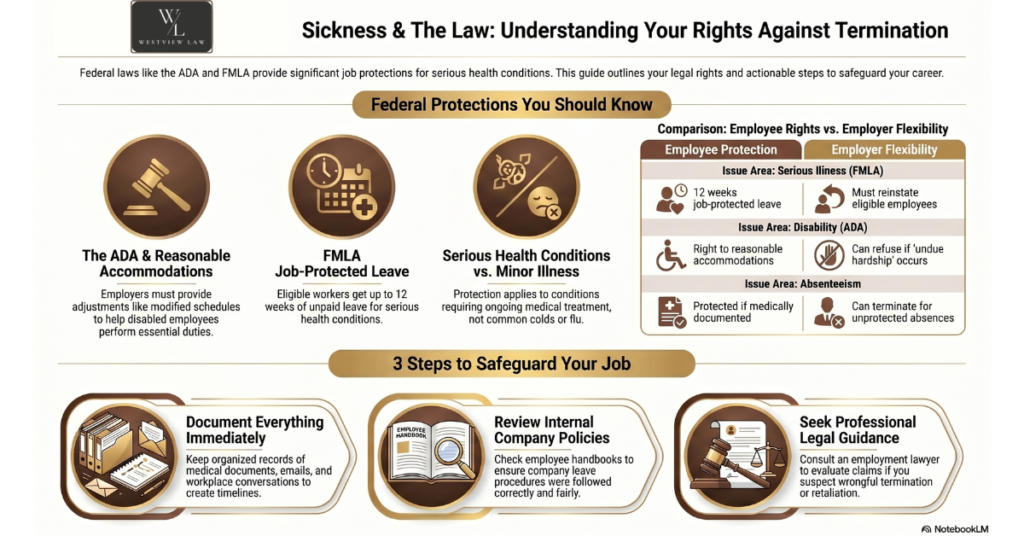
The Americans with Disabilities Act (ADA) is a federal law that protects individuals with disabilities from discrimination. Its purpose is to help ensure equal opportunities in workplaces and other areas of daily life. The ADA gives employees important protections and helps create a fairer work environment for people with qualifying physical or mental impairments.
The ADA protects employees by making it unlawful for employers to discriminate against qualified individuals because of a disability. Employers generally cannot make hiring, firing, or workplace decisions based on a person's disability alone. The law also requires employers to provide reasonable accommodations when appropriate.
The ADA may apply when physical or mental impairments or a mental impairment substantially limit a major life activity. These accommodations help employees perform essential functions and continue working effectively.
Reasonable accommodations can take many forms depending on the situation. Examples may include modified work schedules, assistive equipment, changes to job duties, additional breaks, or remote work arrangements when appropriate. Employees with health-related conditions may also need adjustments to their workspace or temporary modifications during treatment or recovery. The goal is to help employees perform their jobs through an interactive process without creating an undue hardship for the employer.
One well-known example is the US Airways, Inc. v. Barnett case. The dispute involved an employee who requested a workplace accommodation after a health condition affected his ability to perform certain duties. The case reached the Supreme Court and helped clarify how reasonable accommodations should be evaluated under the ADA. It also reinforced the importance of balancing employee rights with workplace policies and business needs.
Exploring the Family and Medical Leave Act (FMLA)
The Family and Medical Leave Act, often called the FMLA, is a federal law that gives eligible employees time away from work for important family or medical reasons. It was created to help workers balance their jobs with serious life events without fearing they will lose their employment. Employees may qualify if they work for a covered employer, have worked there for at least 12 months, and meet certain hour requirements. The law applies to situations like serious illness, caring for a family member, childbirth, or bonding with a new child.
Under the FMLA, eligible employees can take unpaid, job-protected leave for qualifying family and medical reasons. This means workers can take time off while keeping their health benefits and generally returning to the same or a similar job afterward. Employers must follow specific rules under the law. They must notify employees about their FMLA rights, maintain benefits during leave, and avoid retaliation against workers who use protected leave.
FMLA can also apply when an employee is sick with a serious health condition. Covered conditions may include illnesses that require hospital care, ongoing treatment, chronic conditions, or recovery from surgery. Eligible employees can generally take up to 12 weeks of leave within a 12-month period. In some cases, leave may be taken all at once or in smaller periods of time if medically necessary. This protection can give employees time to focus on their health while helping them keep their jobs secure.
According to the U.S. Department of Labor, enforcement actions under the Family and Medical Leave Act (FMLA) continue to show that violations are not uncommon. In FY 2025 alone, the Department of Labor recorded 301 compliance actions with FMLA violations, affecting hundreds of employees nationwide and resulting in over $1 million in back wages recovered.
What are Serious Health Conditions?
A serious health condition is more than a common cold or a minor illness. Under laws like the FMLA, it usually refers to an illness, injury, or condition that requires ongoing medical treatment or inpatient care. Examples can include cancer, severe diabetes, heart conditions, recovery from surgery, or chronic illnesses that make it difficult to work. These conditions often involve extended treatment, recurring doctor visits, or periods where the employee cannot perform normal job duties.
There is an important difference between a short-term illness and a serious health condition. A brief flu, mild headache, or routine stomach bug may not qualify for legal protection under the FMLA. Serious health conditions are generally more severe and may require continuing care from a healthcare provider. In some cases, mental health conditions can also qualify if they seriously affect a person’s ability to work or function. Understanding this distinction is important for both employees and employers.
Employers who mishandle serious health condition cases may face legal consequences. An employee can file wrongful termination claims if they are fired for taking protected medical leave or requesting accommodations. Employers have a responsibility to follow leave laws, keep accurate records, and communicate clearly with workers about their rights.
Good risk management strategies include proper training, consistent policies, and careful handling of medical leave requests. Taking these steps can help employers avoid costly disputes while supporting employees during difficult times.
Common Questions About Termination Due to Health Reasons
Many employees worry about whether they can lose their jobs because of health problems. The answer is not always simple. Being sick does not automatically protect someone from termination, but certain laws may provide important workplace protections. The details of each situation, including health issues, can make a big difference.
Laws such as the Americans with Disabilities Act (ADA) and the Family and Medical Leave Act (FMLA) may protect employees in certain situations. The ADA may require employers to provide reasonable accommodations for qualifying disabilities. FMLA may give eligible employees protected leave for certain medical conditions, including their own illness if the illness qualifies under the law. Factors such as the employee's condition, job duties, and eligibility requirements can affect legal protections.
It is not always legal to fire someone simply because they are sick. Employers generally cannot terminate an employee for reasons that violate disability laws or protected leave rights. However, employers may sometimes raise concerns about too many sick days or absences related to taking sick leave, although lawful protections may still apply in certain circumstances involving serious illnesses.
Keeping records can help protect employees if questions arise. Save medical documents, leave requests, emails, and workplace communications related to absences or accommodations. Good documentation can help create a clear timeline and show how issues were handled. Organized records can become important if legal concerns develop.
Federal and state laws may both affect employee rights. Some states provide additional protections beyond federal requirements. Rules can vary depending on where a person works and the specific circumstances involved. Understanding these differences can help employees better understand their rights and available protections.
Employee Rights vs Employer Actions in Sick Leave Termination Cases

Understanding whether it is legal to terminate an employee who is sick often comes down to a balance between workplace needs and legal protections. While some situations allow employers to act based on attendance or performance, federal laws like the ADA and FMLA can significantly limit when termination is allowed. To make these distinctions clearer, it helps to compare employee protections against employer flexibility side by side. The table below breaks down these key trade-offs so you can better understand how different situations are typically evaluated.
| Issue Area | Employee Protections (What You Gain) | Employer Flexibility (What Employers Can Do) | Key Trade-Off/Risk Point |
|---|---|---|---|
| Short-term illness (non-serious) | Limited legal protection in most cases | May terminate for attendance/performance issues | Low legal protection unless disability or leave law applies |
| Serious health condition (FMLA) | Job-protected leave (up to 12 weeks), continued benefits | Must reinstate employee after leave (if eligible) | Risk of wrongful termination if firing occurs during protected leave |
| Disability under ADA | Right to reasonable accommodations (schedule changes, remote work, etc.) | Can refuse accommodations that cause “undue hardship” | Disputes often arise over what counts as reasonable |
| Excessive absenteeism | Protection if absences are medically protected or documented | Can discipline or terminate for unprotected absences | Key issue is whether absences are legally protected or not |
| Medical documentation & records | Strong evidence for claims of unfair treatment | Employers may request medical certification (within limits) | Poor documentation weakens employee claims and defense |
| Termination timing | Suspicious timing after leave requests may support legal claims | Employers may cite unrelated performance reasons | Risk of retaliation claims if timing suggests bias |
| State vs federal laws | Additional protections may apply depending on location | Employers must comply with both layers of law | Outcomes vary significantly by jurisdiction |
Steps to Protect Your Rights When Facing Termination Due to Illness
If an employee believes their health condition played a role in a workplace decision, knowing what actions to take can make an important difference. Following a structured approach can help employees understand their legal rights, explore possible legal options, and keep important information organized. Understanding applicable state and federal laws can also help protect workers and support an appropriate response if legal concerns arise.
Step 1: Understand Your Workplace Rights
Employees should first learn whether protections under laws such as the ADA or FMLA may apply to their situation. Understanding workplace rights can help individuals recognize whether an employer's actions may raise legal concerns.
Step 2: Review Company Policies and Leave Procedures
Workplace handbooks and leave policies can explain how absences, accommodations, and medical leave are handled. Reviewing these documents can help employees understand expectations and determine whether company procedures were followed.
Step 3: Gather and Organize Important Documentation
Employees should keep copies of medical records, leave requests, emails, performance reviews, and other relevant workplace communications. Organized documentation can help create a clear timeline if questions or disputes arise later.
Step 4: Keep Records of Workplace Conversations
Important discussions involving supervisors, HR representatives, or accommodation requests should be documented whenever possible. Keeping notes about dates, conversations, and actions taken can provide valuable context if concerns develop.
Step 5: Communicate Concerns Professionally
Employees should raise concerns respectfully and seek clarification if they believe misunderstandings exist. Open communication can sometimes resolve issues before they escalate into larger workplace disputes and help employees feel treated fairly. This can be especially important when workplace concerns involve a family member or other sensitive personal situations.
Step 6: Identify Possible Signs of Legal Issues
Certain situations may raise concerns, such as disciplinary actions immediately following medical leave requests or the denial of reasonable accommodations. Recognizing possible warning signs can help employees determine whether additional steps may be necessary.
Step 7: Seek Legal Guidance if Needed
If an employee believes a termination or workplace action may have violated their rights, speaking with an experienced employment lawyer may provide helpful guidance. Legal professionals can explain available options, evaluate whether there may be a legal claim, and help employees better understand their situation. They can also discuss possible outcomes, filing requirements, and potential legal costs that may be involved.
Best Practices for Employers and Employees

Employers can help create a stronger workplace by having clear policies and procedures. Employees should understand workplace rules, leave policies, and expectations from the beginning. Regular training can also help managers and staff handle workplace issues fairly and consistently. Clear communication often helps prevent confusion and disputes for most employers.
Employers should also make sure they follow laws such as the Americans with Disabilities Act (ADA) and the Family and Medical Leave Act (FMLA). Staying informed about legal requirements can help reduce risks and support fair workplace practices. Regular policy reviews can also help businesses stay current with changing laws and situations involving domestic violence protections.
Employees can protect themselves by understanding their workplace rights. Learning about company policies and legal protections can make it easier to recognize potential problems. Keeping copies of important documents, emails, and workplace communications can also be helpful. Good records can provide support if questions arise later and may help address concerns involving job performance.
If an employee believes a termination was unlawful, taking action early can matter. Save important evidence and write down key details while events are still fresh. Speaking with an employment lawyer may also help clarify rights and possible next steps. Understanding your options can help you make informed decisions moving forward, especially when workplace issues create significant difficulty.
For example, in a past case, an employee was terminated shortly after requesting medical leave for a serious health condition. They believed the decision was tied to their illness but were unsure of their rights. After reaching out to Westview Law, a lawyer reviewed their records, including emails and medical documentation. The timing of the termination raised concerns under FMLA protections. The employer was contacted, and the case was resolved through negotiation. The employee received a settlement and a corrected employment record.
Were You Fired for Being Sick?
Being fired for being sick is not always legal, especially when federal or state laws protect employees dealing with serious health conditions or approved medical leave. In this blog, we discussed how laws like the FMLA and disability protections may apply, what counts as a serious health condition, and the risks employers face when they wrongfully terminate workers.
Knowing your rights can help in a stressful situation. Employees who understand these protections are often better prepared to safeguard their jobs and take appropriate next steps. If you believe that your employer wrongfully fired you for being sick, it may be time to speak with an attorney about your options.
Was your job at risk after calling in sick, and are you wondering whether that decision crossed a legal line? At Westview Law, we bring focused experience in employment law to help workers understand how illness-related absences are protected under laws like the FMLA and other workplace regulations. We are committed to providing clear, reliable guidance so employees can recognize when their rights may have been violated. If you have concerns about being fired while sick, reach out to us today to discuss your situation and explore your legal options.
Frequently Asked Questions
This FAQ section answers common questions about whether it is illegal to fire someone for being sick. It explains employee rights, legal protections, and important factors that may affect whether a termination is lawful.
Is It Illegal to Fire Someone for Being Sick in Westview?
Being sick alone does not automatically make a termination illegal. However, employees may have protections under laws such as the ADA or FMLA in certain situations. The facts of each case can make a difference.
What Protections Do Employees Have in Westview Regarding Sick Leave and Termination?
Employees may have rights under federal laws and possibly state laws depending on where they work. These protections can include medical leave rights, disability accommodations, and protection from retaliation or discrimination.
Can an Employer in Westview Terminate an Employee for Excessive Absenteeism Due to Illness?
In some situations, an employer may take action for excessive absences. However, legal issues may arise if the absences are protected under laws such as FMLA or involve reasonable accommodations under the ADA.
How Can an Employee in Westview Prove That They Were Fired for Being Sick?
Employees can keep records such as emails, medical documents, performance reviews, and workplace communications. Witness statements and the timing of events may also help support a claim.
What Should an Employee in Westview Do if They Believe They Were Wrongfully Terminated for Being Sick?
Save important documents and write down details about what happened. Keep records of conversations and workplace actions. Speaking with an employment lawyer may help you understand your rights and options.
Disclaimer: The information provided on this blog is for general informational purposes only and does not constitute legal advice. Reading this content does not create an attorney-client relationship. Laws and regulations vary by jurisdiction and may change over time, so you should consult a qualified employment attorney directly for advice regarding your specific situation. Past examples, case studies, or hypothetical scenarios are illustrative only and do not guarantee similar results.