Retail accrual shortfall
Hourly cashier accrues at the wrong rate because POS-clocked break time is excluded.
Employee-side representation for workers whose California paid sick leave was denied, miscounted, or used against them. Free case review across the state.
Short answer: Most California workers earn at least one hour of paid sick leave per 30 hours worked, and employers can't cap yearly use below 40 hours or five days. You can use it from your 90th day for your own or a family member's health care, and for specific safety reasons. Unused leave generally isn't paid out when you leave.
Statewide California representation. Westview Law PC handles paid sick leave cases for employees from San Diego to Crescent City. Consultations are free and confidential.
California paid sick leave is a statutory floor, not a perk. The Healthy Workplaces, Healthy Families Act of 2014 created the right, and Senate Bill 616 (Gonzalez, 2023) raised the minimum to 5 days or 40 hours of paid sick leave per year, whichever is greater. The accrual rule sits at Lab. Code §246. Almost every employee who works in California for 30 or more days within a year qualifies, including part-time, per-diem, temporary, and most agricultural workers.
The audience for this page is the employee who clocked a fever day, asked HR for paid hours, and got back a denial, a guilt-tripped warning, or a deduction from a discretionary bonus. Westview Law PC represents workers in those disputes. We file with the California Labor Commissioner (DLSE) when the path runs through wage-claim channels, and we file in superior court when retaliation under Lab. Code §246.5 is the better claim.
Two recent statutory shifts matter for any sick-leave dispute that arose on or after January 1, 2024. SB 616 nearly doubled the annual floor. Assembly Bill 1041 (Wicks, 2022) widened the list of people an employee can use sick leave to care for, adding a "designated person" the employee may identify each year. If your dispute predates 2024, the prior 3-day / 24-hour floor and the narrower family-member list still control.
The statutory framework has six moving parts. Knowing each one keeps you from accepting an employer reading that shaves your hours.
Under Lab. Code §246(b), an employer either accrues sick leave at one hour for every 30 hours worked, or front-loads the full 40 hours (5 days) at the start of each year. Accrual carries over year to year up to a 10-day / 80-hour cap. Front-load avoids carryover but the employer cannot dock the balance mid-year.
An employee may begin using accrued sick leave on the 90th day of employment. A blanket policy that withholds use until the one-year mark violates §246(c).
An employer may set a minimum-increment rule, but it cannot exceed two hours per use under §246(k). A four-hour-minimum rule is illegal on its face.
Non-exempt employees are paid sick leave at the regular rate of pay for the workweek the leave is taken, or at a 90-day weighted average if the rate fluctuates. Exempt employees are paid in the same manner as other paid leave time.
Permitted reasons include the employee's own illness, preventative care, the same care for a family member, and absences related to domestic violence, sexual assault, or stalking (Lab. Code §246.5(a)). After AB 1041, "family member" now covers the employee's "designated person" identified once per year.
Adverse action because an employee used or requested sick leave violates Lab. Code §246.5(c). The statute creates a rebuttable presumption of retaliation if discipline follows within 30 days of the protected use.
Hourly cashier accrues at the wrong rate because POS-clocked break time is excluded.
Salaried manager told she "does not get sick days" because she is exempt. SB 616 covers her.
Server gets a schedule cut the week after calling out for a migraine.
RN entitled to both §246 and the supplemental Health Care Worker PSL on top.
Employer resets the balance to zero mid-year after the SB 616 increase took effect.
Worker tries to use leave to care for a chosen non-relative under AB 1041 and is told no.
Policy forces employees to take sick leave in four-hour chunks, doubling lost wages on short visits.
Employer requires a note for any sick day, chilling use. §246.5(a) allows broad self-certification.
Wage statement omits sick-leave balance, triggering §226 penalties on top of §246.
Per-diem nurse working consistent shifts denied sick pay as if she were a contractor.
Employee tells the supervisor about a chronic condition; pretextual termination follows.
Employee uses sick leave for court appearance under §246.5(a)(2); manager writes her up.
Hours credited at less than 1 per 30 worked.
Use blocked past the 90-day mark.
Minimum-use rules above two hours.
Paid at base only when commissions or shift differentials apply.
Hours cut after a protected sick day.
Write-ups, PIPs, or terminations after use.
Treating qualifying workers as ineligible.
Sick-leave balance not reported each pay period.
Year-end balance zeroed out under an accrual plan.
The corporate entity that issues the W-2.
For retaliation claims under §246.5(c).
When HR set the policy that violates §246.
Personal liability for wage violations under Lab. Code §558.1.
Joint-employer doctrine reaches staffing entities.
Lab. Code §2810.3 imposes joint liability on host employers using labor contractors.
Asset purchasers can inherit wage liability under California successor-liability doctrine.
Liable in narrow cases where the provider exercised control over the policy.
Unpaid sick hours at the regular rate, plus interest under Lab. Code §218.6, plus waiting-time penalties under Lab. Code §203 when separation triggers the rule.
Lost wages, emotional distress, and reinstatement under §246.5(c). PAGA penalties under Lab. Code §2699 where the violation is willful or affects multiple employees.
Recoverable to the prevailing employee under Lab. Code §218.5 in wage actions and §1102.5(j) when whistleblower retaliation overlaps with sick-leave retaliation.
Past results in California paid sick leave claims are confidential and shared during consultation. Westview Law PC's public verified flagship outcomes across litigation include:
Past results do not guarantee future outcomes. Each case depends on its specific facts. See the firm case results page for the complete record.
Sick-leave wage recovery follows CCP §338(a), the three-year limit for liability created by statute. Retaliation claims under §246.5(c) follow Lab. Code §98.7(a), which now allows one year to file with the Labor Commissioner after a 2020 amendment. A PAGA notice carries its own one-year window from the most recent violation. Missing any of these dates ends the claim. Talk to a lawyer the same week the violation surfaces.
The California Division of Labor Standards Enforcement (DLSE), inside the Department of Industrial Relations, is the front-line wage enforcement agency. Sick-leave wage claims start with the local DLSE office covering the employee's county of work. The Berman process at the DLSE is informal, fast, and free, and decisions are appealable to the superior court for trial de novo.
Retaliation claims under Lab. Code §1102.5 and §246.5(c) can be filed with the Labor Commissioner's Retaliation Complaint Investigation Unit (RCI) or directly in superior court. There is no DLSE-exhaustion requirement for §1102.5 after the 2014 amendment. The federal forum applies only when a FLSA overlay or ADA accommodation claim joins the file, in which case the U.S. District Court for the Northern, Central, Eastern, or Southern District of California takes the matter, depending on residency and the place of employment.
The clock is running. SOL on sick-leave retaliation is one year from the adverse act.
Call (310) 906-4862 or use the form below for a free case review today.
DIY DLSE filings work for simple unpaid-hour disputes where the employer concedes the policy and only the math is in play. They falter when the employer denies the underlying right, when retaliation is in the picture, or when the wage-statement violation under §226 needs to be pleaded alongside §246. A general-practice attorney can handle the filing, but the §246 / §246.5(c) / §226 / §203 / §1102.5 stack rewards a wage-and-hour focus. The honest version of this section: if your case is one missed paystub line and an apology from HR, file it yourself. If your employer cut your hours or fired you, get a wage-and-hour lawyer on the phone.
For accrual taken on or after January 1, 2024, the floor is 5 days or 40 hours per year, whichever is greater. SB 616 (2023) set that number. Accrual is one hour for every 30 hours worked, with carryover capped at 10 days or 80 hours. Employers may offer more, and several California cities (Los Angeles, San Francisco, Berkeley, Emeryville, Oakland, San Diego, Santa Monica, West Hollywood) have local ordinances that exceed the state floor. Healthcare workers also have a layered Health Care Worker PSL on top of §246.
Yes. Lab. Code §245.5 defines "employee" broadly. Anyone who works 30 or more days within a year in California, full-time, part-time, per-diem, or temporary, accrues sick leave. The 90-day waiting period applies before use, but accrual starts on day one of employment.
The statute does not require employees to certify a sick day with a doctor's note. Lab. Code §246.5(a) says an employee "may determine how much paid sick leave he or she needs to use," with reasonable advance notice if foreseeable. A blanket doctor-note demand for any sick day, especially short ones, is the kind of policy that chills use and supports a retaliation theory if discipline follows.
AB 1041 (2022) amended Lab. Code §245.5(c) to add a "designated person" to the family-member list. The employee can identify one designated person per year at the time of using leave. The person does not have to be a relative. Roommates, close friends, a partner who is not a registered domestic partner, all qualify. An employer can limit the designation to one per 12-month period but cannot refuse it.
Not automatic, but Lab. Code §246.5(c)(2) creates a rebuttable presumption of retaliation when the employer takes adverse action within 30 days of the protected activity. The presumption shifts the burden to the employer to articulate a legitimate non-retaliatory reason, then the employee can attack that reason as pretext under Yanowitz v. L'Oreal USA, Inc. (2005) 36 Cal.4th 1028.
For non-exempt employees, §246(l) gives two methods. The employer pays at the regular rate of pay for the workweek in which the leave is taken. If the rate fluctuates because of commissions, piece rate, or shift differential, the employer uses a 90-day weighted average. The base hourly rate alone is not lawful when other compensation is part of regular pay.
Yes. §246(i) requires the employer to provide written notice of available sick leave each pay period, either on the wage statement or in a separate document issued the same day. A missing balance is also a §226 wage-statement violation, which carries its own penalty schedule of $50 for the first pay period and $100 for each subsequent pay period, capped at $4,000.
Local ordinances stack on top of state law when they grant more. Los Angeles, San Francisco, Berkeley, Emeryville, Oakland, San Diego, Santa Monica, and West Hollywood each have ordinances with higher accrual caps, larger annual minimums, or broader covered reasons. The employee gets the more generous package by operation of the savings clause in §246(g).
Only if the PTO policy meets every requirement of §246. A combined PTO bank can satisfy the statute if it provides at least 5 days or 40 hours, can be used for the reasons in §246.5, has the same accrual and carryover, and is paid at the §246(l) rate. Many combined-PTO policies fall short on accrual cap or the rate calculation, which creates a §246 claim.
No. Under §246.5(a) the employee gives "reasonable advance notification" if foreseeable, or "as soon as practicable" if not. The employee is not required to disclose the medical reason. A supervisor who demands a diagnosis as a condition of paid leave is overreaching the statute and probably setting up a retaliation file.
Yes. Exempt status under the executive, administrative, or professional tests does not exempt the employee from §246. The accrual still runs, the use rules still apply, and the employer must track balance in the same way as for non-exempt staff. Some employers treat exempt sick days as informal and untracked. That practice creates §246(i) and §226 problems when an exempt employee separates.
Wage recovery for unpaid sick leave: three years from the violation under CCP §338(a). Retaliation under §246.5(c) or §1102.5: one year to file with the DLSE Retaliation Complaint Investigation Unit, three years for the civil action. PAGA: one year from the most recent violation, with a 65-day administrative notice period that tolls the SOL. The cleanest move is to call counsel within weeks of the adverse act, before evidence walks.
David M. Safvati is a California-licensed employment lawyer at Westview Law PC, focused on wage-and-hour and retaliation claims. Education: Loyola Law School, J.D. Bar admissions: State Bar of California, admitted 2019; U.S. District Court for the Central District of California; U.S. District Court for the Northern District of California. CA Bar #326605 (verify on calbar.ca.gov). Member, California Employment Lawyers Association. Past speaker on paid sick leave compliance for the Cal Bar Labor and Employment Section. The attorney's published case work includes wage-statement litigation under Naranjo v. Spectrum Security Services, Inc. (2022) 13 Cal.5th 93 and its application to sick-leave premium pay.
Free, confidential consultation. Statewide California representation.
Call (310) 906-4862Reviewed by David M. Safvati, CA Bar #326605. Last updated May 12, 2026.
Attorney Advertising. Page reviewed by David M. Safvati, CA Bar #326605. This advertisement is the responsibility of Westview Law PC. Past results do not guarantee future outcomes. Each case depends on its specific facts.
© 2026 Westview Law PC. All rights reserved.
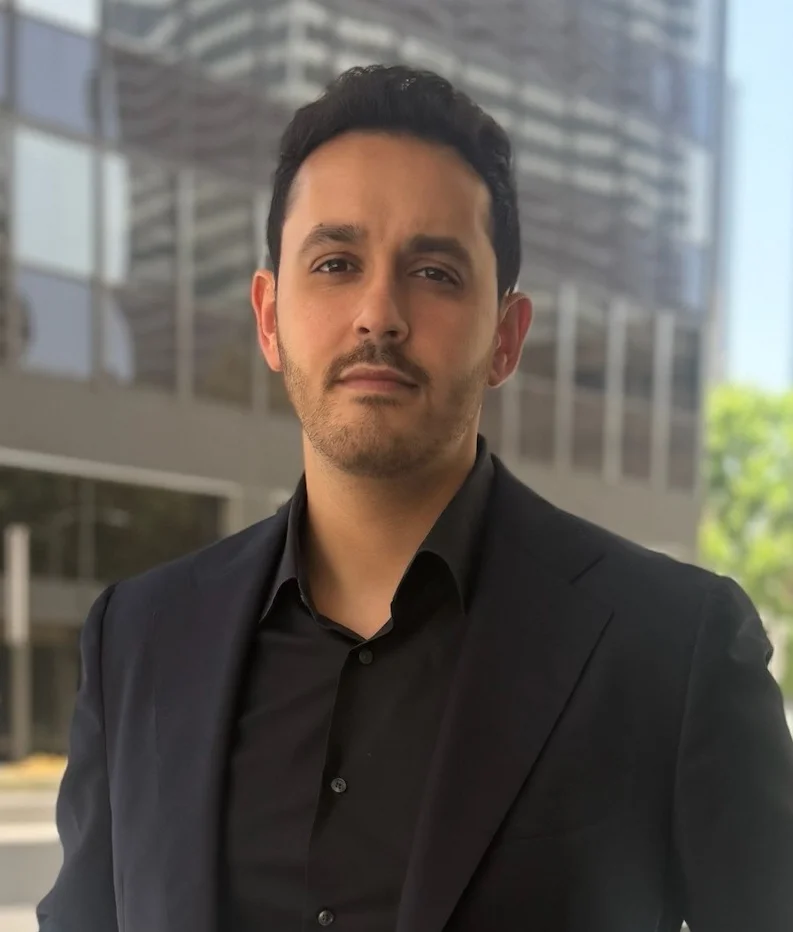 David M. Safvati
Founding Partner
David M. Safvati
Founding Partner
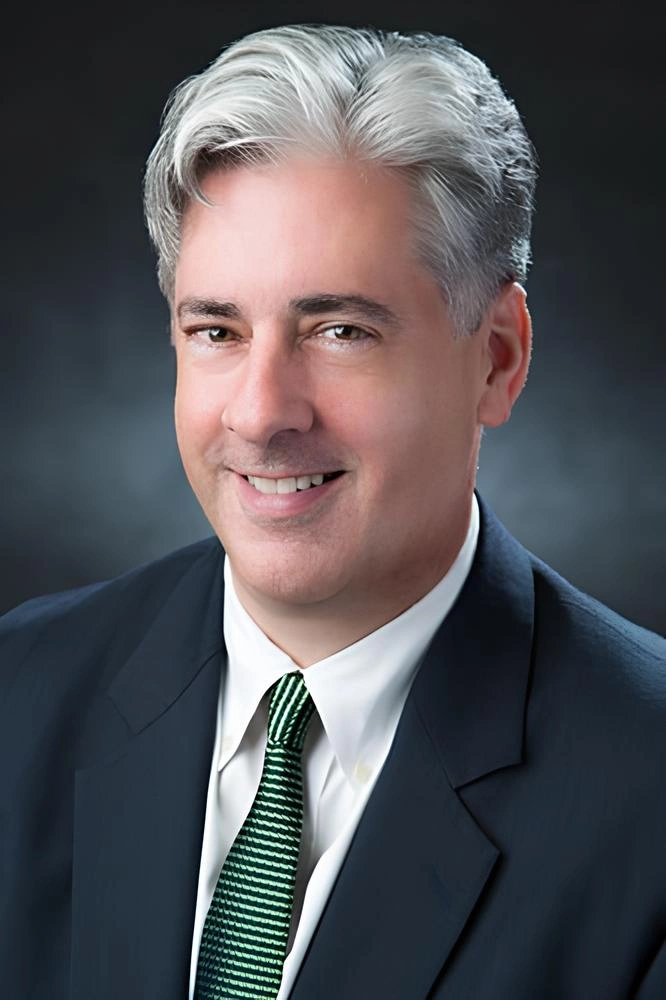 Paul S. Marks
Of Counsel
Paul S. Marks
Of Counsel
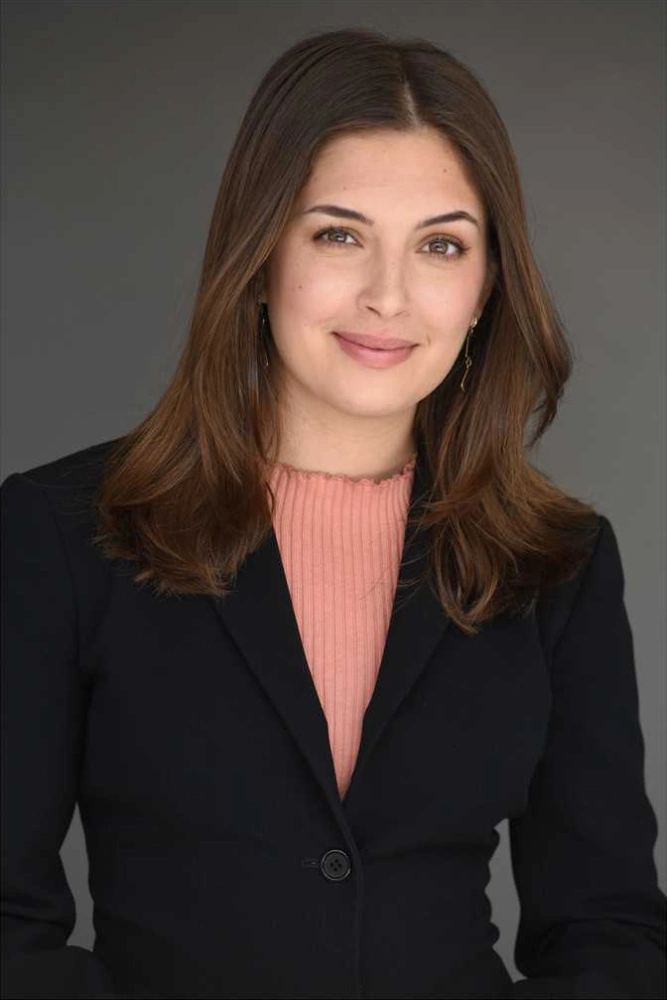 Taylor Markey
Of Counsel
Meet the Team →
Taylor Markey
Of Counsel
Meet the Team →

40+ Years Combined Experience
Top 100 Verdict in California (2024). A real trial law firm that fights for results.
Schedule a Consultation →
Free Case Evaluation
Our California attorneys offer free, confidential consultations.
Get a Free Evaluation →
We Prepare Every Case for Trial
That’s why insurance companies take us seriously — we prepare every case for trial.
View All Results →
Serving Employees Across California
Wherever you work in California, our attorneys can take your case.
Get a Free Evaluation →
Not Sure Where You Stand?
A free consultation is the fastest way to understand your options.
Talk to an Attorney →