Auto-deducted 30-minute meal
Payroll deducts a lunch the employee never took.
Employee-side representation for missed meal periods, interrupted rest breaks, and the premium-pay claims that flow from them under Lab. Code section 226.7.
Statewide California representation. Westview Law PC handles meal and rest break claims for non-exempt employees across every California county. Consultations are free and confidential.
California meal and rest break law sits at Lab. Code §226.7 and Lab. Code §512, with industry-specific detail in the IWC Wage Orders (most commonly Wage Order 5 for healthcare and personal services; Wage Order 4 for professional, technical, clerical; Wage Order 7 for mercantile; Wage Order 9 for transportation). The structure is simple. A non-exempt employee who works more than 5 hours in a workday gets an unpaid 30-minute, off-duty meal period. A second meal period is owed when the shift exceeds 10 hours. A 10-minute paid rest period is owed for every four hours worked or major fraction thereof.
The audience for this page is the employee who never quite got a real lunch, or whose rest breaks were always cut short by a manager texting "back to the floor." Westview Law PC represents non-exempt workers in retail, healthcare, hospitality, warehouse, manufacturing, transportation, and call-center roles where break violations are the rule, not the exception.
Two California Supreme Court decisions frame the modern meal and rest break case. Brinker Restaurant Corp. v. Superior Court (2012) 53 Cal.4th 1004 set the employer's duty: relieve the employee of all duty, permit a 30-minute uninterrupted break, but no obligation to police whether the employee actually leaves the workstation. Donohue v. AMN Services, LLC (2021) 11 Cal.5th 58 added the modern enforcement edge: time-clock records that round meal-period times are unlawful, and a payroll record showing a short, late, or missed meal raises a rebuttable presumption that the meal was not provided as required.
Section 512(a) requires a 30-minute meal period to start before the end of the fifth hour of work. A shift that runs from 8:00 a.m. owes the meal period by 12:59 p.m. The break must be uninterrupted, the employee must be relieved of all duty, and the employee must be free to leave the premises. Per Brinker, the employer has no duty to police whether the employee actually eats or actually leaves, only the duty to provide.
Section 512(a) also requires a second 30-minute meal period when the workday exceeds 10 hours. The second meal can be waived only by mutual written agreement and only if the total shift is no more than 12 hours and the first meal period was not waived.
The IWC Wage Orders set the rest period as 10 minutes net per four hours worked "or major fraction thereof." Major fraction means more than two hours. So a 3.5-hour shift owes a 10-minute rest break; a 6-hour shift owes two; a 10-hour shift owes three. Rest breaks are paid and on duty. The employer cannot require the employee to remain on-call during a rest break (see Augustus v. ABM Security Services, Inc. (2016) 2 Cal.5th 257, rejecting on-call rest breaks).
Section 226.7(c) requires "one additional hour of pay at the employee's regular rate of compensation" for each workday on which a meal period is not provided, and one additional hour for each workday on which a rest period is not provided. Two premiums per workday is the maximum: one for any meal violation in the day, one for any rest violation in the day.
Under Ferra v. Loews Hollywood Hotel, LLC (2021) 11 Cal.5th 858, the section 226.7 premium is paid at the "regular rate of compensation," which means the same regular-rate calculation used for overtime, including non-discretionary bonuses, shift differentials, and commissions. The base hourly rate alone is not lawful when the regular rate is higher.
Under Naranjo v. Spectrum Security Services, Inc. (2022) 13 Cal.5th 93, the section 226.7 premium is wages, not a penalty. Missed premiums trigger Lab. Code §226 wage-statement liability (up to $4,000 per employee) and §203 waiting-time penalties at separation (up to 30 days of wages). The Naranjo holding is the single most important wage-and-hour case for break litigation in the last decade.
Under Donohue v. AMN Services, LLC (2021) 11 Cal.5th 58, an employer cannot use neutral rounding to make a 28-minute meal look like 30 minutes on the payroll record. And a payroll entry showing a short, late, or missed meal creates a rebuttable presumption that the meal was not provided as required. The employer must rebut with evidence, not a policy statement.
Payroll deducts a lunch the employee never took.
Employee eats at the workstation; no written on-duty meal agreement on file.
Lunch starts at 1:15 p.m. on an 8:00 a.m. shift, past the fifth hour.
Employee called back to the floor after 22 minutes.
No second meal period offered or waived.
Security guard required to carry a radio during the rest break, contrary to Augustus v. ABM Security Services, Inc.
One-hour premium paid at hourly base, ignoring shift differential or bonus; Ferra violation.
Time-clock rounds a 27-minute meal up to 30 on the payroll record.
Wage Order 5 healthcare meal waiver applied beyond its limits.
Delivery driver cannot return to a fixed location for a meal period; no in-transit alternative offered.
Rest break ended when the line restarts before 10 minutes elapse.
Required wrap-up time between calls consumes the rest period.
Worked through lunch entirely.
Less than 30 minutes.
Past the end of the fifth hour.
No off-duty release.
Deducted but not taken.
No 10-minute paid break.
Required availability during break.
Paid at base, not regular rate.
Premium not itemized on paystub.
The W-2 issuer.
Personal liability under Lab. Code §558.1.
Where policy is the violation.
Where practice diverges from policy.
Joint employer with the host.
Lab. Code §2810.3 joint liability.
Where the franchisor controls scheduling or break policy.
Asset purchasers inheriting wage liability.
One hour per workday for any meal violation, one hour per workday for any rest violation, at the regular rate. Three years of look-back under CCP section 338(a), four years under Bus. & Prof. Code section 17200.
Section 226 wage-statement penalties up to $4,000 per employee. Lab. Code §203 waiting-time penalties up to 30 days of wages at separation. PAGA civil penalties under Lab. Code §2699 on every covered violation.
Recoverable under Lab. Code section 218.5 in wage actions and section 226(e) for wage-statement violations. PAGA fees are recoverable separately under section 2699(g)(1).
Recovery in a section 226.7 case turns on how many workdays carry a violation, how many employees share the pattern, and which derivative penalties attach. The table below shows the categories that build a claim, not a guarantee of any specific amount.
| Claim category | What it covers | Statutory basis | Look-back |
|---|---|---|---|
| Meal-period premium | One hour of regular-rate pay per workday with a meal violation | Lab. Code §226.7(c) | 3 years (4 with §17200) |
| Rest-period premium | One hour of regular-rate pay per workday with a rest violation | Lab. Code §226.7(c) | 3 years (4 with §17200) |
| Wage-statement penalty | Up to $4,000 per employee for inaccurate paystubs | Lab. Code §226(e) | 1 year |
| Waiting-time penalty | Up to 30 days of wages when premiums are unpaid at separation | Lab. Code §203 | 3 years |
| PAGA civil penalty | Per-pay-period penalty for every aggrieved employee, firm-wide | Lab. Code §2699 | 1 year (65-day LWDA tolling) |
Past results do not guarantee future outcomes. Each case depends on its specific facts. Westview Law PC discusses verified firm results during a confidential consultation. See the case results page for the public firm record.
Section 226.7 premium recovery runs three years under CCP section 338(a), or four years under Bus. & Prof. Code section 17200 unfair competition. Wage-statement penalties under Lab. Code section 226(e) run one year. PAGA penalties run one year from the most recent violation, with 65-day LWDA tolling. Waiting-time penalties under section 203 run three years. The earliest clock controls the earliest harm. Call counsel within weeks of leaving the job, not months.
The California Division of Labor Standards Enforcement (DLSE) is the agency that handles individual wage claims through its Berman process. For individual section 226.7 premium claims that the employer is willing to dispute on the merits but not the law, the DLSE works. For the typical break case (multiple employees, multiple shifts, firm-wide policy or practice), the civil court is the right forum. PAGA representative actions are filed in superior court only.
Federal forum is available under the FLSA when an off-the-clock theory dominates, but California's break-premium architecture has no federal analog and stays in state court. The California Supreme Court's clarification in Brinker and Naranjo makes superior court the forum where break litigation has the stronger procedural posture for the employee. The U.S. District Courts for the Northern, Central, Eastern, or Southern District of California take any federal-overlay file.
The wage-statement SOL is one year. Talk to counsel before the next paystub cycle closes. Call (310) 906-4862 or use the form below.
Call (310) 906-4862 Open the consultation formA solo section 226.7 claim for a handful of missed meals at the DLSE is plausibly a self-filed claim. The Berman process is informal. The trade-off is that DLSE individual claims rarely capture the wage-statement, waiting-time, and PAGA stack that doubles or triples the recovery in court. A general-practice attorney may file the complaint, but the case turns on payroll-data analysis and on the Brinker, Donohue, Ferra, Naranjo framework. If the violation pattern is firm-wide, the right call is wage-and-hour counsel. If it is one missed lunch and an apology, file it yourself.
30 minutes, off duty, before the end of the fifth hour of work. Lab. Code section 512(a) and Wage Order 5 set the rule. On an 8:00 a.m. shift, the meal must start by 12:59 p.m. A second 30-minute meal is owed when the workday exceeds 10 hours, and the second meal can be waived only by mutual written agreement when the shift is 12 hours or less and the first meal was taken.
10 minutes net, paid, on duty, for every four hours worked or major fraction thereof. Major fraction means more than two. So a 3.5-hour shift owes one rest break, a 6-hour shift owes two, and a 10-hour shift owes three. The rest break is paid and counts as time worked.
No. Augustus v. ABM Security Services, Inc. (2016) 2 Cal.5th 257 held that on-call rest periods are not lawful. The employee must be relieved of all duty and free from employer control during the rest period. Carrying a radio or being available to respond fails the rule.
Brinker Restaurant Corp. v. Superior Court (2012) 53 Cal.4th 1004 set three requirements. The employer must relieve the employee of all duty, permit a 30-minute uninterrupted meal period, and not impede or discourage the employee from taking it. The employer is not required to police whether the employee actually leaves the workstation or eats. If the employee voluntarily works through lunch despite a real opportunity to take the break, no violation occurs.
Donohue v. AMN Services, LLC (2021) 11 Cal.5th 58 did two things. It held that rounding meal-period times is unlawful, even neutral rounding. And it held that a payroll record showing a short, late, or missed meal period creates a rebuttable presumption that the meal was not provided as required. The employer must produce evidence (not just a policy statement) to overcome the presumption.
Regular rate of compensation. Ferra v. Loews Hollywood Hotel, LLC (2021) 11 Cal.5th 858 confirmed that the section 226.7 premium uses the same regular-rate concept as overtime. The employer must include non-discretionary bonuses, shift differentials, and commissions. If the employer paid the premium at base only, the underpayment is its own claim subject to all the same penalties.
Under Donohue, a paystub showing a 30-minute meal that was actually worked is presumptively unlawful when the punch data reveals the true length. The employee's testimony, supported by manager texts or witness accounts, can rebut the paystub presumption. Many employers' time-clock systems flag short meals automatically; that flag is your evidence.
Yes, but only in narrow circumstances. The first meal period can be waived by mutual consent when the workday is 6 hours or less. The second meal period can be waived by mutual written agreement when the workday is 12 hours or less and the first meal was not waived. A blanket on-duty meal-period waiver requires a separate written agreement, must be revocable at any time, and is allowed only when the nature of the work prevents an off-duty meal.
One hour of pay at the regular rate per workday with a meal violation, plus one hour per workday with a rest violation, capped at two premiums per day. Over three or four years, the math becomes significant. On top of the premiums, wage-statement penalties up to $4,000, waiting-time penalties up to 30 days of wages at separation, and PAGA civil penalties of $100 per pay period per employee for the initial violation, scaled by the 2024 PAGA reform.
Wage Order 5 has a healthcare meal-period waiver that allows a 12-hour shift to be worked with one meal period waived. The waiver must be in writing and revocable at any time. Gerard v. Orange Coast Memorial Medical Center (2018) 6 Cal.5th 443 confirmed the validity of the Wage Order 5 waiver. The waiver does not apply to rest periods, and it does not apply where the shift exceeds 12 hours.
For California intrastate drivers, yes. For interstate commercial drivers under FMCSA, the Ninth Circuit upheld FMCSA preemption of California meal and rest break rules in International Brotherhood of Teamsters, Local 2785 v. Federal Motor Carrier Safety Admin. (9th Cir. 2021) 986 F.3d 841. If you are an intrastate driver, the section 226.7 framework still applies. If you are interstate under FMCSA, the federal rules control.
Three years for the section 226.7 premium under CCP section 338(a). Four years if combined with Bus. & Prof. Code section 17200 unfair-competition theory. Wage-statement penalties under section 226 run one year. PAGA penalties run one year, with 65-day LWDA tolling. The first clock to expire is the wage-statement penalty clock. The lookback shortens fast after separation.
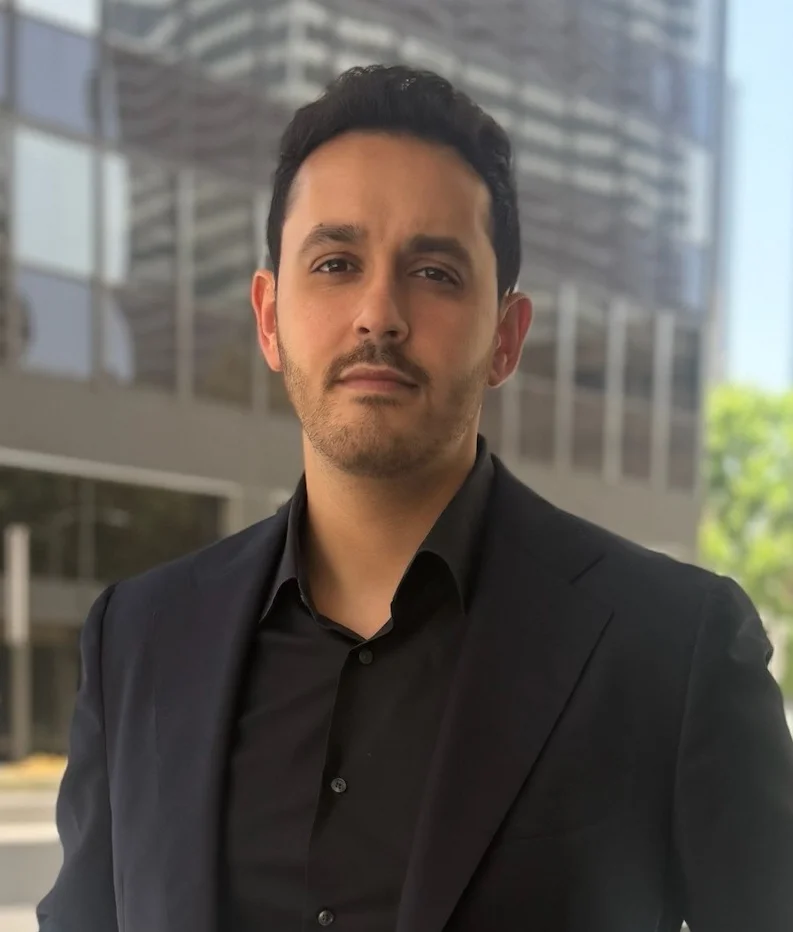
David M. Safvati is a California-licensed employment lawyer at Westview Law PC, focused on wage-and-hour class and PAGA representative actions, with a docket weighted toward section 226.7 meal and rest break litigation. Education: Loyola Law School, J.D. Bar admissions: State Bar of California, admitted 2019; U.S. District Court for the Central District of California; U.S. District Court for the Northern District of California. CA Bar #326605 (verify on calbar.ca.gov). Member, California Employment Lawyers Association. Speaks regularly on the application of Brinker, Donohue, Ferra, and Naranjo to break litigation.
 David M. Safvati
Founding Partner
David M. Safvati
Founding Partner
 Paul S. Marks
Of Counsel
Paul S. Marks
Of Counsel
 Taylor Markey
Of Counsel
Meet the Team →
Taylor Markey
Of Counsel
Meet the Team →

40+ Years Combined Experience
Top 100 Verdict in California (2024). A real trial law firm that fights for results.
Schedule a Consultation →
Free Case Evaluation
Our California attorneys offer free, confidential consultations.
Get a Free Evaluation →
We Prepare Every Case for Trial
That’s why insurance companies take us seriously — we prepare every case for trial.
View All Results →
Serving Employees Across California
Wherever you work in California, our attorneys can take your case.
Get a Free Evaluation →
Not Sure Where You Stand?
A free consultation is the fastest way to understand your options.
Talk to an Attorney →