Replacement by a substantially younger worker
Employee over 55 terminated, replaced within weeks by a worker in their 30s with less experience.
Employee-side representation for California workers aged 40 and older pushed out, passed over, or pressured to retire because of their age. Free, confidential case review.
Statewide California representation. Westview Law PC handles age discrimination cases for California employees in every county. Consultations are free and confidential.
California protects workers aged 40 and older against employment decisions made because of their age. The state statute is Gov. Code §12940, the Fair Employment and Housing Act (FEHA), which lists age as a protected characteristic in subdivision (a). The parallel federal statute is the Age Discrimination in Employment Act, 29 U.S.C. §621 et seq. Both laws prohibit hiring, firing, demoting, harassing, or denying promotions based on age. They cover terms and conditions of employment, including pay, training, schedule, and reduction-in-force selection.
This page is written for the California employee who was told the company wanted "fresh perspective," whose role was eliminated in a layoff that hit only employees over 50, who was replaced by someone substantially younger after years of strong reviews, or who was steered toward retirement after a new manager arrived. Westview Law PC represents California employees in FEHA and ADEA age cases through the California Civil Rights Department (CRD), the Equal Employment Opportunity Commission (EEOC), and federal and state courts.
The legal standards differ between FEHA and ADEA, and the difference matters. FEHA uses a "substantial motivating factor" causation standard under Harris v. City of Santa Monica (2013) 56 Cal.4th 203. ADEA requires "but-for" causation under Gross v. FBL Fin. Servs., Inc. (2009) 557 U.S. 167. The same facts can satisfy FEHA and still fail ADEA, which is one reason California employees over 40 generally have a stronger remedy in state court under FEHA.
Under Guz v. Bechtel National, Inc. (2000) 24 Cal.4th 317, the employee establishes a prima facie age case by showing: (1) membership in the protected class (40 or older); (2) qualified for the position; (3) an adverse employment action; and (4) circumstances suggesting age was a motivating factor, such as replacement by a substantially younger worker or disparate treatment of older employees in a layoff. The framework comes from McDonnell Douglas Corp. v. Green (1973) 411 U.S. 792, adopted into California law by Guz.
FEHA asks whether age was a "substantial motivating factor" in the decision. Harris v. City of Santa Monica (2013) 56 Cal.4th 203. ADEA asks whether age was the "but-for" cause, meaning the decision would not have happened without it. Gross v. FBL Fin. Servs., Inc. (2009) 557 U.S. 167. The FEHA standard is easier for the employee to meet. A jury can find FEHA liability even where the employer had legitimate reasons too, as long as age was a substantial factor in the decision.
If the employer offers a non-age reason, the employee must show pretext. Reeves v. Sanderson Plumbing Products, Inc. (2000) 530 U.S. 133 holds that the prima facie case plus disbelief of the employer's reason can support a finding of liability without separate proof of discriminatory intent. The fact finder can infer the real motive from the employer's lie. Reeves is heavily cited in California age cases at summary judgment.
CRD charge filing: three years from the last unlawful act under Gov. Code §12960(e). Civil suit: one year from the right-to-sue letter under Gov. Code §12965(c)(1)(C). EEOC charge for an ADEA file: 300 days because California has CRD as a deferral agency. After EEOC right-to-sue, 90 days to file in federal court.
Employee over 55 terminated, replaced within weeks by a worker in their 30s with less experience.
Layoff selection list skews 50-plus while the role remained.
References to "lifers," "old guard," "fresh blood," or "retirement age" in the months before termination.
Pressure conversations and a waiver-of-claims package presented under deadline.
Years of "exceeds expectations" reviews replaced with sudden criticism after a younger supervisor took over.
Senior candidate passed over for an external hire 15 years younger.
Older employee told the company is "investing in the future" of younger workers.
Older employees take the largest comp reductions in a "rightsizing."
Salesperson over 55 reassigned to a smaller territory after years of top performance.
"Conversations" with employees turning 65 about transition timing.
Repeated jokes about age, memory, or technology skill that HR refused to remedy.
OWBPA-deficient release demanded under pressure.
Termination of a worker 40 or older where age was a substantial motivating factor.
Older applicant qualified for the role rejected in favor of a substantially younger candidate.
Senior candidate passed over without legitimate, non-age reasons.
Layoff decisions that disproportionately fall on older employees.
Severe or pervasive age-based ridicule, slurs, or exclusion.
Adverse action after an internal or CRD age complaint, prohibited by section 12940(h).
Older worker excluded from advancement-relevant training given to younger peers.
Pressure tactics that produce a resignation that constructively functions as termination.
Facially neutral practices (last-in-first-out rules, skills tests, age-correlated criteria) that fall hardest on older workers.
FEHA liability under section 12940(a). ADEA liability for employers with 20 or more employees.
Individual liability for harassment under section 12940(j); aiding and abetting under section 12940(i).
Aiding-and-abetting exposure when HR rubber-stamped a discriminatory action.
Integrated-enterprise liability when corporate separateness fails.
Joint employer responsibility for the placement and the host worksite.
Where the acquirer continued the operation that produced the discrimination.
FEHA reaches a "person using the services of one or more employees."
Where the host or franchisor controlled the employment decisions at issue.
Back pay from the unlawful action through judgment. Front pay where reinstatement is not feasible, often two to five years of future earnings depending on the worker's tenure, role, and re-employment prospects. The mitigation duty applies.
Emotional distress damages without a statutory cap on FEHA claims. Punitive damages available where the employer acted with malice, oppression, or fraud under Civ. Code section 3294 and a managing agent ratified the conduct. ADEA permits liquidated damages equal to back pay on willful violations under 29 U.S.C. section 626(b).
Recoverable to the prevailing FEHA plaintiff under Gov. Code §12965(c)(6). ADEA fee shifting under 29 U.S.C. section 216(b), incorporated through section 626(b).
Specific past results in age discrimination matters are confidential and reviewed with you during a consultation. The firm's verified public outcomes across its litigation practice include:
Past results do not guarantee future outcomes. Each case depends on its specific facts.
CRD charge: three years from the last unlawful act under Gov. Code section 12960(e). After the right-to-sue letter, one year to file in superior court under Gov. Code section 12965(c)(1)(C). EEOC ADEA charge: 300 days from the unlawful act because California is a deferral state. After EEOC notice of right to sue, 90 days to file in federal court under 29 U.S.C. section 626(e). Missing any deadline ends the claim. The clock starts on the date of the adverse action, not the date the employee learned the action was discriminatory.
The California Civil Rights Department (CRD), formerly the Department of Fair Employment and Housing (DFEH), is the state agency that processes FEHA charges. Filed charges trigger an investigation or a quick right-to-sue letter on request. CRD operates regional offices in Oakland, Fresno, Los Angeles, San Bernardino, and San Diego, plus a statewide intake line. After CRD issues the right-to-sue letter, the case goes to California superior court for the county where the unlawful act took place or where the employee resides.
The Equal Employment Opportunity Commission (EEOC) handles ADEA charges, with work-sharing into CRD. After EEOC issues the notice of right to sue, the case can be filed in one of four federal districts in California: the Northern District of California, the Eastern District of California, the Central District of California, or the Southern District of California. Plaintiffs usually keep FEHA cases in state court because of the broader causation standard, the uncapped damages, and the fee-shifting statute that favors the prevailing employee. The arbitration question, raised when an employer points to a signed arbitration agreement, is governed in California by Sandquist v. Lebo Automotive, Inc. (2016) 1 Cal.5th 233 on who decides class-arbitration availability, and by the broader body of Armendariz v. Foundation Health Psychcare Services, Inc. (2000) 24 Cal.4th 83 unconscionability law.
If you signed a separation agreement, do not destroy it. Federal OWBPA rules attached to ADEA waivers carry strict disclosure and consideration-period requirements. A defective waiver can be invalid.
Call (310) 906-4862 Open the consultation formThe CRD intake portal is open to self-represented employees. A charge filed pro se will get processed and a right-to-sue letter will issue. The harder questions come after: which forum, which causes of action, what to plead, how to handle the arbitration motion, how to develop the comparator and statistical evidence. Age discrimination cases turn on the documentary record from performance reviews, HR notes, and email. A general-practice attorney can file the complaint; whether the file is built to survive summary judgment on the Reeves pretext analysis is a separate question. If the comparator evidence is clean and the timing tight, the case may be straightforward. If the employer ran a layoff with a written justification and the data is ambiguous, the case becomes a project. Pick the path that fits the facts.
Employees aged 40 and older. FEHA covers age as a protected class under Gov. Code section 12940(a), and the ADEA covers workers 40 and older under 29 U.S.C. section 631(a). California state law applies to employers with five or more employees. ADEA applies to employers with 20 or more employees. There is no upper age limit under either statute. Federal age protection runs in parallel with FEHA, and California employees usually file both.
The causation standard. FEHA asks whether age was a "substantial motivating factor" under Harris v. City of Santa Monica (2013) 56 Cal.4th 203. ADEA asks whether age was the "but-for" cause under Gross v. FBL Fin. Servs., Inc. (2009) 557 U.S. 167. The FEHA standard is easier for an employee to meet. Damages also differ: FEHA emotional-distress damages have no statutory cap; ADEA permits liquidated damages on willful violations but does not allow uncapped compensatory damages.
Direct evidence is rare. Most cases rely on circumstantial proof: replacement by a substantially younger worker, comparator employees treated more favorably, performance reviews that flipped after a manager change, ageist comments by decision-makers, and statistical patterns in layoff selections. Under Reeves v. Sanderson Plumbing Products, Inc. (2000) 530 U.S. 133, the fact finder can disbelieve the employer's stated reason and infer discrimination from that disbelief plus the prima facie evidence.
RIF cases turn on selection criteria and demographics. If the layoff disproportionately hit workers over 40, that pattern can support disparate-impact analysis. If the employee's specific selection was driven by age-correlated criteria ("retirement-eligible," "long tenure," "highest comp") with no legitimate justification, the FEHA disparate-treatment claim can survive. Pull the headcount data for the role before and after, and the ages of who was kept versus who was let go.
Not without counsel review. The federal Older Workers Benefit Protection Act (OWBPA) at 29 U.S.C. section 626(f) requires age-claim waivers to include specific disclosures (a 21-day consideration period for individual waivers, 45 days for group programs, a 7-day revocation period, written language meeting OWBPA standards). A waiver that does not meet OWBPA is invalid as to ADEA claims. The waiver may also affect FEHA claims if it is broad enough. Counsel review takes one or two consultations and can preserve the case.
Federal courts generally require an age gap of at least eight to ten years, though no rigid line exists. O'Connor v. Consolidated Coin Caterers Corp. (1996) 517 U.S. 308 holds that the replacement does not have to be outside the protected class; what matters is the age gap. A 55-year-old replaced by a 45-year-old can support an inference of age bias. A 55-year-old replaced by a 53-year-old generally cannot.
Yes. FEHA recognizes age-based harassment under Gov. Code section 12940(j). The conduct must be severe or pervasive enough to alter the conditions of employment, the same standard that applies to sex or race harassment. Repeated jokes about memory, technology skill, "old guard," or retirement age from a supervisor or co-workers that HR failed to remedy can meet the standard.
The "cat's paw" doctrine applies. If a biased manager influenced the decision-making process and the formal decision-maker relied on the biased input, the employer can be liable. Staub v. Proctor Hospital (2011) 562 U.S. 411 set the federal rule. California courts apply the same logic under FEHA. The discovery focus is on who fed the decision-maker information and what their motivations were.
Yes for FEHA. Administrative exhaustion is a prerequisite to a FEHA civil action. The CRD charge must be filed within three years of the last unlawful act under Gov. Code section 12960(e). After CRD issues the right-to-sue letter, the civil suit must be filed within one year. For ADEA, an EEOC charge is required within 300 days, followed by a 60-day waiting period or an EEOC notice of right to sue.
"Position elimination" is a common defense in age cases. The employee can rebut it by showing the role was filled by a substantially younger worker under a different title, the duties were redistributed among younger employees, or the position was re-posted shortly after. Replacement by transfer or duty reassignment counts. The defense fails when the documentary evidence shows the function continued under another name.
Often, but not always. California courts review arbitration agreements for unconscionability under Armendariz v. Foundation Health Psychcare Services, Inc. (2000) 24 Cal.4th 83 and apply Sandquist v. Lebo Automotive, Inc. (2016) 1 Cal.5th 233 to questions about who decides class-arbitration availability. The Federal Arbitration Act applies to most agreements covering interstate-commerce employers. A finding of procedural and substantive unconscionability can invalidate an agreement. The motion practice on the arbitration question is the first significant fight in many cases.
Recovery depends on the lost wages, the duration of unemployment or wage gap, the emotional-distress evidence, and whether punitive damages are available. Lost wages cover the period from termination through judgment, plus front pay where reinstatement is not feasible. FEHA emotional distress has no statutory cap. Punitive damages require malice, oppression, or fraud and a managing agent. Attorney's fees flow to the prevailing plaintiff under Gov. Code section 12965(c)(6). For a senior worker with strong tenure and a clear comparator record, multi-year wage damages plus emotional-distress damages drive most recoveries.
David M. Safvati is a California-licensed employment lawyer at Westview Law PC. The practice focuses on FEHA disparate-treatment cases, with age, disability, and pregnancy files forming the bulk of the docket. Education: Loyola Law School, J.D. Bar admissions: State Bar of California, admitted 2019; U.S. District Court for the Central District of California; U.S. District Court for the Northern District of California; U.S. District Court for the Eastern District of California; U.S. District Court for the Southern District of California. CA Bar #326605 (verify on calbar.ca.gov). Member, California Employment Lawyers Association. Speaks on the FEHA causation standard after Harris v. City of Santa Monica and the strategic implications of Reeves pretext analysis at summary judgment.
 David M. Safvati
Founding Partner
David M. Safvati
Founding Partner
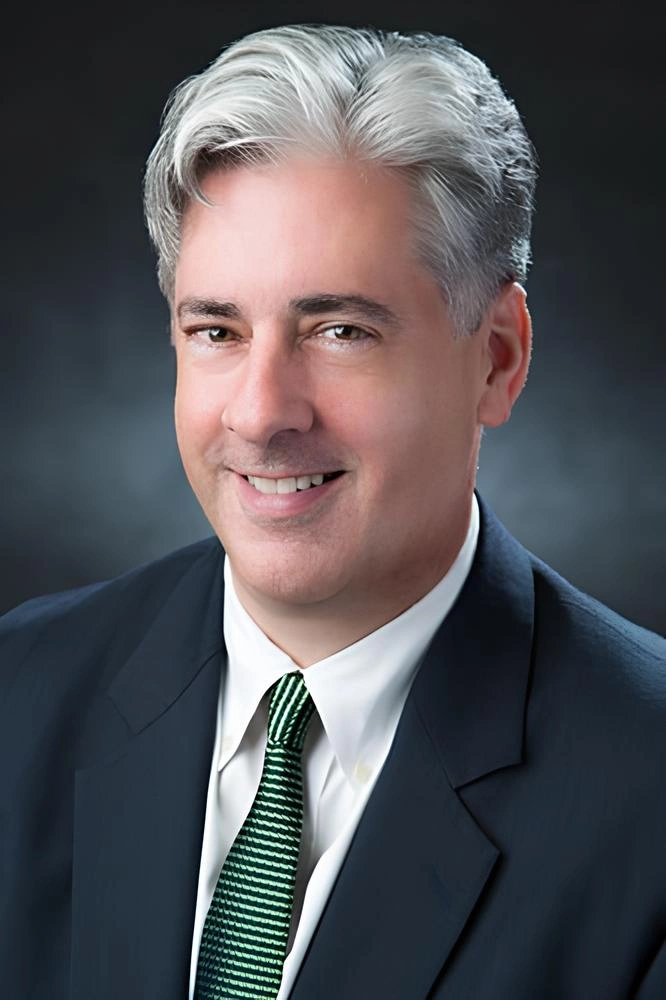 Paul S. Marks
Of Counsel
Paul S. Marks
Of Counsel
 Taylor Markey
Of Counsel
Meet the Team →
Taylor Markey
Of Counsel
Meet the Team →

40+ Years Combined Experience
Top 100 Verdict in California (2024). A real trial law firm that fights for results.
Schedule a Consultation →
Free Case Evaluation
Our California attorneys offer free, confidential consultations.
Get a Free Evaluation →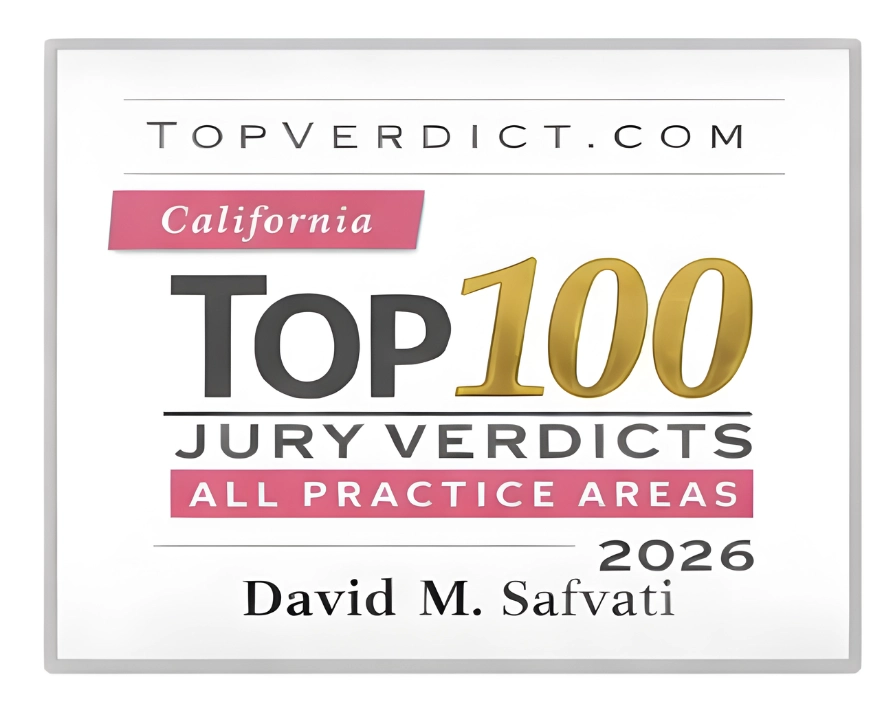
We Prepare Every Case for Trial
That’s why insurance companies take us seriously — we prepare every case for trial.
View All Results →
Serving Employees Across California
Wherever you work in California, our attorneys can take your case.
Get a Free Evaluation →
Not Sure Where You Stand?
A free consultation is the fastest way to understand your options.
Talk to an Attorney →