




Workplace retaliation can happen after an employee reports discrimination, harassment, unsafe conditions, or other workplace concerns. Common examples include unfair write-ups, reduced hours, demotions, or sudden termination after speaking up. Understanding these retaliation examples can help employees recognize their rights and know when to seek legal support.
For years, Westview Law has helped employees understand their rights in workplace retaliation cases. The firm works with individuals facing unfair treatment after reporting harassment, discrimination, wage violations, or other protected concerns. Westview Law provides clear guidance and compassionate support throughout the legal process. If you believe you experienced retaliation at work, contact us today to discuss your situation and learn about your legal options.
This post explains common workplace retaliation examples, warning signs employees should watch for, and the legal rights that may help protect them.
What Is Workplace Retaliation
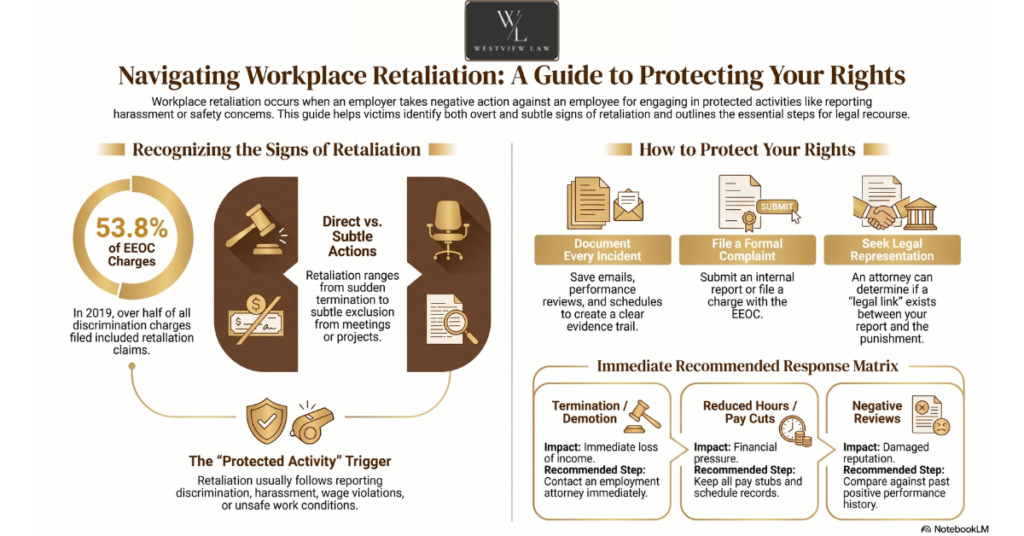
Workplace retaliation or retaliation in the workplace happens when an employer takes negative action against an employee for engaging in a protected activity. This can include reporting discrimination, filing a complaint, requesting accommodations, or participating in a workplace investigation. Retaliation occurs in many forms, such as termination, demotion, reduced hours, or unfair treatment.
Retaliation often happens when an employer reacts negatively to an employee speaking up about workplace concerns. In some situations, retaliation begins after an employer punishes an employee for raising concerns or exercising workplace rights. Some actions may be obvious, while others can be more subtle. Employees may notice sudden changes in treatment, increased scrutiny, or exclusion from important workplace activities. These actions can create stress and uncertainty and may qualify as a retaliatory action.
Addressing retaliation is important for both employees and workplaces. Employees should be able to raise concerns without fear of punishment. A workplace that discourages retaliation can build trust and encourage open communication. It can also help create a healthier and more respectful work environment.
Common Examples of Workplace Retaliation
Workplace retaliation can happen in obvious ways or through smaller actions that build over time. It often occurs after an employee reports employment discrimination, sexual harassment, raises workplace concerns, or takes part in a protected activity. Recognizing these actions can help employees understand when something may be wrong. Not every workplace conflict is retaliation, but certain patterns can raise concerns.
Direct retaliation is often easier to recognize. Examples can include termination, demotion, reduced pay, or sudden disciplinary actions without a clear reason as an adverse action. Some employees may also receive unfair negative performance reviews after making a complaint. These actions can have an immediate effect on a person's job and income.
Retaliation can also be more subtle. An employee may suddenly be excluded from important meetings or removed from key projects. Others may notice changes in job duties that reduce responsibilities or limit opportunities. These actions may seem small at first but can affect a person's role over time, especially if tied to discrimination based on protected characteristics.
Social treatment in the workplace can also change. Some employees may feel isolated by coworkers or left out of workplace activities. This type of workplace ostracism can affect morale and create stress. Employees may also face inappropriate conduct, including unwanted sexual advances. Understanding these examples can help employees recognize possible warning signs and take steps to protect their rights.
Exploring the Impact of Workplace Retaliation on Employees
Workplace retaliation can affect more than a person's job. It can also affect emotional well-being and overall quality of life. Employees who feel targeted at work may struggle with uncertainty and stress. Over time, these feelings can become part of a stressful process that becomes difficult to manage.
Many employees experience increased stress and anxiety after facing retaliation. Worrying about job security, changes to a work schedule, or unfair treatment can create emotional pressure. Some people may also begin to feel isolated or overwhelmed. Constant stress can affect both work and personal life.
Retaliation can also affect self-esteem and confidence. Employees may start questioning their abilities or value in the workplace. Negative treatment or an adverse change in responsibilities can make people feel discouraged, even when they have done nothing wrong. These emotional effects can continue long after the workplace issue ends.
The impact can also extend to a person's career. Employees may miss out on promotions, projects, or professional opportunities. Workplace retaliation can also harm a person's professional reputation if unfair treatment affects performance or results in being fired.
Legal Framework and Protections Against Workplace Retaliation
Workplace retaliation laws are designed to protect employees who speak up about problems at work. These laws help ensure workers can report concerns without fear of punishment. They also help create safer and fairer work environments. Understanding these protections under federal law can help employees recognize and protect their rights.
Several laws provide protection against workplace retaliation. Title VII of the Civil Rights Act protects employees who report discrimination or participate in workplace investigations. The Whistleblower Protection Act protects certain employees, including some workers in the federal sector, who report misconduct or unlawful activity. The Occupational Safety and Health Administration (OSHA) states that it enforces more than 20 federal whistleblower protection laws that prohibit retaliation against employees who report safety concerns or unlawful conduct. TheFair Labor Standards Act also includes protections for workers who raise concerns about wage-and-hour issues.
Employees generally have the right to report workplace problems without fear of retaliation. This may include reporting discrimination, harassment, safety concerns, or unlawful conduct. Workers who participate in investigations or exercise protected rights may also receive legal protection. Knowing these rights can help employees feel more confident when raising concerns.
Employees who believe they experienced retaliation may have deadlines for filing claims. These time limits can vary depending on the law and the circumstances involved. Remedies may include lost wages, reinstatement, compensation, or other legal relief. Taking timely action can help preserve important rights and options.
Identifying Workplace Retaliation

Workplace retaliation is not always easy to recognize. Sometimes the signs can be obvious, while other times they may be more subtle. According to the U.S. Equal Employment Opportunity Commission (EEOC), retaliation was the most frequently filed workplace discrimination charge in fiscal year 2019. The agency reported that 53.8% of all charges filed that year included retaliation. Employees who report concerns, request medical leave, take FMLA leave, or take part in protected activities may notice that others treat them differently. Understanding the warning signs can help identify possible problems early.
One common sign is a sudden change in behavior from supervisors or management. An employee who previously received positive feedback may suddenly face increased criticism or different treatment. Disproportionate disciplinary actions can also raise concerns. For example, an employee may receive unusually harsh discipline for minor issues if an employer acts differently after a protected activity.
Isolation in the workplace can also be a warning sign. Some employees may find themselves excluded from meetings, projects, or important workplace discussions. When coworkers or supervisors treat you differently after you make a complaint, it may also create concerns. A reasonable employee may view these changes or other forms of workplace conduct as potential warning signs. Changes like these do not automatically mean that someone has retaliated, but they may deserve closer attention.
Keeping detailed records can help protect employees if concerns arise. Save emails, messages, performance reviews, and notes about workplace incidents. Collecting witness statements and reporting concerns to HR or legal representatives may also help create a clear record. Strong documentation can be valuable if questions arise later.
Workplace Retaliation: Common Actions vs Employee Response
Workplace retaliation can affect employees in many different ways, both professionally and personally. Some actions may be obvious, while others can develop slowly over time and create stress, uncertainty, or career setbacks. The table below compares common workplace retaliation examples, why they may raise concerns, and steps employees can consider taking to help protect their rights.
| Workplace Action | Why It May Raise Concerns | What Employees Can Do |
|---|---|---|
| Sudden termination after reporting misconduct | Timing may suggest retaliation | Save records and speak with an employment attorney |
| Demotion or reduced responsibilities | Can limit career growth and opportunities | Document job duty changes and performance history |
| Reduced hours or pay cuts | May create financial pressure after speaking up | Keep schedules, pay stubs, and written communications |
| Unfair write-ups or negative reviews | May damage reputation or future advancement | Compare past reviews and gather supporting evidence |
| Exclusion from meetings or projects | Can isolate employees and reduce visibility | Track changes in participation and assignments |
| Increased scrutiny or discipline | Different treatment may signal retaliation | Keep detailed notes of incidents and conversations |
| Workplace ostracism or isolation | Can affect morale and emotional well-being | Report concerns to HR and maintain documentation |
| Denied promotions or opportunities | May impact long-term career growth | Record qualifications and promotion discussions |
What Are the Steps to Take if You Face Workplace Retaliation?

Facing workplace retaliation can feel stressful and overwhelming. Knowing what steps to take can help you protect your rights and make informed decisions. Here are some important steps to consider if you believe you are experiencing workplace retaliation and may need to preserve evidence before pursuing legal action.
Step 1: File a Complaint
If you believe retaliation has occurred, you may be able to file a retaliation complaint or an EEO complaint with the Equal Employment Opportunity Commission (EEOC). When an employee files a complaint, it may start an investigation into whether workplace rights were violated. Employees should also complain through appropriate internal procedures when available.
Step 2: Gather Documentation and Evidence
Save emails, text messages, performance reviews, job descriptions, and written workplace complaints. Keep notes with dates, conversations, and details that may help support your concerns. Statements or observations from co-workers may also help support your case.
Step 3: Seek Legal Representation
Legal guidance can help you better understand your rights and available options. A lawyer can review your situation, evaluate a possible legal claim, and represent employees facing workplace retaliation.
Step 4: Learn How Westview Law Can Help
Westview Law can help review workplace retaliation concerns and explain available legal options. They can also provide support with documentation, claims, and employment-related issues involving supervisors, a manager, or treatment compared to other employees.
Step 5: Understand the Benefits of Legal Advice
Speaking with a legal professional can help you avoid mistakes and better understand the process. Early guidance may also help protect important evidence, explain rights involving job applicants, and address concerns related to protected EEO activity.
How Can an Attorney Help in a Workplace Retaliation Lawsuit?

An attorney can help you understand whether your situation meets the legal standard for workplace retaliation. Not every unfair action is legally actionable or illegal, so a lawyer can review the facts, identify protected activity, and determine whether there is a strong link between your complaint and the employer’s response. They can also help you gather and organize key evidence, such as emails, performance reviews, schedules, and witness statements, so your claim is supported from the start.
A lawyer also helps you navigate the legal process, which can be time-sensitive and complex. This includes filing complaints with agencies like the EEOC, meeting strict deadlines, and responding to employer defenses. In many cases, attorneys also negotiate settlements or represent you in litigation if needed. Having legal guidance can make it easier to protect your rights while focusing on moving forward, especially if workplace concerns involve a disability or other protected issue.
In a past case, an employee contacted Westview Law after reporting workplace safety concerns and then experiencing sudden negative performance reviews and reduced work hours shortly after. Our team reviewed the timeline, gathered supporting records such as emails, schedules, and written feedback, and helped the employee build a clear retaliation claim. After filing the complaint and engaging with the employer, the matter was resolved through a favorable settlement that included compensation for lost wages and adjustments to the employee’s record, allowing the individual to move forward with greater stability.
Ready to Fight Against Workplace Retaliation?
Workplace retaliation can take many forms. An employer may cut hours, issue unfair discipline, deny promotions, reassign duties, or terminate an employee after they report harassment, discrimination, wage violations, or unsafe working conditions. These actions can leave employees feeling stressed and uncertain about their future. Knowing the common examples of retaliation can help workers recognize when something may be wrong.
Employees have legal protections when they speak up about unlawful workplace behavior. Keeping records, saving emails, and documenting changes at work may help support a retaliation claim. Every situation is different, and deadlines may apply. Speaking with an employment attorney can help employees better understand their rights, possible legal options, and the next steps they may want to take.
Have you been treated differently at work after speaking up about a serious concern? Westview Law has years of experience helping employees navigate retaliation claims involving wrongful termination, demotions, reduced hours, and hostile work environments. Our firm understands how stressful these situations can feel and works to protect the rights of employees at every stage. Contact us today to discuss your case and find out what legal steps may be available to you.
Frequently Asked Questions
This FAQ section answers common questions about workplace retaliation and provides examples of actions that may be considered retaliatory. It explains employee rights, warning signs to watch for, and steps employees can take if they believe they have been treated unfairly.
Can You Provide Some Examples of Workplace Retaliation?
Examples of workplace retaliation can include termination, demotion, reduced work hours, unfair disciplinary actions, or negative performance reviews. It may also involve being excluded from meetings, projects, or promotion opportunities after reporting a workplace concern.
How Common Is Workplace Retaliation?
Workplace retaliation is one of the most frequently reported workplace issues. Retaliation claims often appear alongside complaints involving discrimination, harassment, or other employment concerns.
What Are Some Subtle Forms of Workplace Retaliation That Employees Should Be Aware Of?
Subtle retaliation can include sudden schedule changes, exclusion from important projects, reduced responsibilities, or being left out of workplace activities. Employees may also notice increased scrutiny or treatment that differs from coworkers.
How Can Employees Protect Themselves From Workplace Retaliation?
Keep records of emails, messages, workplace complaints, and important conversations. Write down dates and details of workplace events. Staying organized can help support your concerns if issues arise later.
What Are the Legal Protections Available to Employees Who Experience Workplace Retaliation?
Federal and state laws may protect employees from retaliation after engaging in protected activities. These protections can apply to reporting discrimination, requesting accommodations, participating in investigations, or raising concerns about unlawful conduct.
Disclaimer: The information provided on this blog is for general informational purposes only and does not constitute legal advice. Reading this content does not create an attorney-client relationship. Laws and regulations vary by jurisdiction and may change over time, so you should consult a qualified employment attorney directly for advice regarding your specific situation. Past examples, case studies, or hypothetical scenarios are illustrative only and do not guarantee similar results.