



California law protects employees from workplace harassment, but many workers are unsure what unlawful behavior actually qualifies. Workplace harassment in California refers to unwelcome conduct based on protected characteristics like race, sex, religion, age, disability, or gender identity, that creates a hostile, intimidating, or offensive work environment.
Examples of workplace harassment include unwanted sexual advances, repeated offensive jokes or insults, unwelcome touching or physical intimidation, sharing or displaying offensive images or messages, and excluding or mistreating someone because of their protected traits. Knowing what qualifies as workplace harassment in California is important because it helps you recognize unlawful behavior, take action early, and protect your rights under the law.
If you are experiencing workplace harassment, our California workplace harassment lawyers at Westview Law can help protect your rights and fight for you. With 40 years of combined experience, we evaluate your case, explain your legal options, help you take the right steps, hold employers accountable, and pursue the compensation you deserve. Schedule a free consultation with us today.
This blog explains what is considered workplace harassment in California, what does not qualify, protected characteristics, types of harassment, employer responsibilities, and what steps to take if it happens to you.
What is Workplace Harassment Under California Law?
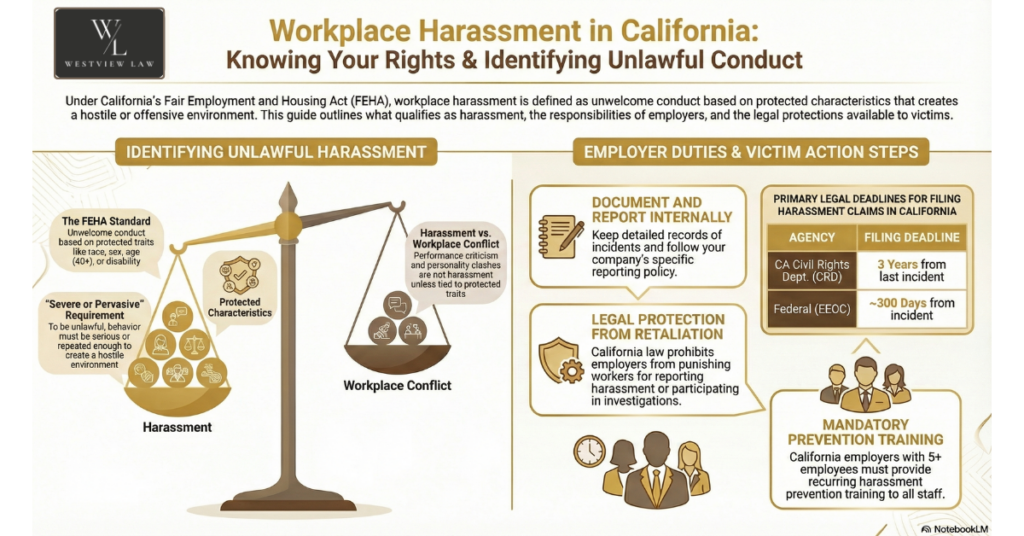
Under California's Fair Employment and Housing Act (FEHA), workplace harassment occurs when an employee is subjected to unwelcome conduct because of a protected characteristic. This conduct becomes unlawful when it is severe or happens repeatedly, creating a work environment that is intimidating, hostile, or offensive. Protected characteristics under FEHA include traits such as race, sex, gender identity, sexual orientation, religion, age (40 or older), disability, genetic information, medical condition, marital status, or national origin.
Harassment can come from supervisors, coworkers, or even clients and vendors. FEHA recognizes both direct harassment, like derogatory comments or unwanted physical contact, and indirect harassment, such as spreading rumors or displaying offensive images. Moreover, harassment cases do not have to result in tangible job loss or financial harm. What makes it unlawful is its impact on the employee’s work environment.
What Does NOT Qualify as Workplace Harassment?
It's important to note that not every unpleasant situation at work is considered harassment. California workplace harassment laws do not consider ordinary workplace conflicts or personality clashes to be harassment on their own. For example, criticism of your work performance or being disciplined for breaking company rules do not qualify as harassment. So long as the conduct is not based on the employee's race, age, or other protected characteristic, it's most likely not qualified as harassment.
A single minor comment or isolated incident also may not qualify unless it is extremely serious, such as a clear threat or severe misconduct. To be unlawful, the behavior generally must be connected to a protected trait and be severe or repeated enough to create a hostile or intimidating work environment. This distinction helps separate normal workplace issues from conduct that violates California harassment laws. The goal is to protect employees who are targeted for reasons beyond their control, while typical workplace disagreements are handled through standard management procedures.
Which Laws Regulate Workplace Harassment in California?

Workplace harassment in California is primarily regulated by the Fair Employment and Housing Act (FEHA). In addition to FEHA, federal laws like Title VII of the Civil Rights Act of 1964 and the Americans with Disabilities Act (ADA) also protect employees from harassment and discrimination. These laws provide additional avenues for filing complaints with federal agencies like the Equal Employment Opportunity Commission (EEOC). Together, state and federal laws ensure employees have multiple protections and legal options if they face workplace harassment in California.
What Are Protected Characteristics Under California Harassment Laws?
California workplace harassment laws make it illegal to harass an employee because of certain personal traits known as protected characteristics. These include
- Race or ethnicity
- Age (40 or older)
- Color
- National origin or ancestry
- Religion or creed
- Sex
- Gender
- Gender identity or expression
- Sexual orientation
- Pregnancy, childbirth or related medical conditions
- Physical or mental disability
- Medical condition
- Marital status
- Military or veteran status
Harassment based on any of these traits may violate the law if it is severe or happens repeatedly. In such cases, the victim can file a workplace harassment claim to seek justice and recover compensation.
The protection also applies if the harasser is wrong about the trait or targets you because of your connection to someone who has that trait. For example, it can still be illegal if a co-worker mocks you because they think you follow a certain religion, or if you are harassed because your spouse has a disability.
Types of Workplace Harassment Recognized in California

In California, harassment in the workplace can happen in various ways. But no matter the form it takes, the law focuses on three basic checks: Is the harassing behavior unwelcome? Is it connected to a protected characteristic? And, is it serious or repeated enough to create a hostile work environment? Below are the most common types of workplace harassment recognized under California law.
1. Sexual Harassment
Sexual harassment is the most reported workplace harassment In California. It includes unwelcome sexual advances, requests for sexual favors, or other sexual behavior that affects your job or work environment. It can involve a supervisor offering job benefits in exchange for sexual conduct, a situation referred to as quid pro quo harassment. It can also be repeated sexual comments, jokes, touching, or messages that create an environment that a reasonable person will consider uncomfortable or intimidating.
2. Hostile Work Environment Harassment
This happens when ongoing behavior makes the workplace intimidating, offensive, or abusive. It may include repeated insults, slurs, threats, or offensive jokes related to a protected trait such as race, religion, or gender. The behavior must be serious or happen often enough that it interferes with your ability to do your job.
3. Verbal Harassment
Verbal harassment in the workplace involves spoken or written words that target a protected characteristic. Examples include racist or sexist jokes, mocking someone’s accent, offensive comments about age or disability, or repeated unwanted remarks about religion or appearance. Emails, texts, or chat messages can also count as verbal harassment.
4. Physical Harassment
Physical harassment includes unwanted touching, blocking someone’s movement, threatening gestures, or any physical intimidation based on a protected trait. Even if they don't result in injuries, physical actions meant to intimidate or humiliate an employee can be unlawful.
5. Visual or Online Harassment
Visual harassment involves displaying or sharing offensive images, posters, drawings, memes, or videos related to protected characteristics. This can happen in the office or online through social media, group chats, or workplace communication platforms if it affects the work environment.
6. Discriminatory Harassment
Discriminatory harassment happens when an employee is targeted with offensive behavior because of a protected characteristic such as race, sex, religion, age, disability, or national origin. It often overlaps with other forms of harassment, but the key factor is that the mistreatment is tied to who the person is. Examples may include repeatedly excluding someone from meetings because of their ethnicity, making negative comments about their pregnancy, or being hostile to them because of their religion or sexual orientation.
Employer Responsibility to Prevent Workplace Harassment in California
California law places a clear legal duty on employers to prevent and address workplace harassment. Employers are not only prohibited from allowing harassment to occur; they are also required to take proactive steps to create and maintain a harassment-free workplace.
Under FEHA, employers must establish and communicate clear harassment prevention policies. These policies should define what harassment is, explain how employees can report it, and outline the steps the employer will take to investigate and address complaints.
California also has mandatory harassment prevention training requirements. Employers with five or more employees must provide harassment prevention training to supervisors and employees. Supervisors must receive at least two hours of training, while non-supervisory employees must receive at least one hour. Training must be provided within six months of hire or promotion and must be repeated every two years.
Moreover, employers are strictly and automatically liable for supervisor harassment even if they didn’t know about it. But if the harasser is a coworker, the employer is liable only if they knew or should have known about the harassment and failed to take prompt and effective corrective action. In addition, when employers ignore complaints, retaliate against employees who report harassment, or fail to investigate or address harassment properly, they violate California law and can be held accountable through legal action.
What To Do If You Experience Workplace Harassment

About 75% of workplace harassment victims do not report it for lack of fear of retaliation. But you don't have any reason to be afraid because California also prohibits employers from retaliating against an employee for reporting or participating in an investigation. So, if you experience harassment in the workplace, you should act early and protect yourself. Taking the right steps can help stop the behavior and strengthen any future claim. Do the following:
- Keep Detailed Records of the Incidents: Start documenting each incident as soon as possible. Include dates, times, locations, what was said or done, and the names of anyone who witnessed it. Keep copies of emails, messages, photos, or other evidence that supports your account. Clear records can be very important if you later file a complaint or legal claim.
- Review Your Company’s Harassment Policy: Most employers have a written policy explaining how to report harassment. And, following the company’s process shows that you gave the employer a chance to fix the problem. So, check your employee handbook or HR portal to see the proper reporting steps.
- Speak With a Workplace Harassment Lawyer: An experienced employment lawyer can review your situation, explain your rights, and help you decide the best next step. They can also handle communications, protect you from workplace retaliation, and help you pursue compensation if the offensive conduct violated the law. Learn how to choose a workplace harassment lawyer.
- Report the Harassment Internally: Employers are required to investigate and take reasonable steps to stop harassment once they know about it. Hence, report the behavior to HR department, a supervisor, or the person listed in your company’s policy. Make the complaint in writing if possible and keep a copy for your records.
- Seek Medical or Emotional Support if Needed: Harassment can affect your mental and physical health. If you feel stressed, anxious, or unsafe, consider speaking with a doctor, counselor, or trusted support person. Records of treatment can also help show how the harassment affected you.
- File a Complaint With a Government Agency: If your employer does not take the necessary action against the harassment or if you face retaliation after reporting, you can file a formal complaint with the California Civil Rights Department (CRD). You can also file with the Equal Employment Opportunity Commission (EEOC) for federal claims. In California, you generally have three years from the last act of harassment to file an administrative complaint with the CRD. Federal claims filed with the EEOC should be done within about 300 days.
When to Contact a California Workplace Harassment Lawyer
You should consider contacting a workplace harassment lawyer as soon as the harassment behavior becomes serious, repeated, or begins affecting your job, health, or income. If your employer ignores your complaint, delays investigating, or the harassment continues after you report it, legal guidance can help you understand your rights and next steps. It’s also wise to speak with a lawyer if you experience retaliation, such as demotion, reduced hours, termination, or hostile treatment after reporting harassment.
A California employment lawyer can review your situation, explain whether the conduct may violate the law, and help you protect important evidence and deadlines. They can also assist with filing a complaint, negotiating with your employer, or pursuing compensation if necessary.
Speak With Our Experienced Workplace Harassment Lawyer Today!
Workplace harassment in California is defined by clear legal standards, and not every unpleasant workplace situation meets that definition. When conduct is unwelcome, tied to a protected characteristic, and severe or repeated enough to create a hostile work environment, it may violate state law. Understanding constitutes harassment helps you respond appropriately and avoid ignoring behavior that could harm your career or well-being.
If you believe you are being harassed at work, our experienced California workplace harassment lawyers at Westview Law are ready to help. We will review your situation, explain your rights, and guide you through the next steps to protect your job and pursue fair compensation. Contact us today or visit our office for a free consultation.
FAQs About Workplace Harassment in California
Our experienced workplace harassment lawyers at Westview Law have handled complex employment discrimination cases across California. With over 40 years of combined experience, we've provided comprehensive answers to common questions about California workplace harassment claims.
How long do I have to file a harassment complaint in California?
You generally have three years from the last act of harassment to file an administrative complaint with the CRD. For federal claims with the EEOC, the typical deadline is about 300 days from the incident. Because deadlines are strict, speak with a lawyer as soon as possible.
Who can commit workplace harassment?
Harassment can be committed by supervisors, coworkers, or even clients and vendors. Employers are legally responsible for preventing and addressing harassment regardless of who commits it. Supervisors’ harassment creates automatic liability for the employer, while coworker harassment requires the employer to act once they know about it.
Which laws protect employees from workplace harassment in California?
Employees in California are protected from workplace harassment under the Fair Employment and Housing Act (FEHA), as well as federal laws such as Title VII of the Civil Rights Act of 1964 and the Americans with Disabilities Act (ADA). These laws give employees legal avenues to report harassment and seek remedies.
Can harassment happen between employees of the same gender?
Yes. California anti-harassment laws protect all employees, regardless of gender, from harassment. Harassment is illegal as long as it is tied to a protected characteristic or creates a hostile work environment, regardless of whether the harasser and victim share the same gender.
Is it harassment if it happens outside the office, like at a work event or online?
Yes. Workplace harassment can occur outside the physical office, including at work events, conferences, or online through emails, social media, or messaging platforms. The key factor is that the conduct affects the employee’s work environment or ability to perform their job.
Can a manager be held personally liable for harassment?
Yes. Supervisors or managers can be held personally liable if they engage in harassment or fail to stop it once they are aware. California law treats harassment by a supervisor more seriously, and the employer may also be automatically responsible for their actions.
What is a hostile work environment?
A hostile work environment occurs when harassment is severe or repeated enough to make the workplace intimidating, offensive, or abusive. It can involve verbal, physical, visual, or online behavior, and it must interfere with the employee’s ability to work effectively.
Does harassment have to be sexual to be illegal in California?
No. Workplace harassment in California goes beyond unwanted sexual advances or other sexual conduct. It includes workplace harassment based on any protected characteristic, including race, religion, age, disability, national origin, gender identity, and many others. Any offensive behavior connected to any of these traits can qualify as illegal harassment.
Can a single incident count as workplace harassment?
Yes. Unlike federal law, California does not always require conduct to be both severe and pervasive. A single serious event such as a physical assault, extremely offensive slur, or threatening behavior may qualify as workplace harassment.
Is my employer liable for coworker harassment?
It depends on the particular situation. If the harasser is a supervisor, the employer is typically held strictly liable. If the harasser is a coworker, the employer is liable if they knew or should have known about the harassment and failed to take prompt and effective corrective action. Employers have a legal duty to prevent and address harassment in the workplace.
Can I sue for emotional distress from workplace harassment?
Yes. If workplace harassment leads to significant emotional distress, you may be entitled to compensation for emotional harm, anxiety, depression, and other psychological effects. A good California workplace harassment lawyer can help you pursue damages for lost wages, medical expenses, and other losses related to the harassment.