



California and federal law protect employees from workplace sexual harassment, but understanding your rights and options can be challenging. A workplace sexual harassment lawyer helps you handle the process, protect your rights, and hold your employer or harasser accountable.
Working with a lawyer ensures you document incidents correctly, report the harassment safely, meet strict legal deadlines, and pursue the full compensation you deserve. They can also protect you from retaliation and represent you if your case requires filing a complaint or going to court.
If you're sexually harassed at work, our California workplace harassment lawyers at Westview Law can help protect your rights and fight for you. With 40 years of combined experience, we will evaluate your case, help you understand your rights, protect your job, and pursue the financial compensation you deserve. We're always prepared to fight for you in court, so you don't have to accept low settlements under pressure. Schedule a free consultation with us today.
This blog will explain what workplace sexual harassment is, how a lawyer helps victims, when to seek legal guidance, and how to choose the right attorney.
What Is Workplace Sexual Harassment Under the Law?
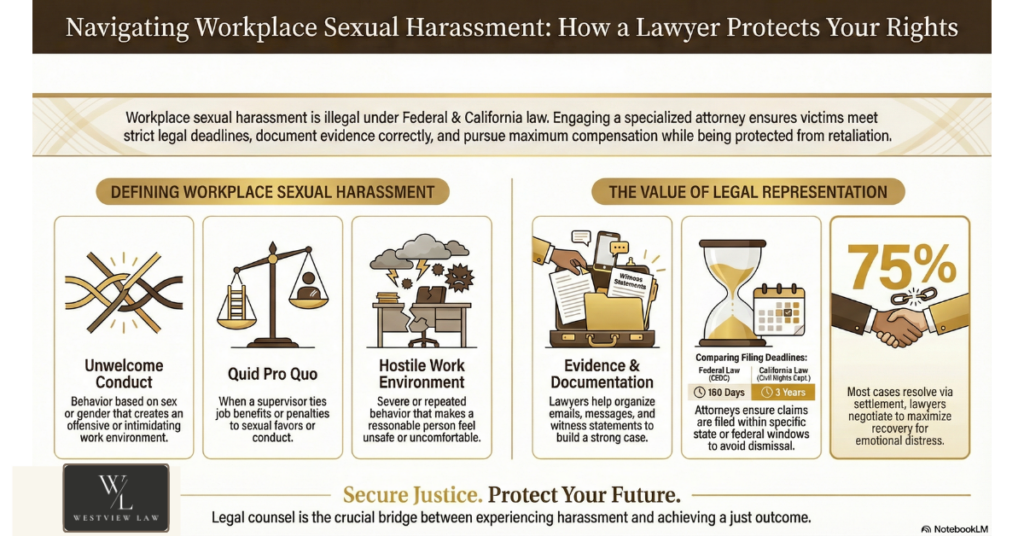
In simple terms, workplace sexual harassment refers to unwelcome sexual advances, conduct, or behavior based on sex, gender, gender identity, sexual orientation, or pregnancy. Such conduct affects your job or creates an offensive or intimidating work environment.
Examples of sexual harassment in the workplace include unwanted sexual advances, sexual assault, repeated requests for dates, inappropriate touching, sexual jokes or comments, explicit emails or messages, sharing sexual images, remarks about someone’s body or appearance, intrusive questions about a person’s private life, and threats or promises tied to sexual favors.
Workplace sexual harassment is illegal under both federal and state laws. At the federal level, it is treated as sex discrimination under Title VII of the Civil Rights Act of 1964. On the other hand, California's Fair Employment and Housing Act (FEHA) provides broader protection and applies to more employers and workers.
The law generally recognizes two main types of sexual harassment: Quid pro quo harassment and hostile work environment harassment. Quid pro quo harassment happens when a supervisor or person in authority ties job benefits or penalties to sexual conduct. An example is offering a promotion for a date or threatening termination after rejection.
Hostile work environment harassment involves severe or repeated behavior that would make a reasonable person feel uncomfortable, unsafe, or unable to work normally. Examples of such acts include unwanted touching, sexual jokes, explicit messages, persistent advances, and other verbal harassment or physical conduct of a sexual nature.
Note that harassment can come from supervisors, co-workers, clients, or others in the workplace, and it does not need to involve physical contact to be illegal. Moreover, California law strictly prohibits retaliation against employees who report harassment or support an investigation. If you are unsure whether certain conduct meets the legal definition, speaking with a sexual harassment attorney lawyer can help you understand your rights and next steps.
How a Lawyer Helps Victims of Workplace Sexual Harassment

If you're involved in a workplace sexual harassment claim, we recommend you work with an experienced workplace sexual harassment lawyer. With their legal expertise, they can guide you through the process, help you avoid mistakes, and hold the employer or harasser accountable. Their key roles include:
1. Explains your rights and legal options
A workplace harassment lawyer listens to your story, reviews the facts, and tells you whether the inappropriate behavior likely violates the law. They explain your options clearly, such as reporting internally, filing a government complaint, negotiating a resolution, or pursuing a lawsuit, so you can make informed decisions.
2. Helps gather and organize evidence
Strong evidence is key in harassment cases. A lawyer helps you collect emails, messages, workplace reports, witness information, and personal notes about incidents. They also advise you on how to document ongoing behavior properly so that you don't lose important proof.
3. Handles complaints and communication with the employer
Lawyers can help draft formal complaints to the Human Resource department or management and communicate with the employer on your behalf. This reduces the risk of saying something that could harm your case and shows the employer that you are taking the matter seriously.
4. Files legal claims and meets deadlines
Sexual harassment claims must follow specific procedures and strict timelines. A lawyer prepares and files the necessary paperwork, ensures deadlines are met, and builds a clear legal argument supported by evidence.
5. Negotiates settlements and compensation
About 75% of tort cases resolve through settlement, according to the Bureau of Justice Statistics. Hence, you need an experienced sexual harassment lawyer to calculate fair compensation for lost wages, emotional distress, and other damages. The lawyer then negotiates with your employer to pursue full compensation while protecting you from pressure to accept less than you deserve.
6. Represents you in court if needed
If the case cannot be resolved through settlement, your lawyer can file a lawsuit and represent you throughout the legal proceedings. They handle legal strategy, evidence presentation, and arguments so you can focus on your well-being and work toward a resolution.
Signs You May Need a Workplace Sexual Harassment Lawyer

Sometimes, it can be hard to know whether your situation is serious enough to involve a lawyer. Many employees hope the harassment will stop or that HR will handle it fairly, but that does not always happen. If any of the signs below apply to you, speaking with a workplace sexual harassment lawyer can help you understand your rights and protect yourself.
- The harassment is ongoing or getting worse: If unwanted comments, messages, touching, or advances continue despite your objections, you can seek legal guidance to help you take stronger action and document the behavior properly.
- Your employer ignored your complaint or handled it poorly: If you reported the issue to your HR or management and nothing changed, it might time to involve a lawyer. This also applies if their response felt dismissive, delayed, or biased.
- You experienced workplace retaliation after speaking up: Retaliation can occur as demotion, reduced hours, poor performance reviews, exclusion, or termination after reporting harassment. This is illegal, and a lawyer can help protect your job and pursue additional claims if retaliation occurred.
- You were pressured to stay quiet or sign documents: If your employer asks you to sign a settlement, confidentiality agreement, or resignation papers, do not sign without legal advice. Instead, a lawyer can review the terms and explain whether they are fair or limit your rights.
- The situation affected your job, income, or mental health: If the sexual harassment forced you to miss work, transfer departments, quit, or seek medical or counseling support, the impact may strengthen your legal case. A lawyer can help connect these effects to potential financial compensation.
- You’re unsure whether what happened qualifies as harassment: Many sexual harassment victims hesitate because they are not certain the behavior meets the legal definition. A confidential consultation with a lawyer can clarify whether you have a claim and what steps to take next.
When Should You Contact a Workplace Sexual Harassment Lawyer?
You should consider contacting a workplace sexual harassment lawyer as soon as you believe the behavior may be inappropriate or unlawful. Early legal advice can help you understand your rights, document incidents properly, and avoid mistakes that could weaken your case later. Speaking with a lawyer does not mean you must file an actionable sexual harassment claim immediately. It simply helps you know your options and protect yourself from the start.
It’s especially important to seek legal assistance out if the harassment is severe, keeps happening, or begins affecting your job, performance, or well-being. You should also seek legal help if your employer ignores your complaint or delays taking action. Another good reason is if you experience retaliation such as reduced hours, discipline, demotion, or termination after speaking up.
Finally, contact a lawyer before signing any settlement agreement, resignation letter, or confidentiality document related to the situation. You need a lawyer to review the terms, explain what rights you may be giving up, and help you decide the safest next step for your career and legal protection.
How to Choose the Right Workplace Sexual Harassment Lawyer
Workplace sexual harassment claims usually involve sensitive facts, strict deadlines, and strong employer defenses. So, you want someone who understands what constitutes sexual harassment, the law regulating it, and how to support clients through the legal process. Let's look at key qualities you should consider when comparing sexual harassment attorneys.
Look for proven experience in employment and harassment law. Choose a lawyer who regularly handles workplace harassment or employment law cases rather than general legal matters. Focused experience often means they understand how to prove harassment in the workplace, respond to employer defenses, and build a strong claim.
Confirm knowledge of California employment laws. California law under FEHA provides broader protections than federal law under the Civil Rights Act. It also has its own procedures and deadlines. A lawyer familiar with California rules and agencies can guide you more effectively and help you avoid missing important steps.
Choose someone who communicates clearly and evaluates your case honestly. A good lawyer should explain your options in simple language, answer your questions, and be upfront about both strengths and risks. You should feel comfortable sharing details and confident that your concerns are taken seriously.
Understand the fee structure before hiring. Ask how the lawyer charges for workplace harassment cases. Many work on contingency, while others may charge hourly or use a mixed arrangement. Clear fee information helps you avoid surprises and make a confident decision.
Check reputation and client feedback. Read reviews, testimonials, or professional recognitions to learn how the lawyer treats clients and manages cases. Consistent feedback about responsiveness, professionalism, and results can indicate reliable representation.
Make sure the lawyer is ready to negotiate or go to court. Some cases resolve through settlement, while others require litigation. Choose a sexual harassment attorney who can negotiate firmly but is also prepared to file a sexual harassment lawsuit and represent you in court if necessary.
Can I File a Workplace Sexual Harassment Claim Without a Lawyer?
Yes, you can file a workplace sexual harassment claim without a lawyer. The Equal Employment Opportunity Commission (EEOC) explicitly says that you don't have to hire a lawyer to file a charge. Nevertheless, the process can be complex without the expert guidance of a lawyer. There are strict deadlines, detailed paperwork, and legal standards that may be difficult to handle without guidance. That's why we recommend you work with an experienced sexual harassment attorney to increase your chances of having a successful sexual harassment claim.
Let's consider the Pamela Blackmore Jenkins v. Security Engineers Inc. as a case study. In that case, the plaintiff filed multiple employment claims, including sexual harassment, hostile work environment, and retaliation under Title VII of the Civil Rights Act of 1964.
The court dismissed her case with prejudice after she repeatedly missed court deadlines and failed to comply with discovery requirements despite extensions and warnings. The dismissal was upheld on appeal due to this pattern of delay and non-compliance. From this case, you can see how inability to follow strict legal procedures can end a claim, which is what hiring a lawyer can effectively solve for you.
What Compensation is Available in Sexual Harassment Cases?

A workplace sexual harassment lawyer not only helps victims identify the full value of their claim. They can also help you pursue all compensation available under state and federal laws. Beyond proving the harassment occurred, your lawyer works to show how it affected your income, career, health, and daily life so you can seek fair financial recovery and other remedies. Such damages include:
- Lost wages and loss of future earnings
- Emotional distress damages
- Medical and therapy expenses
- Punitive damages in some cases
- Back pay and front pay
- Reinstatement to a former position
- Attorney’s fees and legal costs
Speak With a Workplace Sexual Harassment Lawyer Today!
Workplace sexual harassment can have serious effects on your career, income, and well-being, but you do not have to face it alone. A qualified workplace sexual harassment lawyer can guide you through the legal process, help gather evidence, protect your rights, and pursue fair compensation.
At Westview Law, our experienced California workplace harassment attorneys are ready to support you every step of the way. We will help you understand your options, prevent retaliation, and take strong action to hold your employer or harasser accountable. With 40 years of combined experience, we are committed to fighting for your rights in court if needed. If you’ve experienced sexual harassment at work, contact us today for a free consultation.
Frequently Asked Questions (FAQ)
With over 40 years of combined experience, we've provided comprehensive answers to common questions you may have about hiring workplace harassment lawyers in California.
What should I do immediately after experiencing workplace sexual harassment?
Document every incident in detail, including dates, times, locations, and any witnesses. Report the harassment to HR or a supervisor if you feel safe doing so. You may also consult a workplace sexual harassment lawyer to understand your rights and get guidance on the next steps.
How do I prove workplace sexual harassment in California?
You may need to gather evidence such as emails, texts, photos, recorded messages, witness statements, and personal notes about harassment incidents. Your lawyer can help organize this evidence and demonstrate how the behavior created a hostile work environment or affected your employment.
Can I report sexual harassment without losing my job?
Yes, California law under FEHA and federal law protect employees from retaliation for reporting harassment. A lawyer can help ensure your complaint is properly handled and take action if your employer tries to punish or discriminate against you for speaking up.
How long do I have to file a workplace sexual harassment claim in California?
Under California law, you generally have 3 years from the harassment to file a complaint with the California Civil Rights Department. Federal claims with the EEOC usually require filing within 180 days of the incident. A lawyer can guide you on which deadlines apply to your situation.
Can I sue my employer for sexual harassment by a coworker or customer?
Yes. Employers can be held responsible if they knew, or should have known, about the harassment and failed to take action. A lawyer can help prove the employer’s responsibility and take legal actions to pursue compensation for damages caused by the harassment.
What if I didn’t report the harassment to HR - can I still file a claim?
Yes. While reporting internally can strengthen your case, failing to notify HR does not prevent you from filing a claim. A lawyer can help collect evidence and guide you through the complaint process, whether or not you reported it at work.
How much does it cost to hire a workplace sexual harassment lawyer?
Many employment lawyers work on a contingency fee basis, meaning they only get paid if you recover compensation. Some may charge hourly or a flat fee for certain services. A consultation can clarify costs and help you understand your options without financial risk.