




California law provides strong protections for employees who experience workplace harassment. The main California workplace harassment laws are the Fair Employment and Housing Act (FEHA) and Title VII of the Civil Rights Act, along with additional protections under California Labor Code provisions and employer training requirements.
These laws are important because they clearly define what harassment is, require employers to prevent it, and hold them accountable when they fail to act. As an employee in California, understanding these laws helps you know your rights and take the right steps if harassment occurs.
If you're facing or previously faced harassment at work, our California workplace harassment lawyers at Westview Law can help protect your rights and fight for you. With 40 years of combined experience, we will evaluate your case, help you understand your rights, protect your job, and pursue the financial compensation you deserve. We're always prepared to fight for you in court, so you don't have to accept lowball settlement offers under pressure. Schedule a free consultation with us today.
This blog will break down California workplace harassment laws, explain what conduct is illegal, who is protected, what employers are required to do, and what options you have if your rights are violated.
What Is Workplace Harassment in California?
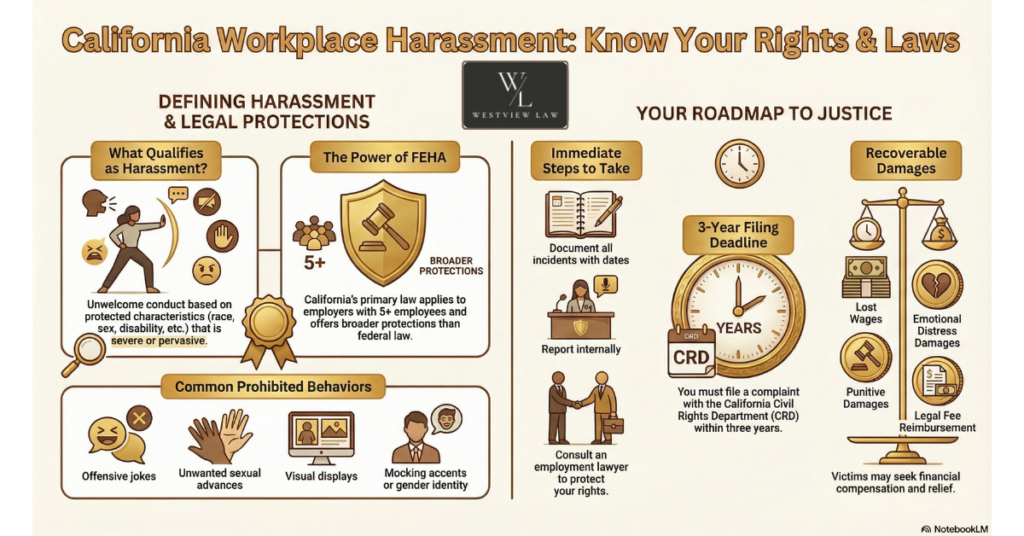
In California, workplace harassment refers to any unwelcome or offensive conduct targeted at an employee based on protected characteristics such as sex, race, disability, age, religion, sexual orientation, gender identity, etc. Such unlawful conduct must be severe or pervasive enough to create a hostile, intimidating, or offensive work environment.
Under California law, harassment can be verbal, physical, visual, or written. It can be committed by supervisors, coworkers, or even third parties like clients or vendors. Unlike ordinary workplace disputes such as personality conflicts, isolated rude behavior, or performance-related criticism, harassment is unlawful because it is tied to a protected characteristic.
Common Examples of Workplace Harassment in California
Workplace harassment in California can take many forms and is not always obvious. It often involves repeated behavior, but a single severe incident may also qualify if it significantly affects the work environment. Examples include:
- Offensive jokes, slurs, derogatory comments, or other forms of verbal harassment
- Unwanted sexual advances or inappropriate touching
- Sexually suggestive remarks or gestures
- Displaying offensive images, emails, or messages
- Mocking an employee’s accent, disability, or medical condition
- Harassment based on gender identity or sexual orientation
- Intimidation, threats, or bullying tied to a protected characteristic
- Exclusion or isolation because of race, religion, age, or sex
What are the Key Laws Governing Workplace Harassment in California?

In California, workplace harassment is regulated by both state and federal laws. These laws work together to protect employees from harassment and to hold employers accountable for preventing and addressing unlawful conduct in the workplace. The two major workplace harassment laws in California are:
Fair Employment and Housing Act (FEHA)
The Fair Employment and Housing Act (FEHA) is the primary and most comprehensive law governing workplace harassment in California. It applies to employers with five or more employees. FEHA protects a wide range of workers, including employees, job applicants, unpaid interns, volunteers, and independent contractors. The law prohibits harassment based on protected characteristics such as sex, gender identity, sexual orientation, race, religion, age, disability, pregnancy, and medical conditions.
Under FEHA, harassment does not need to involve job-related decisions like termination, demotion, or pay cuts to be illegal. Employers are strictly liable for harassment committed by supervisors. That means the employer can be held responsible even if it was unaware of the harassing behavior. Employers may also be liable for harassment by coworkers or third parties if they knew or should have known about the conduct and failed to take immediate and appropriate corrective action.
Title VII of the Civil Rights Act of 1964
Title VII of the Civil Rights Act is the primary federal law addressing workplace harassment and applies to employers with 15 or more employees. It prohibits harassment based on protected characteristics such as race, color, religion, sex, and national origin. Like California law, Title VII covers harassment that creates a hostile or abusive work environment and applies to conduct by supervisors, coworkers, and, in some cases, non-employees.
While Title VII provides important protections, California’s FEHA generally offers broader coverage, applies to more employers, and provides stronger remedies for employees. In many California workplace harassment cases, claims may be filed under both FEHA and Title VII, depending on the circumstances.
Other Legal Protections for Workplace Harassment in California
In addition to FEHA and Title VII, employees in California are protected by several other important laws that address workplace harassment and related issues. These laws provide additional legal basis for employees to seek relief and ensure that workplaces remain safe and respectful. Such laws include:
California Labor Code
The California Labor Code contains provisions that protect employees from harassment, retaliation, and unsafe working conditions. It prohibits employers from punishing or retaliating against workers who report harassment, file complaints, or cooperate with investigations. The Labor Code reinforces an employee’s right to a workplace free from hostility and ensures that employers take complaints seriously and act to correct any harassment.
Americans with Disabilities Act (ADA)
The American with Disabilities Act is a federal law that protects employees with physical or mental disabilities from harassment and discrimination. Under the ADA, employers with 15 or more employees must prevent and correct harassment based on disability. This responsibility includes creating a workplace environment where employees with disabilities can work without fear of verbal abuse, exclusion, or intimidation.
ADA also requires employers to provide reasonable accommodations for employees with disabilities when needed. If you've been harassed or discriminated against because of a disability, our disability discrimination lawyer can help hold your employer accountable.
Age Discrimination in Employment Act (ADEA)
The Age Discrimination in Employment Act protects employees age 40 and older from harassment and discrimination based on age. It applies to employers with 20 or more employees and covers any unwelcome conduct that creates a hostile or abusive work environment due to age. Employees can bring claims under the ADEA if they experience harassment that affects their ability to work or creates a threatening workplace atmosphere.
Protected Characteristics Under California Workplace Harassment Laws
These characteristics are protected to prevent bias, unequal treatment, and hostile work environments that undermine fairness and safety in the workplace. In California, protected characteristics include:
- Race and color
- National origin and ancestry
- Sex, gender, gender identity, and gender expression
- Sexual orientation
- Pregnancy and medical conditions
- Religion
- Age (40+)
- Disability (physical and mental)
- Marital status and military status
Employer Responsibilities Under California Workplace Harassment Laws

Employers in California have a legal duty to maintain a workplace free from harassment and to take proactive steps to prevent and address unlawful conduct. Failure to meet these responsibilities can lead to liability, even if the harassment is committed by a supervisor, coworker, or third party. The key responsibilities that California employers must follow under the law include:
1. Prevent Harassment
California employers must implement policies and programs that clearly prohibit harassment. This includes creating a written harassment policy and communicating it to all employees. They are also expected to establish procedures for reporting complaints. These preventive measures help reduce incidents and demonstrate that the employer takes harassment seriously.
2. Provide Mandatory Training
California law requires employers with five or more employees to provide regular harassment prevention training to supervisors and non-supervisory staff. The training is supposed to detail what constitutes harassment, how to report it, and how to respond appropriately. The goal of the training is to help employees recognize harassment and promote a respectful work environment.
3. Investigate Complaints Promptly and Fairly
When an employee reports harassment, the employer must take immediate action to investigate the complaint thoroughly and impartially. With prompt investigations, employers show that they take harassment complaints seriously. The investigations should document findings, interview relevant parties, and maintain confidentiality whenever possible.
4. Take Corrective Action
Effective corrective action helps stop harassment and prevents future incidents. Therefore, if an employer confirms harassment, they must take appropriate corrective measures. The measures may include disciplinary action against the harasser, changes to workplace procedures, or support to the affected employee.
5. Prevent Retaliation
The law prohibits employers from retaliating against employees who report workplace harassment or participate in an investigation. Actions that count as retaliation may include demotion, termination, reduced hours, or any form of intimidation. Protecting employees from retaliation is essential to encourage reporting and ensure compliance with the law.
Harassment vs. Discrimination vs. Retaliation
Harassment, discrimination, and retaliation are closely related under California workplace and employment law. However, they are not the same. The key difference lies in how the unlawful behavior shows up in the workplace, whether it involves offensive conduct, an employment decision, or punishment for speaking up.
Harassment focuses on harmful behavior, not job decisions. As we mentioned earlier, it involves unwelcome conduct based on a protected characteristic, that is severe or pervasive enough to create a hostile work environment. Harassment can happen even if an employee is never fired, demoted, or denied a promotion. In contrast to discrimination, harassment is about how an employee is treated on a day-to-day basis rather than a specific employment action.
Discrimination, on the other hand, is tied directly to employment decisions. It occurs when an employer takes a negative action, such as termination, demotion, pay reduction, or denial of a promotion, because of a protected characteristic. Unlike harassment, discrimination usually involves a clear decision or policy that affects the employee’s job status or opportunities.
Retaliation is different from both harassment and discrimination because it is based on the employee’s actions, not their personal characteristics. Retaliation happens when an employer punishes an employee for reporting harassment, filing a complaint, requesting an accommodation, or participating in an investigation. Even subtle actions, such as reduced hours or increased scrutiny, can qualify as retaliation under California law.
Many workplace cases involve a combination of these issues because they often occur in sequence. For example, an employee may experience harassment, report it, and then face retaliation for speaking up. In other cases, harassment may be followed by a discriminatory employment decision, such as termination or demotion. Because these behaviors are interconnected, California workplace harassment claims frequently include two or all three legal concepts.
An example case study is the EEOC v. Fresh Venture Foods, LLC, et al. As disclosed in an EEOC report, male employees in the defendant companies had subjected some female workers at the Santa Maria facility to sexual harassment. The companies allegedly failed to respond properly to complaints and some women faced retaliation for complaining. Some even had to quit because of unbearable working conditions.
The case was later resolved through a consent decree which required the defendants to pay $900,000 in monetary relief, with additional injunctive relief. This case is a good example of how harassment, discrimination, and retaliation can be involved in one single case.
What to Do If You’re Experiencing Workplace Harassment in California
If you believe you are experiencing or have experienced workplace harassment in California, you should not hesitate to take the right steps to protect your rights. We recommend you do the following:
- Document the Harassment: Clear documentation can be critical if you decide to file a complaint or legal claim. So, keep detailed records of each harassment incident, including dates, times, locations, what was said or done, and who was involved or witnessed the behavior. Save emails, messages, photos, or any other evidence that supports your experience.
- Speak with an Employment Lawyer: Consulting an experienced California employment attorney can help you understand your legal options and any applicable deadlines. A lawyer can also guide you through the complaint process and help protect you from retaliation.
- Review Your Employer’s Harassment Policy: Most employers are required to have written policies explaining how to report harassment. Review these procedures to make sure your complaint is made through the proper channels and that you followed company guidelines.
- Report the Harassment Internally: If it is safe to do so, report the harassment to a supervisor, human resources department, or another designated contact. The goal of reporting internally is to put the employer on notice and trigger their legal duty to investigate and take corrective action.
- Avoid Retaliation and Document Any Changes: Pay attention to any negative treatment that occurs after you report harassment. Watch out for actions like reduced hours, discipline, or exclusion. Retaliation is illegal under California law, and documenting these changes can support a separate retaliation claim.
- File a Complaint with the California Civil Rights Department (CRD): If the harassment continues or your employer fails to act after reporting, you may file a complaint with the CRD. The statute of limitations for workplace harassment cases is three years of the last incident of harassment. Make sure you file within this deadline to avoid losing the right to sue.
How to File a Workplace Harassment Claim in California

Filing a workplace harassment claim in California involves specific steps and deadlines. You need to understand the process to avoid mistakes that could delay or limit your claim.
In most cases, you must first file an administrative complaint with the California Civil Rights Department before taking legal action. You can file the complaint online, by mail, or by phone within three years of the last incident of harassment. The CRD may investigate the complaint, attempt mediation, or move the case forward for enforcement.
The next step is to participate in the CRD Investigation or mediation process. After a complaint is filed, the CRD may request additional information, interview witnesses, or offer voluntary mediation between the employee and employer. Sometimes, mediation can resolve the issue without litigation.
If the case is not resolved through the CRD, or if you choose to move forward sooner, you may request a right-to-sue notice. This notice allows you to bypass the administrative process and file a lawsuit directly in civil court.
Once a right-to-sue notice is issued, you generally have one year to file a workplace harassment lawsuit in California court. A civil lawsuit may seek compensation for lost wages, substantial emotional distress, and other damages allowed under the law.
In some cases, you may also file a charge with the Equal Employment Opportunity Commission (EEOC) if federal laws apply. You may be required to complete this step if you plan to pursue claims under federal statutes such as Title VII, the ADA, or the ADEA.
Damages Available Under California Workplace Harassment Laws
If you successfully bring a workplace harassment claim in California, you may be entitled to various forms of compensation. What you recover depends on the nature of the case and the harm suffered. Damages that may be available include:
- Lost wages and benefits
- Emotional distress damages
- Punitive damages
- Attorney’s fees and legal costs
- Reinstatement or front pay
- Interest on awarded damages
Speak With a California Workplace Harassment Lawyer Today
California workplace harassment laws are designed to protect employees, hold employers accountable, and create safer work environments. By understanding what the law prohibits, who is protected, and what employers are required to do, you put yourself in a stronger position to recognize misconduct and respond appropriately. Knowing your rights can make the difference between enduring ongoing harassment and taking meaningful action to stop it.
If you are experiencing workplace harassment or believe your employer failed to protect you, reach out to us today. Our California workplace harassment lawyers at Westview Law are prepared to review your case and fight for your rights. Contact us today for a free case evaluation.
FAQs
With over 40 years of combined experience, we've provided comprehensive answers to common questions you may have about workplace harassment laws in California.
What laws protect employees from workplace harassment in California?
Employees in California are primarily protected by the California Fair Employment and Housing Act (FEHA). Federal laws such as Title VII of the Civil Rights Act, the Americans with Disabilities Act (ADA), and the Age Discrimination in Employment Act (ADEA) may also apply in certain cases.
How many employees must a company have for California harassment laws to apply?
Most California workplace harassment laws apply to employers with five or more employees. However, some protections, such as liability for supervisor harassment, may apply regardless of company size.
Can I file a harassment claim without quitting my job?
Yes. You do not have to quit your job to file a workplace harassment claim in California. The law also prohibits employers from retaliating against you if you report harassment or participate in an investigation.
How long do I have to file a workplace harassment claim in California?
In most cases, you have three years from the last incident of harassment to file a complaint with the California Civil Rights Department. Missing this deadline can limit your ability to pursue a claim.
Does harassment have to be sexual to be illegal?
No. Workplace harassment can be based on many protected characteristics, including race, age, disability, religion, gender identity, and sexual orientation. Sexual harassment is just one form of unlawful harassment under California law.
Can my employer be held liable for harassment by a coworker?
Yes. Employers can be held liable if they knew or should have known about the harassment and failed to take prompt and appropriate action to stop it. Employers may also be responsible for harassment by non-employees, such as customers or vendors.
Do I need a lawyer to file a California workplace harassment claim?
It is not mandatory to hire a lawyer to file a harassment complaint. However, we recommend working with an experienced harassment lawyer for legal guidance and proper representation. An experienced employment attorney can help protect your rights, meet deadlines, and maximize potential compensation.
Is workplace violence covered under California workplace harassment laws?
Yes. California law requires employers to take reasonable steps to prevent workplace violence and maintain a safe work environment. Threats, physical intimidation, and violent conduct may violate workplace safety laws and other employment protections. Moreover, California Code of Civil Procedure Section 527.8 allows employers to seek temporary workplace violence restraining orders to protect employees from individuals who have engaged in violence or have made credible threats of violence.
What is a hostile work environment under California workplace harassment laws?
A hostile work environment exists when harassment is severe or pervasive enough to make a reasonable person view it as hostile, intimidating, or offensive.