


Choosing the right workplace harassment lawyer is important because the wrong attorney can weaken your case, delay action, or cost you compensation you deserve. To find the right attorney, look for someone with experience handling workplace harassment cases, strong knowledge of both federal and California law, prepared to take your case to court if needed, and able to guide you throughout the process.
Moreover, research reviews and testimonials from former clients to see how the lawyer handled similar cases. During your initial consultation, ask about their experience, approach and procedures, and fees to be sure you're hiring a lawyer who is transparent, responsive, and fully prepared to protect your rights.
If you're facing or previously faced harassment at work, our California workplace harassment lawyers at Westview Law can help protect your rights and fight for you. With 40 years of combined experience, we will evaluate your case, help you understand your rights, protect your job, and pursue the financial compensation you deserve. We're always prepared to fight for you in court, so you don't have to accept lowball settlement offers under pressure. Schedule a free consultation with us today.
This blog will explain how to choose the right workplace harassment attorney, factors to consider, and what to expect once you do.
What Qualifies as Workplace Harassment?
Under Title VII of the Civil Rights Act, workplace harassment refers to unacceptable or unreasonable conduct based on a protected characteristic such as race, sex, religion, age, national origin, etc. Such conduct is severe or pervasive enough to create a hostile, intimidating, or abusive work environment, or interfere with an employee’s work. In California, under the Fair Employment and Housing Act (FEHA), harassment is unlawful even if the conduct is not severe or pervasive. A single serious incident may be enough, while repeated smaller actions can also add up over time.
Workplace harassment can come from a supervisor, coworker, or even a client, and it does not have to be physical. Repeated offensive comments, jokes, threats, or messages can all qualify as long as they interfere with an employee’s ability to do their job or feel safe at work. Common types of workplace harassment include sexual harassment, verbal abuse, offensive jokes or slurs, unwanted comments, inappropriate emails, texts, or images, and retaliation after reporting harassment.
What Workplace Harassment IS NOT
It's important to note that workplace harassment does not include normal workplace discipline, performance feedback, or a single rude behavior that is not connected to a protected characteristic. Moreover, personality conflicts, general workplace stress, or fair enforcement of company rules usually do not qualify. However, when conduct is discriminatory and creates a hostile work environment, it may meet the legal definition, especially under California’s broader standards.
When Should You Hire a Workplace Harassment Lawyer?

You should consider hiring a workplace harassment lawyer if you are experiencing ongoing harassment based on a protected characteristic and your employer has failed to stop it. This includes situations where the behavior continues after you report it. It can also be that the HR ignores or minimizes your complaint, or the unlawful harassment comes from a supervisor or someone with authority over you.
We also recommend that you speak with a lawyer if you face workplace retaliation, such as being demoted, fired, or treated differently after reporting harassment. In such cases, a workplace harassment attorney can help you understand whether the conduct qualifies as harassment under federal or California law and protect your rights early in the process. The lawyer can also guide you through complaints, agency filings, or legal action while helping you preserve evidence and pursue compensation if appropriate.
How to Choose a Workplace Harassment Lawyer: Qualities to Look For
Before choosing a workplace harassment lawyer, you should understand the important factors to consider to be sure you're hiring the right legal team. Such key factors include:
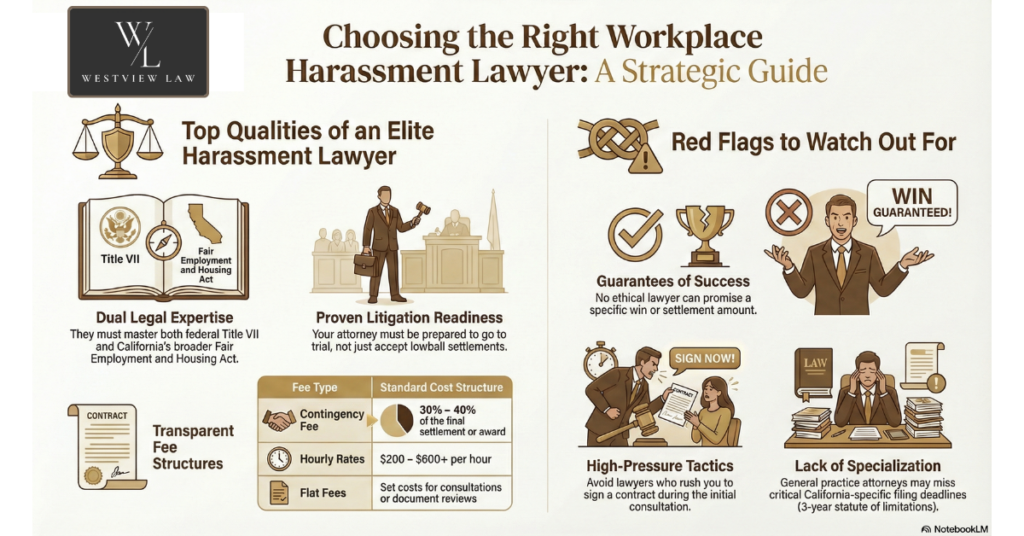
1. Strong Knowledge of Federal and California Law
Your lawyer should understand both federal harassment laws under the Civil Rights Act and California’s broader protections under FEHA. They should understand the filing requirements, deadlines, and possible defenses employers come up with. That way, they'll be able to harness the merits of your case, gather relevant evidence, or even advise rightly on whether to pursue the claim or not.
2. Experience With Harassment Cases
Look for an employment lawyer who regularly handles workplace harassment claims, not just general employment disputes. Experience in workplace harassment means they know how employers and HR departments typically respond and how to counter common defenses.
3. Clear and Honest Communication
Workplace harassment cases can be confusing and emotionally draining. Therefore, you need a good lawyer to explain your rights, timelines, and legal options clearly. Your lawyer should also be able to keep you updated and provide honest guidance without overpromising results.
4. Willingness to Stand Up to Employers
Sometimes, employers may deny wrongdoing or try to minimize harassment claims. So, your lawyer should be confident pushing back and holding employers accountable. Although some cases resolve through settlement negotiations, others require aggressive action. Therefore, your lawyer should be ready to take the case to court if necessary.
5. Focus on Your Protection and Well-Being
Workplace harassment cases are personal and emotional. The right lawyer takes your concerns seriously, prioritizes confidentiality, and works to protect you from retaliation while your case is ongoing.
6. Track Record of Settlements and Trial Outcomes
Past case results can show how effective a lawyer is at securing compensation and holding employers accountable. A strong record of settlements or trial outcomes signals that the lawyer knows how to negotiate from a position of strength and is prepared to litigate when necessary.
7. Professional Reputation and Client Reviews
A lawyer’s reputation among other attorneys and feedback from former clients can offer valuable insight. Consistent positive reviews often reflect professionalism, responsiveness, and the ability to guide clients through stressful and emotional cases.
Questions to Ask During an Initial Consultation
Most employment discrimination lawyers offer free consultations to review your case and determine whether you may have a valid workplace harassment claim. This initial consultation is also your opportunity to evaluate whether the lawyer is the right fit for your case. That's why you need to learn the right questions to ask during the free consultation to understand the lawyer’s experience, approach, and what to expect if you move forward. We recommend you ask the following questions:
- How many workplace harassment cases have you handled?
- Have you handled cases similar to mine before?
- Based on what I’ve shared, do I likely have a valid harassment claim?
- What laws would apply to my situation?
- What steps would you recommend taking next?
- What deadlines or filing requirements should I be aware of in California?
- How do you typically resolve harassment cases - settlement, mediation, or trial?
- Will you personally handle my case or assign it to another attorney?
- How do you charge for harassment cases, and what costs should I expect?
- Will my case likely settle or go to court?
Red Flags to Watch Out For When Choosing a Workplace Harassment Lawyer

Choosing the wrong workplace discrimination lawyer can delay your case, weaken your claim, or cause you to miss critical deadlines under federal or California law. Right from the initial consultation, recognizing red flags early helps you avoid lawyers who may be unprepared, inattentive, or not fully equipped to handle the demands of your case. The most common red flags to watch out for include:
- Lack of Experience With Harassment Claims: A lawyer who mainly handles unrelated legal matters may not understand the nuances of workplace harassment law. Limited experience can lead to missed deadlines, weak case strategy, or improper handling of evidence.
- Unclear or Evasive Answers: If a lawyer avoids direct answers or cannot clearly explain how your case would be handled, this may indicate inexperience or disorganization. You should leave the consultation with a clear understanding of next steps and expectations.
- Guarantees of a Specific Outcome: No lawyer can promise a win or a specific settlement amount. Claims of guaranteed results are unrealistic and often a sign that the lawyer is more focused on signing clients than providing honest advice.
- Little Knowledge of California Employment Law: California has broader harassment protections and stricter employer obligations than federal law. A lawyer who cannot explain these differences may not be equipped to pursue your claim under the strongest legal standards.
- Poor Communication or Slow Follow-Up: Delayed responses, missed calls, or unclear communication early on can indicate future problems. Strong communication is critical in harassment cases where timing and documentation matter.
- Pressure to Sign Immediately: You should never feel rushed to hire a lawyer during your first meeting. High-pressure tactics can suggest that the lawyer is prioritizing volume over quality representation.
- Lack of Transparency About Fees: A lawyer should clearly explain how fees work and what costs you may be responsible for. Vague or confusing fee explanations can lead to unexpected expenses later.
Can I File a Workplace Harassment Claim Without a Lawyer?
Yes, it is possible to file a workplace harassment claim without a lawyer.This is legally known as acting Pro Se. The Equal Employment Opportunity Commission states it clearly that you don't have to hire a lawyer to file a charge. At the state level, the California Department of Industrial Relations outlines steps on how to file a retaliation/discrimination complaint directly to the California Civil Rights Department (CRD).
However, filing without a lawyer can be challenging. Harassment cases often involve complex legal standards, strict deadlines, and detailed documentation requirements. Moreover, employers are usually represented by legal counsel, which can make handling the process on your own more difficult. It also increases the risk of mistakes that could weaken your claim. That's why we recommend you work with a lawyer or law firm who can help protect your rights, avoid mistakes, and pursue the strongest possible claim.
An example case study is the Pamela Blackmore Jenkins v. Security Engineers Inc. In this case, the plaintiff, Pamela Blackmore Jenkins, sued her former employer, Security Engineers Inc., alleging multiple employment-related violations. Her claims included workplace sexual harassment, hostile work environment, and retaliation under Title VII of the Civil Rights Act of 1964. She also sued for age discrimination under the Age Discrimination in Employment Act (ADEA), unpaid wages under the Fair Labor Standards Act (FLSA), and retaliation under the Occupational Safety and Health Act (OSHA).
Eventually, the case was dismissed with prejudice after Jenkins repeatedly failed to comply with court-ordered deadlines and discovery requirements, despite receiving extensions and warnings. On appeal, the case was still dismissed based on a clear pattern of delay and non-compliance, making dismissal an appropriate sanction.
How Much Does it Cost to Hire a Workplace Harassment Lawyer?
Most workplace harassment lawyers charge on a contingency fee basis, which means you do not pay upfront legal fees. Instead, they take 30% to 40% of the final settlement or court award. In such arrangements, you don't pay attorney fees if you do not recover compensation. Alternatively, work harassment lawyers may charge hourly rates ranging from $200 to $600+.
Some lawyers may also charge flat fees for specific services such as consultation, agency filings, document review. Bear in mind that certain additional costs may arise during a harassment case. Such costs may include filing fees, deposition costs, expert witness fees, and other case-related expenses. Always ask about fees and costs early, so you understand how billing works and what expenses you may be responsible for during your case.
However, while cost is an important factor, cheaper doesn't always mean better. Beyond costs, you should also consider other important factors such as the lawyer' experience, your location, and whether the case goes to trial. For example, a less experienced lawyer may miss deadlines, undervalue your claim, or fail to apply California’s stronger harassment protections, which can cost you more in the long run.
How to Prepare Before Hiring a Workplace Harassment Lawyer

Before hiring a workplace harassment lawyer, take time to gather and organize any information related to the harassment. This may include emails, text messages, performance reviews, written complaints, witness names, and a timeline of what happened. Having clear details helps a lawyer quickly evaluate your claim under federal and California law and identify the strongest legal options.
It is also helpful to document how the harassment affected your job, such as changes to your schedule, pay, duties, or emotional well-being. Avoid discussing your case with coworkers or posting about it online, as this can be used against you later. Being prepared allows your lawyer to move faster, protect your rights, and take appropriate action before important deadlines expire.
What to Expect After Hiring a Workplace Harassment Lawyer
After hiring a workplace harassment lawyer, the first step is usually a detailed review of your case and evidence. Your lawyer may help you gather additional documents, identify witnesses, and determine whether your claim should proceed under federal law, California law, or both. They will also explain the legal process, timelines, and any deadlines that apply.
Next, your lawyer may file a complaint with the appropriate agency, communicate with your employer or their attorneys, and work toward resolving the case through negotiation or settlement. If the case does not resolve, your lawyer may prepare for litigation. Throughout the process, you should expect regular updates, guidance on how to protect yourself from retaliation, and support as your case moves forward.
Speak With Our Experienced Workplace Harassment Lawyer Today!
Workplace harassment can have serious professional and personal consequences, which is why choosing the right lawyer is critical. By focusing on experience, knowledge of federal and California law, clear communication, and the ability to stand up to employers, you can ensure your rights are protected and your case is handled effectively. Asking the right questions, checking reviews, and being aware of red flags will help you make the best choice for your case.
If you are facing harassment at work, reach out to us today. At Westview Law, our experienced harassment lawyers are ready to evaluate your claim and fight for your right, even if it means going to court. Contact us today or visit our office for a case review.
FAQs
With over 40 years of combined experience, we've provided comprehensive answers to common questions about hiring workplace harassment attorneys in California.
What qualifications should I look for in a workplace harassment lawyer?
Look for a lawyer with strong experience in employment law and a clear focus on workplace harassment cases. They should understand both federal law and California’s Fair Employment and Housing Act (FEHA). A solid track record, clear communication, and positive client reviews are also important.
Can I be fired for hiring a harassment lawyer?
No. Both federal and California law prohibit employers from retaliating against you for speaking to a lawyer or asserting your rights. If you are fired or punished for hiring a lawyer, that may be a separate legal violation. In that situation, you can file a retaliation claim and may be entitled to additional remedies, such as reinstatement, lost wages, or other compensation.
Do I need proof to talk to a lawyer?
No. You do not need proof to speak with a workplace harassment lawyer. However, evidence is still very important in workplace harassment cases. Our experienced lawyer can help you identify what proof may exist, such as messages, witnesses, or workplace record. They can also guide you on how to properly document and preserve evidence to strengthen your claim moving forward.
What is the statute of limitations for workplace harassment claims?
Under California law, you generally have three years to file an administrative complaint with the CRD. Federal deadlines are shorter, often 180 to 300 days, depending on the circumstances. Deadlines are strict, so speaking with a lawyer early is important.
How long does it take to resolve a workplace harassment case with a lawyer?
The timeline varies based on the facts of the case and how the employer responds. Some cases resolve in a few months through settlement, while others may take a year or longer if litigation is required. A lawyer can give a more accurate estimate after reviewing your case.
What are protected characteristics in a workplace harassment case?
Protected characteristics include race, color, sex, gender, pregnancy, sexual orientation, gender identity, religion, national origin, age (40+), disability, and medical condition. Harassment based on any of these traits may be unlawful.